Website articles Courtesy: Gateway House
4 August 2025

Unfolding Geopolitics Episode 21 | Analysing the Thai-Cambodia border conflict

A decades-old dispute has escalated into a conflict along the Thai-Cambodia border. It centres around the archaeological sites of Hindu temples, and are emblematic of a deeper and layered contestation rooted in three key issues: French colonial cartography, political use of history and heritage, and interests of Thai and Cambodian military and political elite. Dr. Thanachate Wisaijorn, Head of Government, Faculty of Political Science at Ubon Ratchathani University in Thailand is an expert on the borderlands of the Thai region, with Cambodia, Thailand and Laos. He has been closely watching the unfolding issues on the Thai-Cambodia border. He speaks to Manjeet Kripalani of Gateway House, about the history of the conflict, its current status and its potential resolution.
ASEAN Website Courtesy: Kuwait Times
25 July 2023

ASEAN on a trodden path

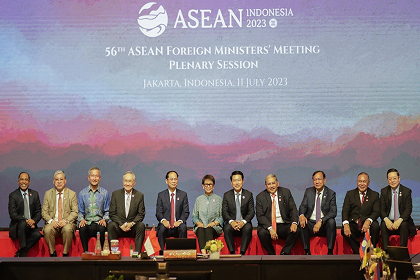
The 56th ASEAN Foreign Ministers Meeting in Jakarta reflected the grouping’s resilience amidst transformative geopolitical changes in the Indo-Pacific. Striving for unity and centrality, ASEAN tackled challenges posed by COVID-19, economic slowdown, climate change, and U.S.-China competition. However, internal differences on sensitive issues like Myanmar have tested its credibility.

GIGA_map_of_Indo-Pacific_Kontur_resize Courtesy: Science Po
28 July 2022

India’s blue economy and the Indo-Pacific’s future

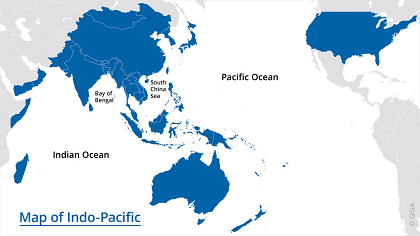
The Indo-Pacific region envisages the Indian and Pacific Oceans as a continuum and stands on two central pillars – maritime security and economic development. The public discussions, however, are focused on maritime security, strategy and geopolitics, while economic development has received less attention. This imbalance can be corrected by creating an awareness on how to harness the potential of the region's Blue Economy and its vast resources and opportunities.

7396fefe-aba2-49fe-a3e5-33b8cea9ebf1 Courtesy: WWF
30 June 2022

Can the WTO Agreement Stop Unsustainable Fishing?

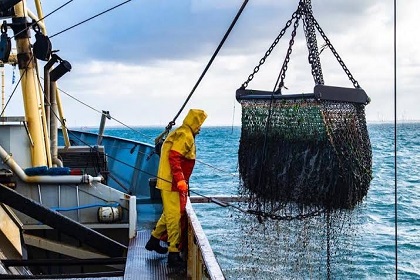
Hailed as historic, the new global rules to curb harmful fishing subsidies is a step towards sustainable fishery practices. The negotiated deal, however, is fraught with concerns over overcapacity in fisheries, deep-sea fishing legislations, and blue finance. It may be better for developing countries to formulate their own regulations and set up mechanisms to prevent illegal fishing within their territorial waters – and hold the WTO agreement to its word.

IMG-1700 Courtesy: @BIMSTECInDhaka
8 June 2022

BIMSTEC@25

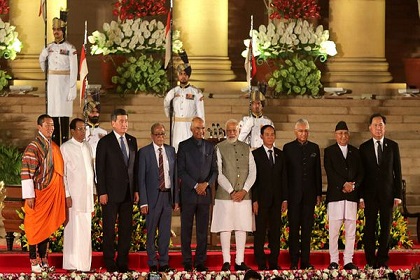
June 6, 2022, marks 25 years since India, Bangladesh, Sri Lanka, Bhutan, Nepal, Myanmar and Thailand joined hands to create BIMSTEC and infuse South Asia with economic and institutional cooperation. The strategic geography of this grouping has the potential to bring new synergy between South Asia and the recently-instituted Indo Pacific Economic Framework, ASEAN and the Quad, for a prosperous, secure Bay of Bengal Community.

ISRO satellite Courtesy: ISRO
26 May 2022

India’s EO satellites in the Indo-Pacific

The Quad has agreed to launch a satellite-based maritime security initiative to curb illegal fishing by China. India is a global leader in satellite launches, especially in Earth Observation (EO) satellites. The Indo-Pacific nations are looking at the Indian model because it is applicable, economical, and sustainable.

bimstec 2 Courtesy: Twitter- BIMSTEC
19 May 2022

Incorporating the Blue Economy into BIMSTEC

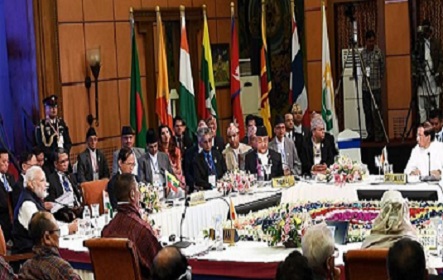
The BIMSTEC charter has laid the foundations for a prosperous, peaceful, and sustainable Bay of Bengal region, a goal that can be achieved by greater integration and deeper collaboration. While ensuring continuity with past efforts and strengthening economic cooperation is necessary, it must also realise its potential in newer areas such as the blue economy, which has three interlinked pillars— connectivity, prosperity, and regional stability.

china-solomon Courtesy: Financial Times
21 April 2022

Economic and human security in the Indo-Pacific

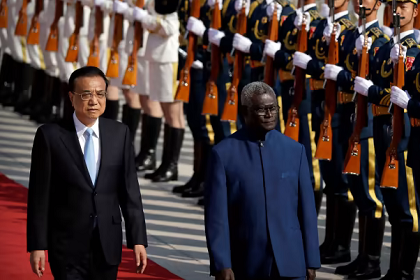
China has established a dominant presence in the Indo-Pacific through exploitative economic engagements. This has destabilised smaller nations in the region and made them dependent on Chinese support. For a free and open Indo-Pacific, India must press its advantage in human and economic capacity building.

quad ip atlantic council Courtesy: Atlantic Council
14 April 2022

The third way for the Indo-Pacific

The Sino-U.S. contestation is a central tenet of the Indo-Pacific. In this power tussle, the EU strategy for the region provides a new way to engage with partners in the "Third Space" for a free, open, and inclusive Indo-Pacific.

quad fm photo mea Courtesy: Ministry Of External Affairs
24 February 2022

The Quad converges beyond China

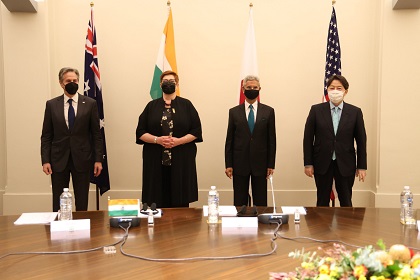
The Quad Foreign Ministers’ Meeting, held in Melbourne on February 11, revealed an ambitious plan for economic and developmental affairs, beyond the security concerns posed by China. Despite differing approaches towards Myanmar and Ukraine, the Quad countries are strengthening their cooperation while maintaining strategic autonomy.