sabrang india (1) Courtesy: Council on Foreign Relations
23 July 2026

India should re-examine its energy investment

The absence of panic in the energy markets despite the renewed U.S.-Iran fighting indicates a well-supplied oil market in the longer term. That means stability for energy short countries like India in the long term. In the short term, however, India will be impacted by other disruptions, such as the increased use of sanctions.


Kenny Holston  AP (3) Courtesy: Business Post
11 June 2026

AI and its spin-off gains

The AI industry in the U.S. is on a high, with three major upcoming public offerings on the table from Anthropic, Open AI and Space X hogging the attention and news. But users are increasingly concerned about costs, and developers are rushing to raise capital. When the effervescence abates, a reduced appetite for AI stocks may eventually see investors return to emerging markets. Can India benefit?

Website articles  (44) Courtesy: Indian Navy
26 February 2026

Indian Navy advances ambitions, enhances diplomacy

Over the last two decades, the Indian Navy has taken a quantum leap in modernising its fleet with stealth frigates, warships, submarines, and fighter planes. Its goal is to be the net security provider and first responder securing Sea Lines of Communication in the region. But it is still lagging behind its Indo-pacific naval partners and most important, its regional rival, China.

Website articles  (29) Courtesy: Somaliland Presidential Office
15 January 2026

Somaliland recognition strengthens alternative diplomacy ecosystem

Israel’s recognition of Somaliland as an independent state in December 2025 is not merely a diplomatic gesture toward a long-marginalised polity; it is a strategic act with implications for Somalia’s territorial integrity, regional security dynamics, great-power competition, and the evolving politics of recognition in a fractured international order.

US Embassy and Consulates in Italy Courtesy: US Embassy & Consulates in Italy
18 December 2025

U.S.’ National Security Strategy 2025

It is customary for every U.S. president to release a National Security Strategy (NSS) early in their tenure. President Trump published the NSS for his second term in November 2025. It’s a contrast from his 2017 NSS, which addressed broad threats. The 2025 version is narrower, emphasising trade over security, with the Western Hemisphere being the primary area of focus. Is the U.S.’s global role shrinking?

Website articles  (7) Courtesy: Gateway House
13 November 2025

India China relations in the near future

India-China relations move in waves of hostility and stability. The bilateral may be re-entering a period of stability, last seen in 2018. If the caveats of security, mutual sensitivity and a level playing field are respected, then much can be achieved by reviving the initiatives begun after PM Modi’s visit to China in 2015 and two informal summits in Wuhan in 2018, and Mahabalipuram in 2019.

Website articles  (4) Courtesy: Gateway House
18 September 2025

White Paper on China’s national Security

In China’s White Paper on national security, the country congratulates itself for maintaining peace and development and bringing “stability in a tempestuous world.” It also pats itself on the back for “creating unity and self-reliance in the Global South” thus leading to an adjustment of the international balance of power. Worth studying are its global initiatives – a new governance order.

Screenshot 2024-08-29 at 10.38.15 AM Courtesy:
29 August 2024

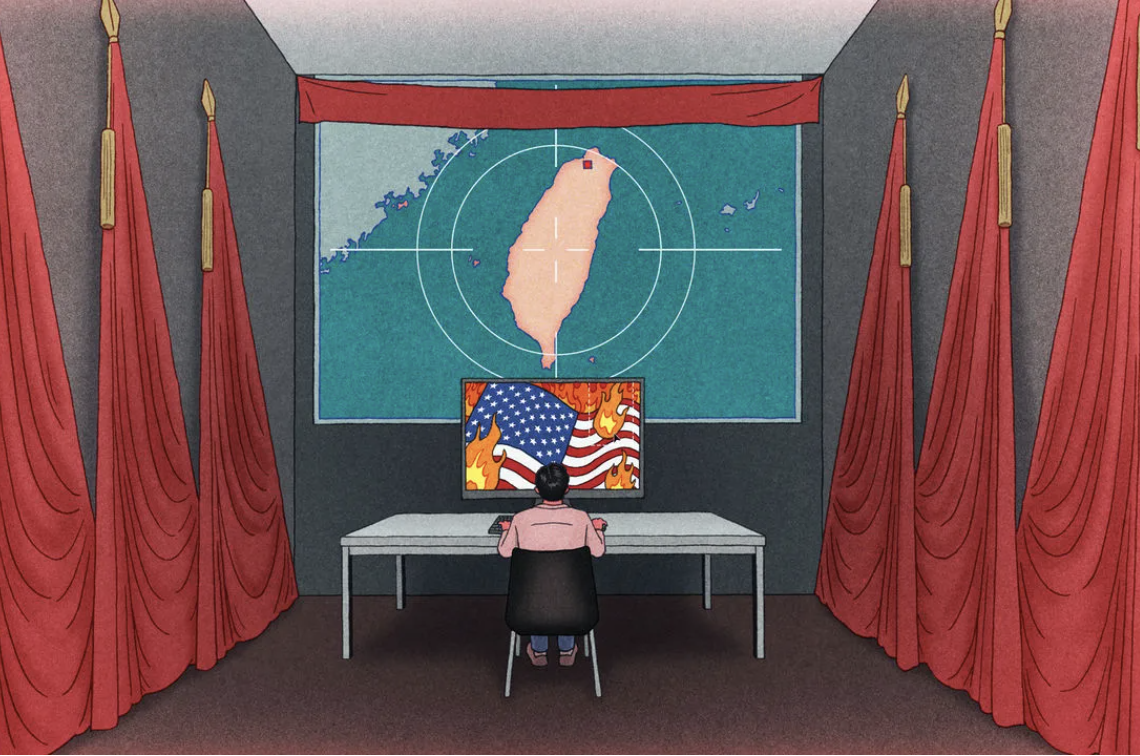
Learning from Taiwan to Counter China’s Disinformation

Chinese state media and other outlets are increasingly using disinformation to undermine Taiwan's political stability, sway public opinion, and erode national unity. The government in Taipei mitigates this threat by employing a range of high- and low-tech solutions. Other countries will benefit by using the Taiwan model to fortify their democratic institutions and enhance their readiness against an advanced arsenal of disinformation tools.

Indo-pac regaining salience Courtesy: CGTN
18 April 2024

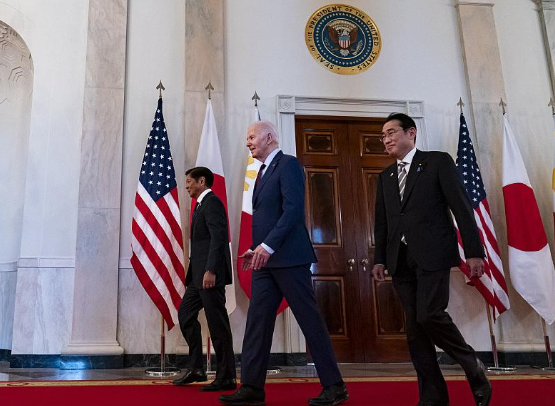
Indo-Pacific’s shifting seas

China’s hostile actions in the East and South China Seas have led to a deepening of naval partnerships within the Indo-Pacific such as the U.S., Japan, Philippines, Australia and South Korea. As crises in West Asia escalate and the strategic contest between the U.S. and China hardens in the Pacific Ocean, India – placed strategically in the Indo-Pacific – can’t neglect either the west nor east.

GIGA_map_of_Indo-Pacific_Kontur_resize Courtesy: Science Po
28 July 2022

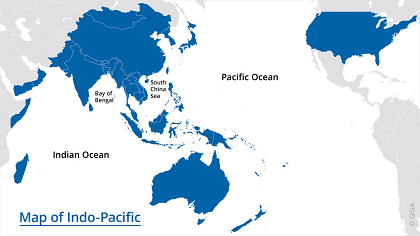
India’s blue economy and the Indo-Pacific’s future

The Indo-Pacific region envisages the Indian and Pacific Oceans as a continuum and stands on two central pillars – maritime security and economic development. The public discussions, however, are focused on maritime security, strategy and geopolitics, while economic development has received less attention. This imbalance can be corrected by creating an awareness on how to harness the potential of the region's Blue Economy and its vast resources and opportunities.