Getty (1) Courtesy: Gateway House
15 May 2025

The New Geopolitics and South Asia’s Trade Architecture – What Next?

Geopolitics is increasingly intertwined with the economic destiny of South Asia. Even before the U.S. tariffs were rolled out, growing polycrises had hit the global economy, which has been struggling since the pandemic. South Asia seems a relatively bright spark of regional trade and growth. This paper analyses South Asia’s trade architecture in the backdrop of a sluggish world economy in the 2020s, and makes recommendations for closer regional economic integration.

Website articles  (12) Courtesy: Gateway House
15 May 2025

U.S., global emperor of sanctions

Over two centuries, the U.S. has amassed vast economic powers across the globe during and after the two World Wars , and sanctions slowly became an effective tool it used to achieve its foreign policy goals, becoming the global emperor of sanctions.

Report Courtesy: Körber-Stiftung
17 April 2025

Momentum for Middle Powers: Emerging Middle Powers Report

The world is undergoing profound transformations that are not being driven only by the United States, China or Russia. Small and medium-sized States are carving out a legitimate place for themselves in the emerging new order. This second edition of our annual Emerging Middle Powers Report is a reminder that the signs of the times are showing a new momentum for middle powers.

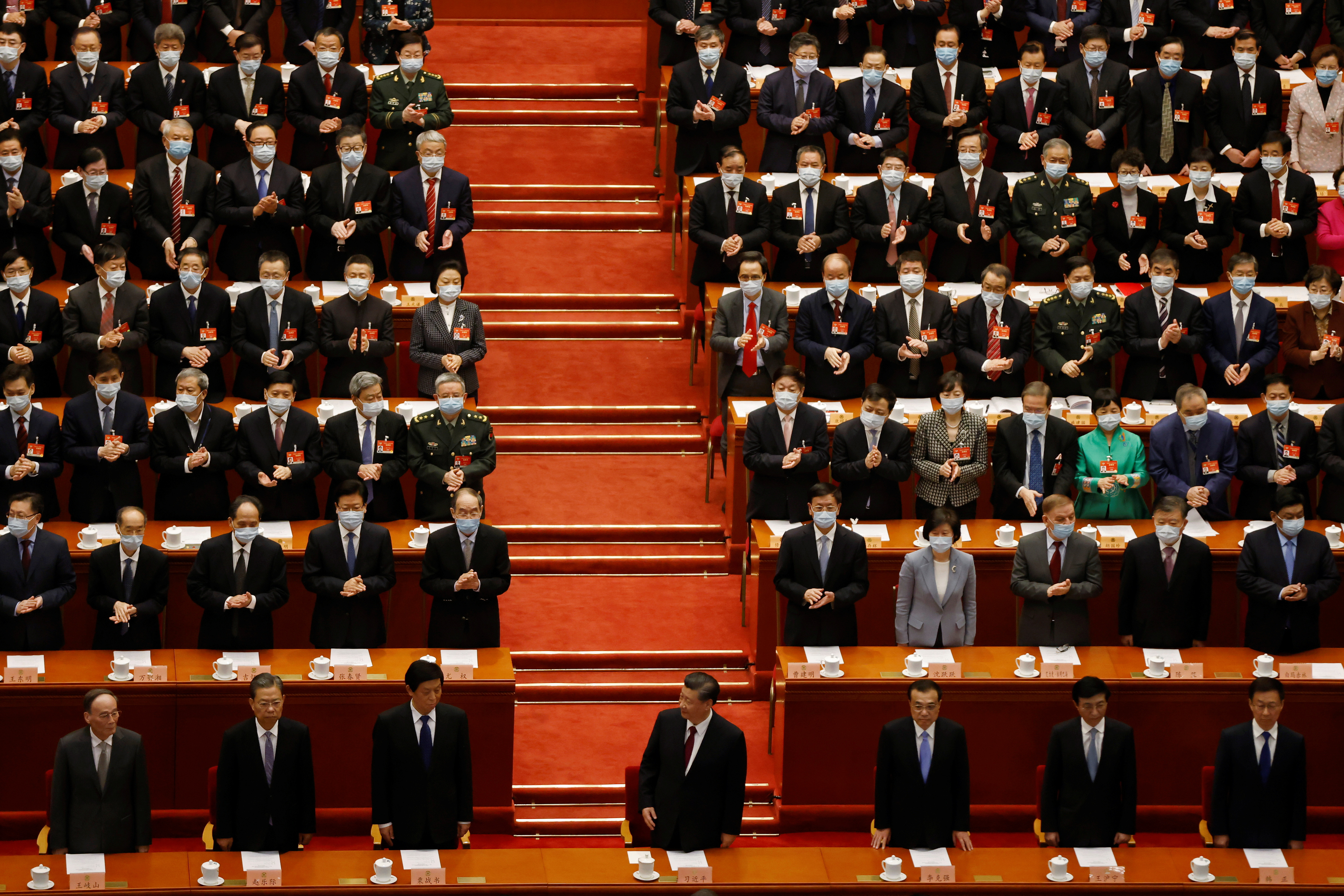
FILE PHOTO: Chinese President Xi Jinping (C), Vice President Wang Qishan, Politburo Standing Committee member Zhao Leji, National People's Congress (NPC) Standing Committee Chairman Li Zhanshu, Premier Li Keqiang, Politburo Standing Committee member Wang Huning and Vice Premier Han Zheng arrive for the closing session of the Chinese People's Political Consultative Conference (CPPCC) at the Great Hall of the People in Beijing, China March 10, 2021. REUTERS/Carlos Garcia Rawlins/File photo Courtesy: Reuters
16 January 2025

Preparing China’s economy for 2025

Two important conclaves held in December 2024 - a Politbureau meeting and the Central Economic Work Conference – set the tone for China’s economic focus in 2025. The economy needs a resurgence, given the domestic environment of low spending and the external threat of high tariffs – the outcome of swapping development for security. In 2025, China’s mandarins will try and find a balance between the two.

longmen Courtesy: UNESCO
9 January 2025

India-China: learning from each other

India and China are the world’s most populous countries, with much in common and much divergence. Reform, discipline, long-term thinking and scale brought China to its present near first-world conditions; India is accommodative with its democracy, cultural diversity and all-round religiosity to achieve development, wealth creation, cultural preservation and self-respect. There’s a great deal that the two Asian giants can learn from each other.

ASEAN summit Courtesy: ANI
22 September 2023

ASEAN’s uphill diplomatic challenge

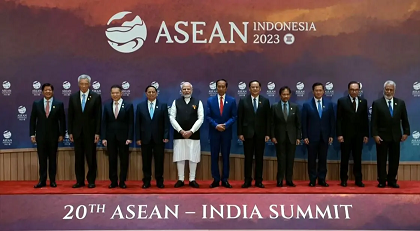
The recent ASEAN Summit and East Asia Summits stressed the region's centrality and unity while also revealing its principal challenge: managing strategic contestation between the U.S. and China. The outcomes of both summits are reflective of ASEAN's diplomatic and strategic dilemmas in Southeast Asia and the Indo-Pacific.

BRICS 2 website Courtesy: Fox News
31 August 2023

BRICS-XI, the new configuration

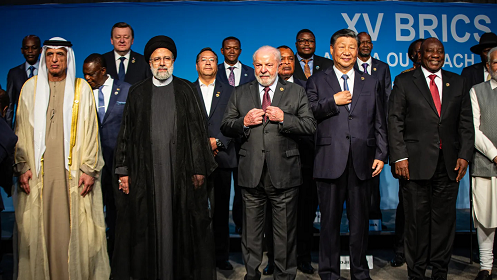
The decision to invite six countries — Argentina, Egypt, Ethiopia, Iran, Saudi Arabia, and the UAE — to join BRICS as full members has opened the grouping to a new geopolitical era. India can now play a seminal but challenging role in this evolved dynamic, given its growing cooperation with the West on the one hand and its active pursuit of the interests of the Global South on the other.

ASEAN Website Courtesy: Kuwait Times
25 July 2023

ASEAN on a trodden path

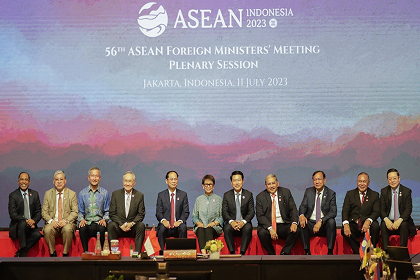
The 56th ASEAN Foreign Ministers Meeting in Jakarta reflected the grouping’s resilience amidst transformative geopolitical changes in the Indo-Pacific. Striving for unity and centrality, ASEAN tackled challenges posed by COVID-19, economic slowdown, climate change, and U.S.-China competition. However, internal differences on sensitive issues like Myanmar have tested its credibility.

FuIkSegXwAA1PDo Courtesy: Twitter / Hindustan Times
20 April 2023

A Buddhist quest for global peace

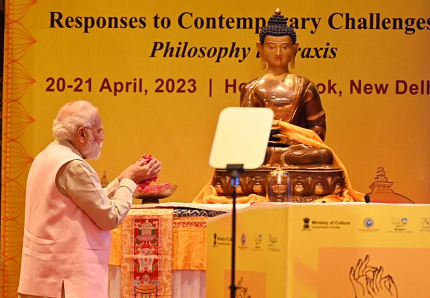
The first Global Buddhist Summit is being held in New Delhi this week, a continuation of India's strategic and diplomatic outreach to Buddhist countries in Asia. The Summit offers India an opportunity to deepen the dialogue on its shared, millennia-old transnational Buddhist legacy with these countries, and arrive at contemporary solutions for global conflicts using the lens of Buddha Dhamma.

Moutai PNG Courtesy: The Economic Times
27 October 2022

China’s new corporate top dogs

A quick look at the list of top Chinese companies shows that the vaunted private sector has receded and the state-owned giants now dominate. Under the new Xi Jinping regime, they are unlikely to relinquish their position. What does this mean for China – and for India?