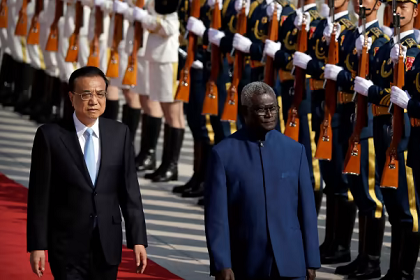
china-solomon Courtesy: Financial Times
21 April 2022

Economic and human security in the Indo-Pacific

China has established a dominant presence in the Indo-Pacific through exploitative economic engagements. This has destabilised smaller nations in the region and made them dependent on Chinese support. For a free and open Indo-Pacific, India must press its advantage in human and economic capacity building.
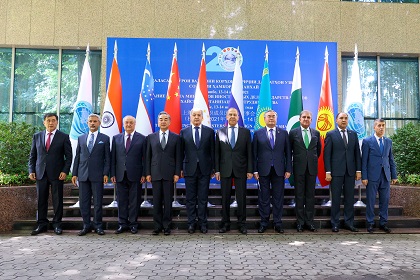

Foreign ministers and officials of the Shanghai Cooperation Organisation (SCO) pose for a group photo during a meeting in Dushanbe, Tajikistan July 14, 2021. Russian Foreign Ministry/Handout via REUTERS Courtesy: Reuters
20 April 2022

The SCO in Afghanistan

The Shanghai Cooperation Organisation has been focused on resolving the Afghan crisis. But divergent views of members and the influence of China and Pakistan have eluded a solution. This has been further impeded by the ongoing sanctions and humanitarian issues which are beyond the organisation's scope.

suiso frontier Courtesy: TIME
24 March 2022

Green Hydrogen in the Indo-Pacific

Last month, the Government of India released its Green Hydrogen Policy with the goal of boosting energy self-reliance and inspiring clean energy transitions. The time is right for the Indo-Pacific economies to finance green hydrogen projects and integrate them into supply chains.

today hong kong horizontal Courtesy: Macmillan
31 January 2022

Today Hong Kong, Tomorrow the World

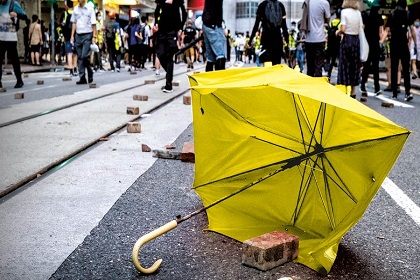
The contemporary fate of Hong Kong, which has known freedom and rule of law, offers in microcosm a glimpse of what could happen if the liberal world order is up-ended. In this book, Mark Clifford convincingly argues that what happens in Hong Kong doesn’t stay in Hong Kong, as he draws connections between the techniques used to end freedom there with China’s penetration and manipulation of open societies elsewhere.

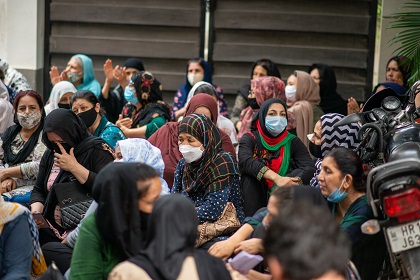
New,Delhi,,India-aug,24,2021:,Group,Of,Afghan,Women,Sitting Courtesy: Shutterstock
27 January 2022

Developing a balanced Indian refugee policy

India has seen a recent influx of refugees from Afghanistan and Myanmar. This has highlighted the absence of a concrete refugee policy in India. India must formalise its approach towards refugees. The Citizen Amendment Act of 2019, is a start. India can move this forward by learning from the examples of other democracies like the U.S., Kenya and South Korea, on how to balance international law with its national security interests.

GIs Courtesy: Blaise Fernandes
14 January 2022

Indian GI: Local Goes National Goes Global

Geographical Indication (GI) tags denote a good's specific physical origin. These are potential revenue-generators for India. Combining government support with its e-commerce network, India can empower MSMEs and women-led cottage industries to compete with large companies by building a strong GI ecosystem. The Make in India initiative and GI can together provide an impetus to social and economic growth in India.

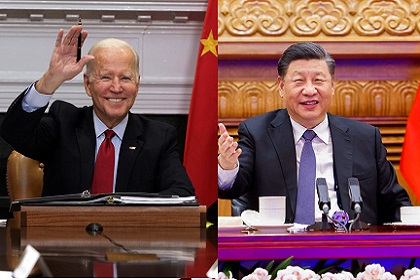
Biden and Xi walk toward detente? Courtesy: Wall Street Journal
25 November 2021

Biden and Xi walk toward détente?

On November 15, the presidents of the U.S and China met for the first time since Joe Biden was sworn in earlier this year. The main purpose was for the two heads of state to get to know each other and establish a line of communication. If this is Cold War 2.0, with similarities to, as well as differences, from Cold War 1.0, then what the Biden administration has in mind is something akin to détente, with some scope for cooperation, especially on climate change.

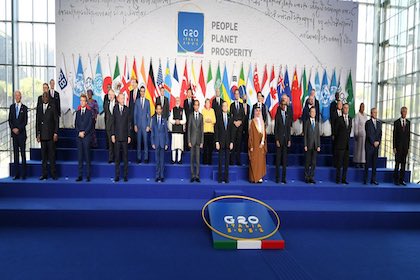
G20 Rome summit, marching ahead Courtesy: G20
4 November 2021

G20 Rome summit, marching ahead

The Oct 30-31 G20 Leaders’ Summit in Rome took several important steps to accelerate economic recovery and health security. In the absence of several Eurasian leaders, India played a significant role especially on climate and energy. The G20 will now acquire greater salience in India's foreign policy, as it readies to lead the grouping in 2023.