davos Courtesy: remy steinegger / Flickr
6 February 2014

The new inequality debate

German President Joachim Gauck’s visit to India this week is a reminder of how Germany is addressing inequality, with better wages, benefits for the poorest, and other measures. When the gap between the rich and poor is growing globally, it is time for India’s prime ministerial aspirants to also focus on this issue
neelam pirate party Courtesy: Delhiiterock/WikimediaCommons
13 November 2013

The rise of the anti-party party

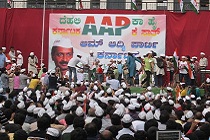
The debut of the Aam Aadmi Party must not cloud the reality that even after a movement transitions into a party, it still has to play the game of hard politics. Anti-party parties such as the AAP make coalition-building more difficult, as was recently evident in Germany and Italy, and is now the scenario in Delhi

merkel cdu www.GlynLowe.com flickr Courtesy: www.GlynLowe.com/Flickr
27 September 2013

Germany after elections: Similar but not the same

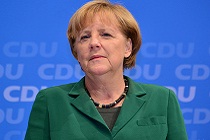
It may take Chancellor Angela Merkel weeks to negotiate a new coalition, but the vote for stability means that change will only be at the margins of current domestic and foreign policy. Still, the fallout of the election in the EU and beyond, including in India, should not be underestimated

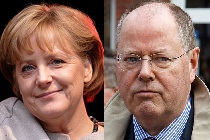
merkey steinbruck Courtesy: WikimediaCommons
6 September 2013

What does Germany want?

German foreign policy can be described as one anchored in the European and NATO alliance while being the economic centre of Europe. Yet, any government that comes in after the September 22 elections will be challenged by rapid developments in West Asia and elsewhere in a politically and economically turbulent world

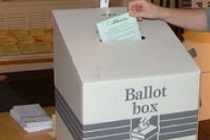
ballot box Courtesy: Dude1248/WikimediaCommons
8 May 2013

Today’s Badi Soch

This daily column includes Gateway House’s Badi soch – big thought – of the day’s foreign policy events. Today’s focus is on the election process, viewed through the Karnataka election in India, and the general elections in Pakistan and Iceland.

Are political parties failing democracy Courtesy: Somenametoforget/Flickr
12 April 2013

Are political parties failing democracy?

Conventional political parties around the world seem to be on the decline, and there are common factors too – precarious economies and a leaching of ideology, for example. How can countries achieve grassroots empowerment in their village republics, and those of ordinary citizens the world over?

green africa Courtesy: trendscout::/Flickr
4 October 2012

A Green Agenda for Africa

All the major economic forces in the world have come together in Africa in a new version of the Great Game. The competition for the continent’s resources will ultimately harm Africa unless Africa uses this opportunity to its advantage and to address its own serious problems.

angre2 Courtesy: Columbia/WikimediaCommons
4 September 2012

Kanhoji Angre: India’s first naval commander

In the 1700s, one man antagonized the European powers, and insisted on the Maratha Empire’s rights to taxation and sovereignty over Maharashtra’s coast. He was Kanhoji Angre, the head of the Maratha navy. How did he, 283 years ago, set an important precedent for the Subcontinent’s local powers?

Global Stability Map Courtesy: Gateway House
1 August 2012

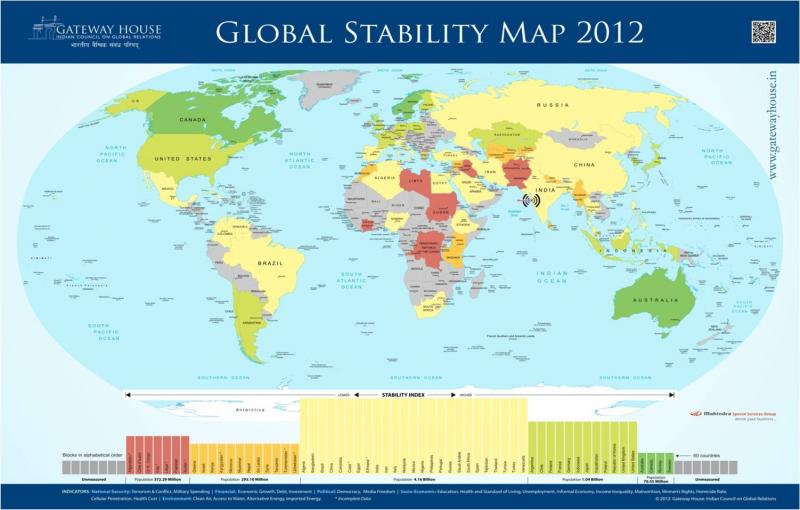
Global Stability Map 2012

Gateway House prepared a Global Stability Map, using 20 differing indicators, to analyze the stability of 60 countries around the world. Using criteria that are important to the emerging economies of the world, the map provides an Indian perspective of the world today.

Courtesy: PIAZZA del POPOLO/Flickr
24 May 2012

EU austerity: room to wiggle

Momentous developments are taking place in Europe. In elections in Greece, France and Germany, Europeans expressed dissent against austerity policies adopted by their government to combat the economic crisis in Europe. How will these results affect the future of European policy-making?