G7 Courtesy: Prime Minister's Office of Japan
25 June 2026

G7 Evian summit matters

The 52nd G7 Summit, held in Evian-les-Bains from June 15-17, reflected both the challenges and continued relevance of the grouping. While the G7’s share of global GDP has declined, it remains influential. India’s participation as an invited guest drew attention as a major representative of the Global South. As BRICS chair this year, India has an opportunity to explain the motivations of both the G7 and BRICS to each other's members.
Website articles  (1) Courtesy: Gateway House
18 June 2026

The relevance of the Indo-Pacific

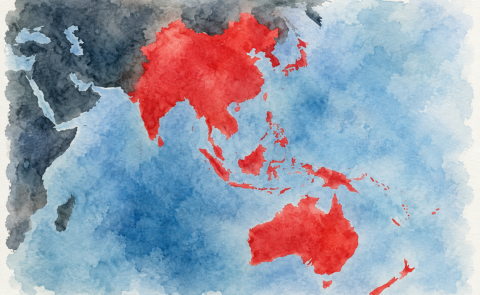
After eight years of its nomenclature, on 16th June the U.S. Pacific Command dropped the 'Indo' from its military command title. It reflects clearly that the U.S. does not consider the Indo-Pacific region to be the most consequential theatre of geopolitics today. Yet its significance as the platform on which great-power contestation in political, military, technological, and economic domains will play out cannot be overstated.

Kenny Holston  AP (2) Courtesy: x/@MEAIndia
11 June 2026

Myanmar president’s visit: realities and gaps

The recent visit of Myanmar President Min Aung Hlaing to India has re-engaged the two neighbours politically after a six-year gap. Critics and pragmatists had much to say, but the outcome spoke for itself: constructive border management, defence agreements and economic cooperation. And a reminder that India has not forgotten about Daw Aung San Suu Kyi, the democracy icon.

Kenny Holston  AP (3) Courtesy: Business Post
11 June 2026

AI and its spin-off gains

The AI industry in the U.S. is on a high, with three major upcoming public offerings on the table from Anthropic, Open AI and Space X hogging the attention and news. But users are increasingly concerned about costs, and developers are rushing to raise capital. When the effervescence abates, a reduced appetite for AI stocks may eventually see investors return to emerging markets. Can India benefit?

Gateway House Courtesy: Gateway House
4 June 2026

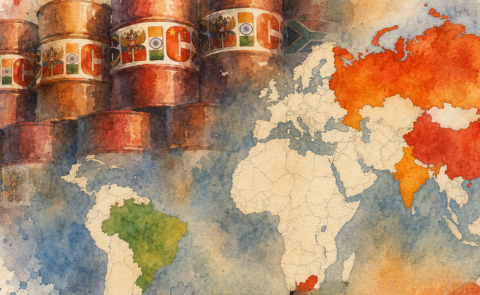
A BRICS Energy Stability Framework

The 2026 Persian Gulf conflict has pushed energy security to the forefront of the BRICS agenda. Divergent national interests prevent the grouping from acting as a unified geopolitical bloc, the growing energy crisis highlights the need for stronger economic cooperation. Proposals such as a BRICS energy reserve, an Energy Stability Fund, and cross-border investments could enhance resilience and be essential if BRICS wants to emerge as a serious economic grouping.

oil Courtesy: KNN
28 May 2026

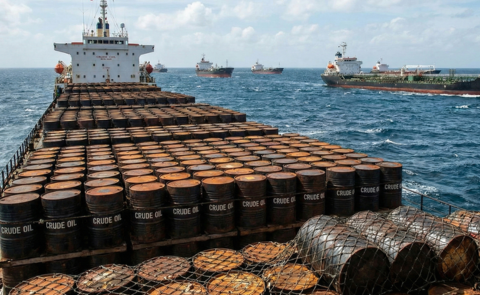
India’s Opportunity in the New Oil Order

The UAE’s recent exit from OPEC, and the U.S. push to sell more oil to India are markers of a new order in the oil world with demand security at a premium. As a major oil importer, India must respond to it smartly. It must develop deeper partnerships with both the UAE and U.S., and a new financial ecosystem and benchmarks for the new order.

Website articles  - 2026-05-28T124708.235 Courtesy: Global Times
28 May 2026

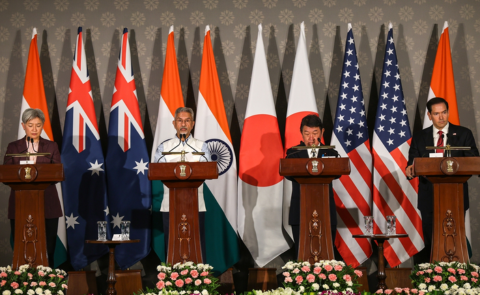
The Quad, reset

The Quad Foreign Ministers’ Meeting, held in New Delhi on May 26, highlighted both the progress and uncertainties surrounding the grouping. Significantly, it reaffirmed U.S. engagement. While the Quad has expanded its agenda and provided some concrete outcomes, the all-important Leaders’ Summit is still not visible – a worry for India’s prolonged chairship since 2024.

Website articles  (96) Courtesy: The Secretariat
20 May 2026

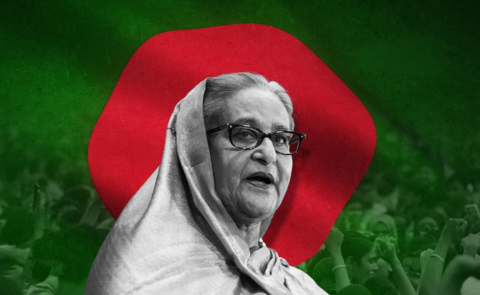
Interview with Sheikh Hasina

Bangladesh elected a new government in February this year after former long-time Prime Minister Sheikh Hasina was ousted from power in a violent mass protest on August 5, 2024. Her party, the Bangladesh Awami League, was banned from participating in this year’s election, which saw the return of the rival Bangladesh Nationalist Party (BNP) under Prime Minister Tarique Rahman. Hasina has been living in India since then and talks about her plans to return to Bangladesh and revive her party’s activities there. She spoke exclusively to Nayanima Basu.

Rajiv Bhatia with Aung San Suu Kyi Naypyidaw in 2013 Courtesy: Rajiv Bhatia
14 May 2026

Leaves from my Myanmar diary

Myanmar’s latest political transition offers the illusion of closure, but little clarity. After years of conflict triggered by the 2021 coup, a new administration under Min Aung Hlaing takes charge amid continuing resistance and fragmentation. Is this consolidation or another phase of instability? Reflecting on this question, Ambassador Rajiv Bhatia draws upon his three-decade-long association with Myanmar, including serving as India’s Ambassador from 2002 to 2005.