Website articles  (9) Courtesy: Bloomberg
5 March 2026

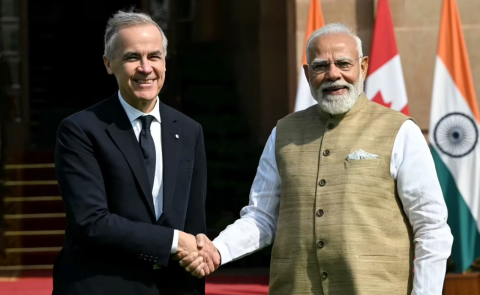
Canada-India reset gathers momentum

Canadian Prime Minister Mark Carney’s visit to India from February 27 to March 2, though sandwiched between the AI Impact Summit and the outbreak of the U.S.-Israel war against Iran, produced concrete outcomes with long-term impact. The visit announced a multidimensional roadmap aligning India’s ‘Viksit Bharat’ vision with Canada’s ‘Build Canada Strong’, to ensure the bilateral relationship does not drift apart again.

revised design Courtesy: Gateway House
27 November 2025

Rise of the Davos Competitor

U.S. health secretary Robert Kennedy Jr. called the World Economic Forum a “billionaires’ boys club” imposing totalitarian controls. Indeed, since 1971, the elite platform shaped geopolitics. But its Western-centricism kept out the concerns of the rest. This gave rise to alternative forums, which look beyond financial agendas to the perspectives shaping the Global South. Here are 45 of biggest, half of which began just two decades ago.

President of Russia Courtesy: President of Russia
2 October 2025

Valdai frames Russia’s global doctrine

Each autumn, Russia convenes its flagship Annual Summit — a gathering of global leaders, business elites and intellectuals. Often compared in scale to Davos or Shangri-La, what sets Valdai apart is President Vladimir Putin’s extended, unscripted dialogue with the audience. Over the years, India has moved to the centre of this dialogue, reflecting its strategic weight and offering rare insight into Moscow’s evolving worldview.

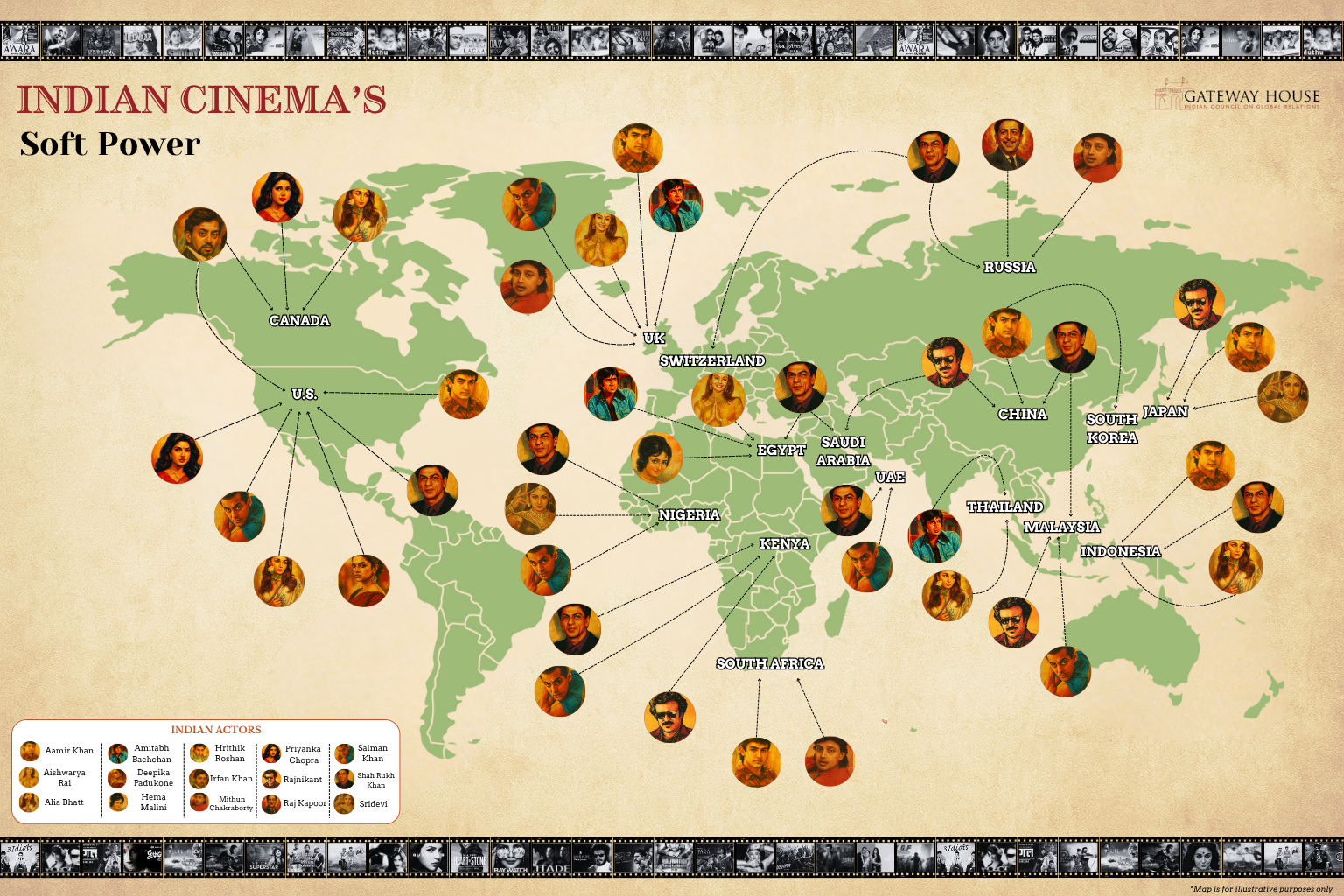
Most popular Indian actors worldwide Courtesy: Gateway House
1 October 2025

Indian Cinema as Economic Catalyst

As India seeks leadership in a multipolar world, cultural credibility is as vital as economic clout. Cinema gives India an edge with vivid storytelling, music, and empowering narratives, fostering understanding in a polarised world. Its popularity correlates with trade, as seen in the U.S., Russia, and Middle East. The more popular the cinema, the bigger the boost to trade.

G20.Org Courtesy: G20.org
28 August 2025

Appraising Brazil’s G20 Presidency

The G20’s current cycle is unique, with four Global South nations presiding consecutively: Indonesia, India, Brazil, and now South Africa. Brazil’s 2023-24 presidency exhibited both achievements and struggles, prioritising social inclusion, hunger, energy transition, and governance reform. The handover to South Africa marks a significant milestone in G20 history. Will the momentum be followed by the U.S., the next G20 president but also a G20 sceptic?

task force cover 420 Courtesy: Gateway House
16 February 2023

G20 Energy Transitions and Climate Finance Task Force Report

Significant progress has been made globally in adopting green energy. Technological advances, easier availability of capital and regulatory measures have helped. But progress is likely to slow due to the shocks caused by Covid-19 and the Ukraine crisis. How to continue the green transition whilst ensuring that lower-income countries have access to affordable energy? This Task Force offers recommendations for India’s G20 Presidency.

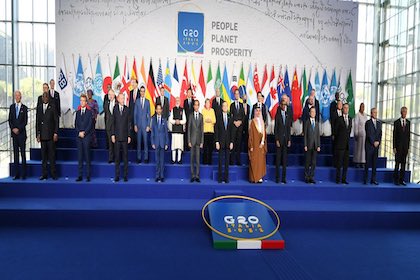
G20 Rome summit, marching ahead Courtesy: G20
4 November 2021

G20 Rome summit, marching ahead

The Oct 30-31 G20 Leaders’ Summit in Rome took several important steps to accelerate economic recovery and health security. In the absence of several Eurasian leaders, India played a significant role especially on climate and energy. The G20 will now acquire greater salience in India's foreign policy, as it readies to lead the grouping in 2023.

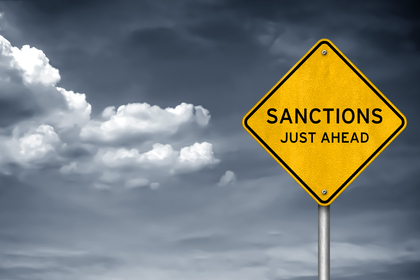
Sanctions,-,Just,Ahead Courtesy: Shutterstock
5 August 2021

Are counter-sanctions effective against sanctions?

Sanctions are an important foreign policy tool, used especially by the West against its adversaries. Now, these rivals are retaliating with counter-sanctions. Are these effective? How does this impact global politics? Where does India stand in this free-for-all sanctions era?

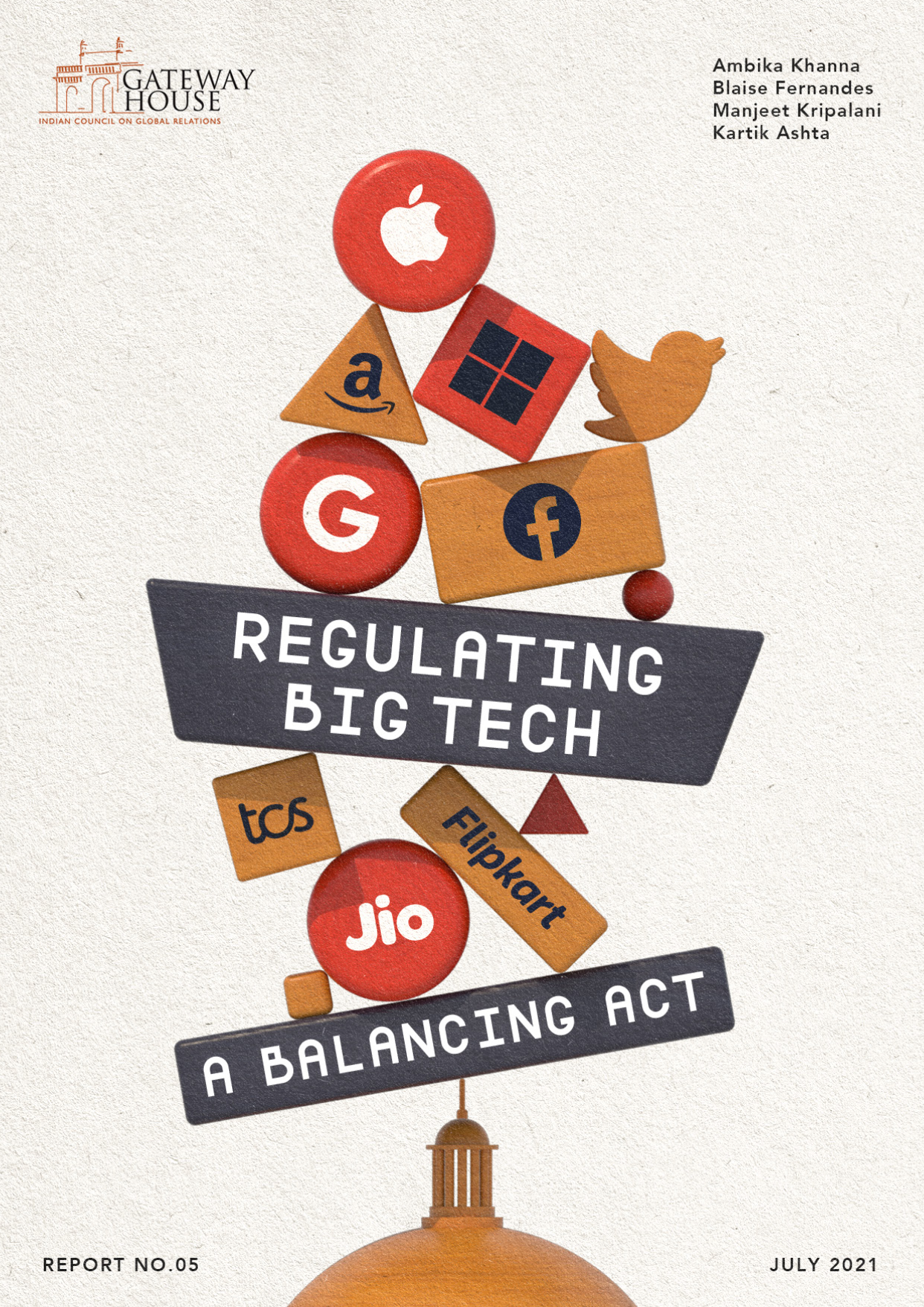
BigTech Report (1) Courtesy: Gateway House
1 July 2021

Regulating Big Tech: A Balancing Act

Big Tech is powerful and its profits are growing - by 105% over the last year. It dominates economies. This raises concerns about data protection and privacy, anti-trust, fintech and the specific role of intermediaries. India is leading the way on fintech, but is behind several countries and institutions on digital rules. It is important to establish laws and rules to govern technology – whether domestic or through multilateral bodies – with the aim to strike the right balance between innovation and regulation.