shutterstock_1457421710 (1) Courtesy: Shutterstock
26 September 2019

Quad in the Indo-Pacific

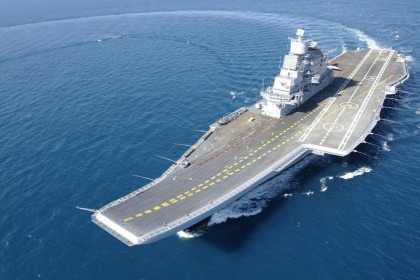
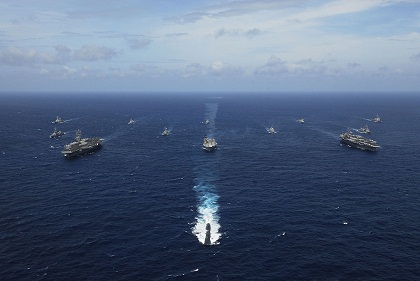
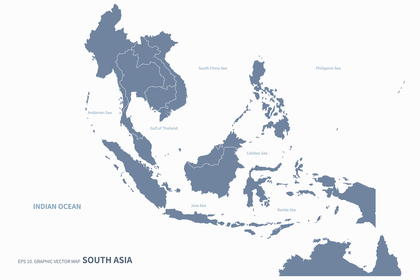
The foreign ministers of the Quad countries meet for the first time in New York today even as the Indo-Pacific has turned into a keenly contested geopolitical arena. Some countries are offering to play a mediatory role while other triangular equations are also undergoing change. An analysis of some of the relationships at work here
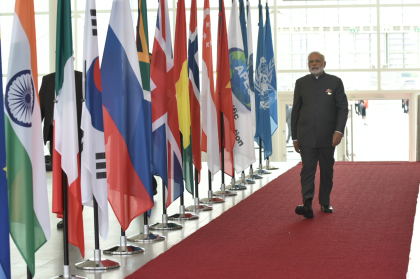
35830490205_81bd5000f7_o Courtesy: MEA/Flickr
6 February 2019

Indian Foreign Policy in 21st Century

The following remarks were given by Ambassador Rajiv Bhatia, Distinguished Fellow, Foreign Policy Studies, Gateway House as Distinguished Guest Lecturer at IIM Tiruchirappalli on February 3, 2019

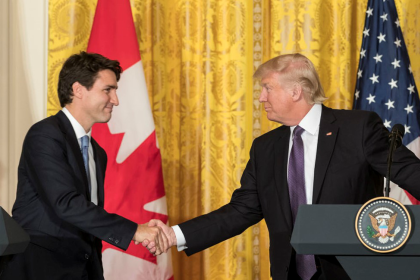
President_Donald_Trump_and_Prime_Minister_Justin_Trudeau_Joint_Press_Conference_February_13_2017 Courtesy: Wikimedia Commons
25 October 2018

Three pillars of Canada’s worldview

The United States, Europe and the Asia Pacific today form Canada’s tripartite foreign policy priorities. The ASEAN is its sixth largest partner, which was not so 20 years ago, but economic engagement with India – still small, compared to China and Japan – has scope to grow

Indo-Pacific Security Quad Courtesy: Indian Navy
3 January 2018

A case for the Quad’s reappearance

A noticeable feature of 2017 was China’s aggressiveness, which it deployed openly to advance its interests in the eastern rim, Southeast Asia, Central Asia and South Asia. This could well be the impetus for the consolidation of a broad front of China-wary nations in 2018

1200px-Malabar_07-2_exercise Courtesy: Wikipedia
14 February 2017

A democratic quadrilateral in Asia?

A strategic coming together of the U.S., Japan, Australia, and India was close to fruition some years ago, impelled initially by the tsunami of 2004. The spirit of the enterprise remains alive even now, and there are many merits in India joining the quad, but such an arrangement can skew existing Asian equations, jeopardising the Act East policy

ind jap Courtesy: generalising/Flickr
6 November 2013

The new Indo-Pacific core

The India-Japan alliance needs to be viewed through a prism broader than that of "containing" China, and by treating the Indian and Pacific oceans as a single entity. Such an alliance has the potential to strengthen the geopolitical security of India and Japan, along with that of all their allies and associates

anna hazare 2 Courtesy: nazeah/Wikimediacommons - Ramesh Lalwani/Flickr
30 December 2011

2011’s Top Foreign Policy Cheers and Jeers

The year 2011 saw various events - the Arab Spring, anti- corruption protests, Europe's sovereign debt crisis - transform countries and reshape the world order. Gateway House takes a look at what these events mean for India, and presents India's top foreign policy cheers and jeers for the year.

Trans Pacific Partnership (TPP)
13 December 2011

Trans Pacific Partnership (TPP)

Amidst myriad country groupings that already exist – BRICS, IBSA, APEC, SCO and many others – a new initiative in the Pacific is looking to integrate more powerful countries to form a multilateral free trade agreement – the Trans Pacific Partnership. How important is this towards the reshaping of trade and power?