A time for concerted action among Quad countries: Gateway House Task Force Report
Group identifies areas of potential economic and technological cooperation between four like-minded democracies in the Indo-Pacific


Group identifies areas of potential economic and technological cooperation between four like-minded democracies in the Indo-Pacific
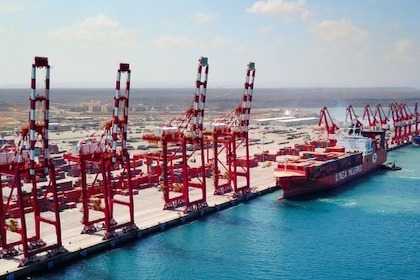 Courtesy: The Maritime Executive
China is rapidly expanding its influence in the Indian Ocean Region, as its massive investment in ports starts to materialise. From smaller investments of $78 million in Djibouti to large ones like $1.6 billion in Gwadar, these are funded largely by Chinese state-owned enterprises. This infographic shows the 17 ports being built by China, which are now important strategic, economic and political outposts for the country.
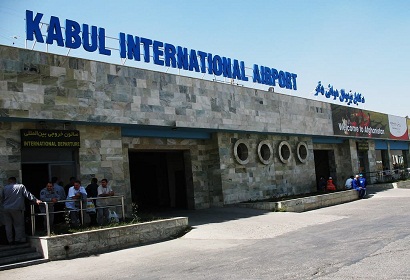 Courtesy: Haroon Sabawoon
The Taliban’s rapid advance towards Kabul shows clear signs of learning from previous failures. The chances of a revival of the old Northern Alliance are minimal. Regional powers are left with the option of maintaining diplomatic contact with the Taliban whilst not taking any assurances on trust.
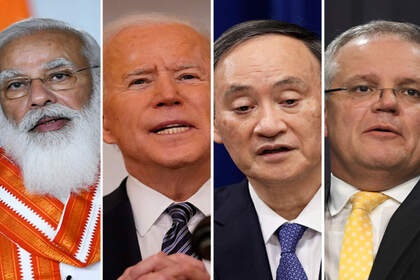 Courtesy: The Times of India
In an interview with Garrison Moratto of The New Diplomatist, Amb. Rajiv Bhatia, Distinguished Fellow, Foreign Policy Studies, counters China's claims that the Quad is an "Asian NATO." He highlights how the India-U.S.-Japan-Australia Quadrilateral initiative aims to increase cooperation in the Indo-Pacific on international law and security. This podcast delves into the history of the Quad's formation, current strategic characteristics, and future geopolitics, ahead of the fall in-person Leaders' Summit in the U.S.
 Courtesy: Shutterstock
Sanctions are an important foreign policy tool, used especially by the West against its adversaries. Now, these rivals are retaliating with counter-sanctions. Are these effective? How does this impact global politics? Where does India stand in this free-for-all sanctions era?
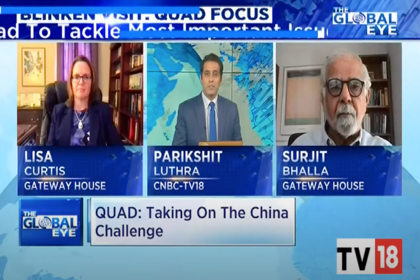 Courtesy: CNBC-TV18 (Youtube)
On 30 July 2021, Lisa Curtis and Surjit Bhalla, co-chairs of the Gateway House Quad Economy and Technology Task Force, spoke to CNBC-TV-18 on the various channels of cooperation between the Quad countries in technology, supply chains and undersea cables, and the need to counter China's dominance in the Indo-Pacific.
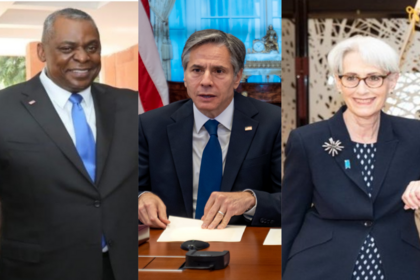 Courtesy: Flickr
Three senior U.S. officials visited Asia in July in a well-choreographed diplomatic outreach strategy by the Biden administration. The U.S is willing to prioritise the Indo-Pacific and counter China. Asia cannot afford to be a reticent bystander.
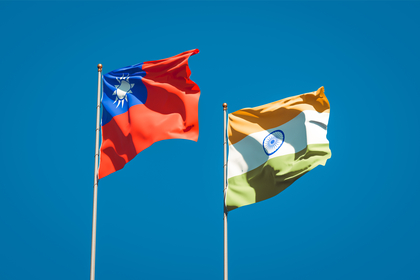 Courtesy: Shutterstock
Taiwan was one of the few countries to successfully contain COVID-19 during the pandemic. But China's influence led to Taiwan losing its observer status in the World Health Assembly (WHA), the WHO's decision-making body, in 2017, preventing learnings from Taiwan to be implemented. The G7 and Japan have already backed Taiwan’s reinstatement. India can use its chairmanship of the WHA to rally more support and change the status quo.
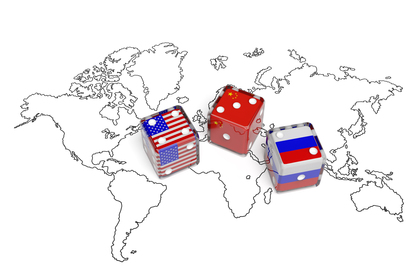 Courtesy: Shutterstock
For years, Western countries have used sanctions as a means of economic warfare against their adversaries. Now, China and Russia are utilising the same tactic against the West. The United Nations Security Council is paralysed by differences between the five permanent members, leaving the tools of unilateral sanctions and counter-sanctions to proliferate at the cost of UN-approved multilateral sanctions.
 Courtesy: Shutterstock
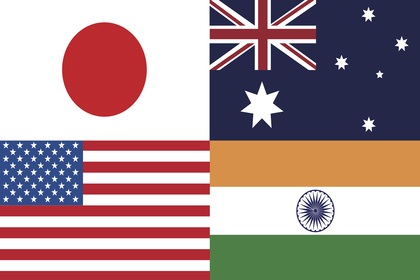
The Quad countries are preparing for an autumn summit in Washington, which will provide an opportunity to discuss multilateral cooperation in various sectors. Four dimensions which merit closer attention and are crucial to the group's future are the Indo-Pacific strategies of European countries and the EU, partnerships with ASEAN and its members, closer India-U.S. ties and maritime security issues in the Pacific.