Myanmar Sanctions Courtesy: Wikimedia Commons/Htoo Tay Zar
1 May 2012

Sanctions on Myanmar: Have they worked?

The West is quick to claim that their sanctions against Myanmar have forced the government to implement political and economic reforms in the country. However, such bans do not usually achieve their stated purpose of forcing regimes to change their behavior.

U.S.-Afghanistan agreement: A welcome start Courtesy: U.S. Department of Defense
27 April 2012

U.S.-Afghanistan agreement: A welcome start

An important take-away from the preliminary pact reached by Kabul and Washington is that unlike the 1990s, the Americans are not just packing their bags and leaving. This is good news in terms of regional stability, and the upcoming NATO summit may answer some questions this draft agreement raises.

bahrain piece neelam Courtesy: LGEPR
24 April 2012

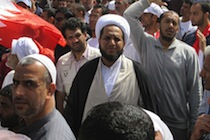
The Bahrain formula

With turmoil in the Middle East, a drawdown in Iraq and Afghanistan, the Iran-Israel-U.S. conflict, the international community has paid little attention to the democracy of a small group of people - the Bahrainis. More worrisome, however, is that politics now responds to the elite.

5825395379_5d725a53f4_z Courtesy: Flickr/freeedomania
21 April 2012

UN: a return to ‘mandated colonialism’

By forcing regime change in Libya, and attempting the same in Syria, and by promiscuously arming disparate groups of Wahabbis and Salafists to achieve this aim, NATO is creating more room for instability in the region. What Syria needs is engagement, not isolation; it needs dialogue and not the arming of rebels.

Courtesy: IAEA Imagebank
9 April 2012

Iran: An opportunity for BRICS

The scope for any process on nuclear talks with Iran to founder on distrust, misunderstanding and political in-fighting in both Tehran and Washington remains formidable. Equally disturbing are the wider political realities. Can the upcoming talks in Istanbul launch a process that can, over time, lead to agreement?

Brics_Summit_-_2012 copy Courtesy: Saurabh Das/AP Photo
30 March 2012

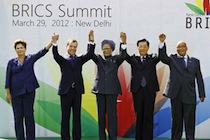
BRICS: Moving in the right direction?

The 4th BRICS Summit in New Delhi has brought a new dimension to emerging markets. The author explains why the summit was perhaps the most significant of the BRICS meetings so far – and one that should have the developed world really worried about their eroding position at the top of the global heap.

Courtesy: PMO
13 March 2012

India-Brazil: pioneers of a new development agenda

India and Brazil have declared inclusive development an imperative and have engineered creative solutions to meet their developmental challenges. But both also face many obstacles to equitable development. Can the upcoming BRICS Summit in New Delhi help drive a new development agenda?

Beware copy Courtesy: upton/Flickr
9 March 2012

Beware of cheap lending from China

While India’s mega-companies are only experiencing the beginning of Beijing’s accommodating bank policy, Brazil and Russia seem to have grown accustomed to Chinese money. Before they meet in New Delhi for the 2012 BRICS summit, it’s important to remember that China’s loans come with strings attached.

5455843055_b765d48e40 Courtesy: Al Jazeera English/Flickr
24 February 2012

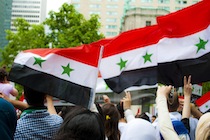
West and Wahabi vs. Shia

The author outlines the partnership between NATO and Wahhabi extremists, and how the West assisted in an armed Sunni movement, which has spread to many countries in West Asia. Consequently, the Shia population suffers from serious discrimination at the hands of Wahabbi.

eu india Courtesy: PIB
13 February 2012

New template for India-EU FTA

As India and the European Union negotiate on a Free Trade Agreement (FTA) in New Delhi, we analyse the relevance and impact an FTA would have on both parties. Can creative methods be implemented to break the current deadlock in negotiations?