Imperatives of regulatory diplomacy
Regulations are the new focus of economic statecraft. Their increasing importance is reflected in the negotiations on global financial standards, plurilateral trading rules, and regional economic unions.
Courtesy: Quartz
Regulations are the new focus of economic statecraft. Their increasing importance is reflected in the negotiations on global financial standards, plurilateral trading rules, and regional economic unions.
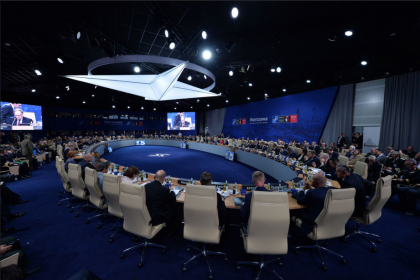
Courtesy: NATO/Flickr
In the aftermath of Brexit, the recently concluded NATO Summit highlighted the emerging asymmetry between NATO and the EU on their respective policy positions towards Russia. Has the expansion of NATO and the EU to absorb Eastern Europe, and the consequent large migration flows, been responsible for the visible cracks within the Europe?
Courtesy: Flickr/Times Asi
China's refusal to accept the ruling of The Hague greatly harms its international reputation and will fuel regional concerns about China's rise. Nationalist sentiments stirred up by a sustained media campaign heighten the risk of a confrontation, but there is also a possibility for the Philippines to use its new leverage to its advantage through new negotiations.
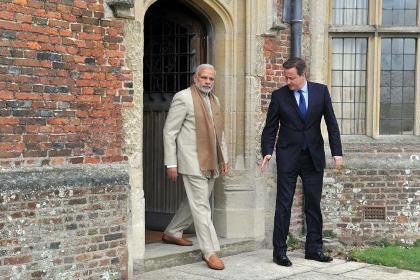
Courtesy: MEA / Flickr
The result of the Brexit referendum is nothing less than a body blow to Bretton Woods organisations, International Monetary Fund-North Atlantic Treaty Organisation (NATO)-World Bank, that originated at the end of the Second World War. The possibility of an Asian century becomes more feasible, if India can be nimble enough to make the most of the opportunity which has presented itself in Europe.
Courtesy: Business Insider
The message from Brexit is simple: the post-second world war financial, trade and industrial order and security arrangements that developed around Bretton Woods, have passed their expiry date. This is the time for countries, regional unions and global institutions to reform themselves – putting people instead of regulations and strategic objectives at the centre of their decision-making.
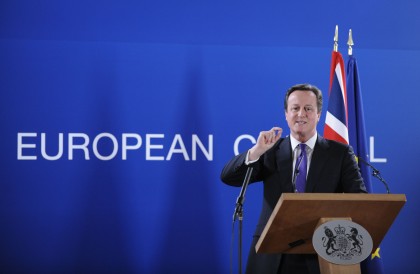
Courtesy: ukrep.be
As the referendum on the UK’s membership of the EU draws near, predicting the outcome remains difficult. While the potential impact of Brexit on the UK has been discussed at length, a vote to stay in the EU could have implications for the UK’s domestic political situation as well as its future relationship with the EU.
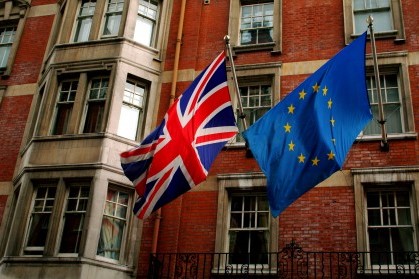
Courtesy: Wikipedia
On June 23, the United Kingdom will vote on whether they wish to remain a part of the European Union through the Brexit vote. The debate surrounding the vote has spurred many a heated and emotional debate. While the Indian government has not declared anything publicly - remaining in the EU would be beneficial to Indian businesses.
Courtesy:
India has applied to be a member of the Nuclear Suppliers Group, but its ambition is being thwarted by China. However, developments in renewable energy mean China’s veto will have little impact on India’s clean energy push.
Courtesy: BBC
At present, South Africa finds itself charting political and economic policy uncertainties. This is not to suggest that the domestic political crisis will see different trajectories unfolding with regard to its BRICS/IBSA engagements, or on a broader foreign policy path, but it will have repercussions at the international level, in terms of investor confidence, credit ratings, and currency volatility. Pretoria will face constant pressure to be seen as a credible actor, especially when it comes to its African identity.
Courtesy: Wikipedia
Does India plan to remodel its Andaman & Nicobar Islands as a launching pad for future security operations to check growing Chinese inroads in the Indian Ocean Region? Development of the islands has long been ignored to India’s detriment, and their strategic position in the Indian Ocean, underutilised.