Website articles  (48) Courtesy: Bayerischer Rundfunk
25 February 2026

Munich diary: Europe at the crossroads

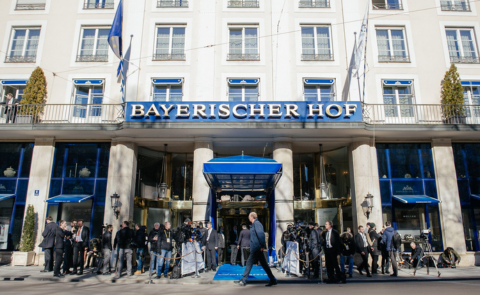
During the week of the Munich Security Conference, Munich transformed into a temporary capital of global diplomacy. Gateway House participated and hosted a Side Event, “Multipolarity without Multilateralism: India, Europe and the Future of Global Order” on February 14. This diary captures observations from the conference and the city, reflecting on Europe’s evolving priorities and how the continent assesses its role in an increasingly fragmented world.
7396fefe-aba2-49fe-a3e5-33b8cea9ebf1 Courtesy: WWF
30 June 2022

Can the WTO Agreement Stop Unsustainable Fishing?

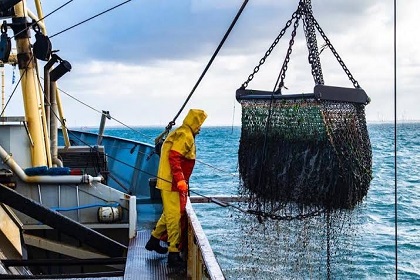
Hailed as historic, the new global rules to curb harmful fishing subsidies is a step towards sustainable fishery practices. The negotiated deal, however, is fraught with concerns over overcapacity in fisheries, deep-sea fishing legislations, and blue finance. It may be better for developing countries to formulate their own regulations and set up mechanisms to prevent illegal fishing within their territorial waters – and hold the WTO agreement to its word.

inserting india into u.s.-israel defence technology cooperation Courtesy: Gateway House
15 April 2021

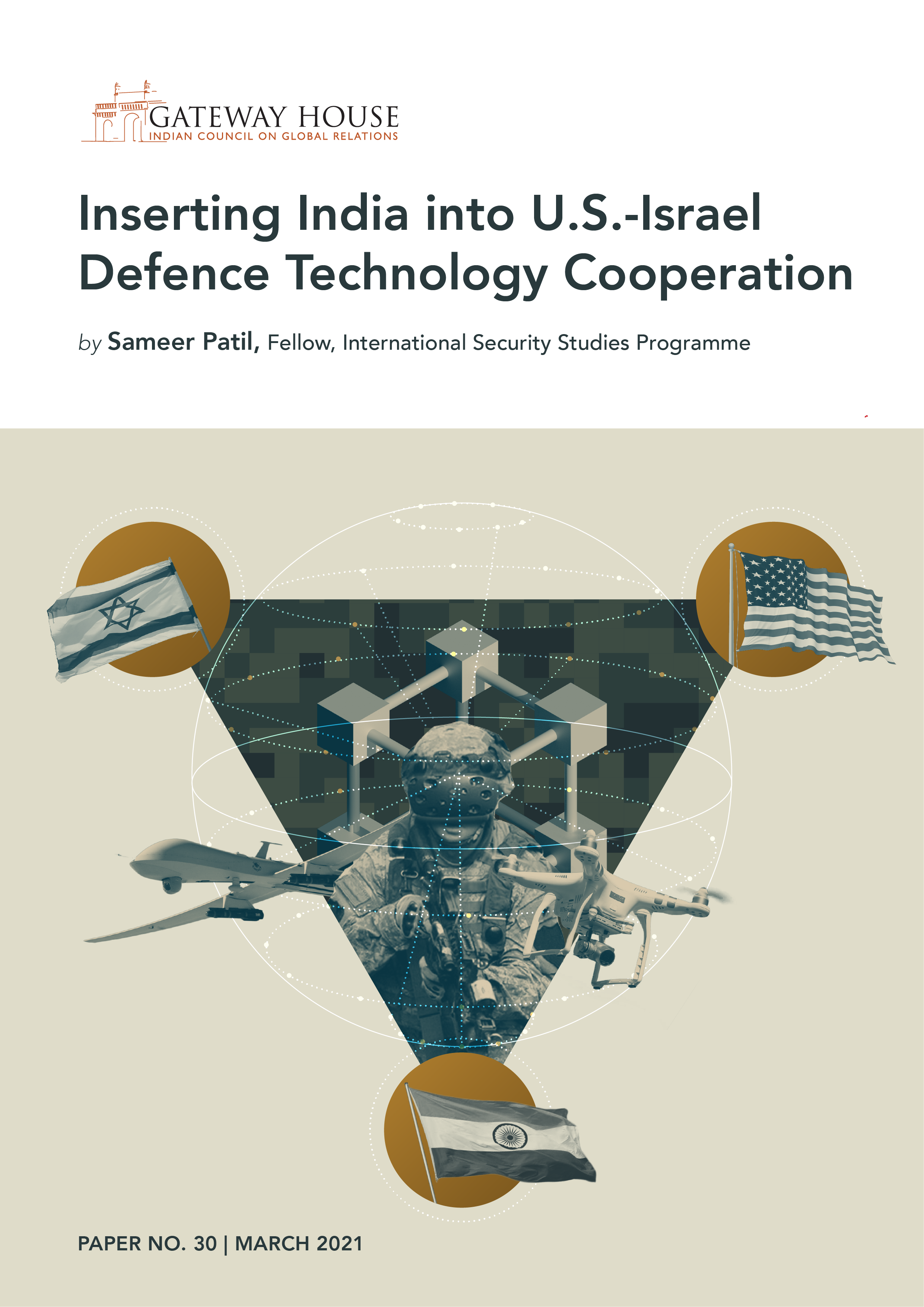
Inserting India into U.S.-Israel Defence Technology Cooperation

Israel and the U.S. have become India's top arms suppliers, with companies from these countries participating in the 'Make in India' initiative. These robust defence partnerships can be elevated, by inserting India into the U.S.-Israel defence technology cooperation corridor. What are the geopolitical and domestic limitations that India must tackle in this effort? What benefit will the U.S. and Israel gain from a partnership with India? This paper studies the U.S.-Israel defence technology corridor, and suggests potential collaborations for India. It recommends the three innovation hubs, Silicon Valley, Tel Aviv and Bengaluru, coming together to maximise their respective strengths and declared national technology priorities.

shutterstock_1091235845 Courtesy: Shutterstock
15 October 2020

UN: Necessary but reformed

The UN turned 75 this year but instead of grand celebrations, the world witnessed an empty UNGA with world leaders addressing it via video screening because of the pandemic. The UN is under unprecedented stress and being shown up for its inability to tackle the challenges of today like the pandemics, climate change, terrorism or global peace and security. The institution's key governing structures, especially the UN Security Council, are inadequate and demand reform. India must now use gritty resolve to ensure its place in these governing structures.

GH_Demonetisation_Web-724x1024 Courtesy: Gateway House
24 November 2016

Demonetisation around the world

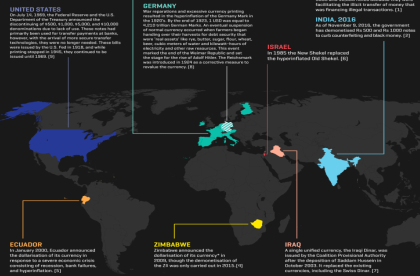
Prime Minister Narendra Modi's announcement on November 8 to demonetise notes of the denomination of Rs 500 and Rs 1000 has a precedent. This infographic traces some interesting demonetisation initiatives around the world. From discontinuation of high denomination notes due to lack of circulation, to the use of beer and water as 'real assets' in place of hyper-inflated currency.

Tokat_darbe_karşıtları Courtesy: Wikipedia
27 July 2016

The beginning of the end for Erdogan

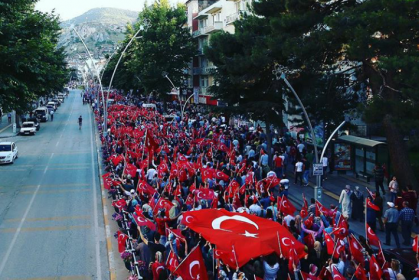
The attempted coup on July 15 in Turkey as well as its aftermath have irreparably dented President Erdogan’s international image and impacted Turkey's standing as a democratic state, a military power, a NATO member, an EU aspirant, and an emerging economy. This downtrend is unlikely to be reversed in the near future and the country is in for an extended period of instability

IS Courtesy: U.S. Staff Sergeant Aaron Allmon
16 September 2014

Modi, Obama and the Islamic State

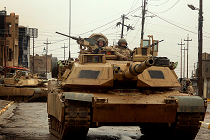
Obama’s strategy to target the IS in Syria within the framework of a U.S.-led international coalition has met with a tepid response. There are reports that the U.S may offer India a non-NATO ally status during Modi’s upcoming visit in a bid to seek greater support – a gesture that India will do well to disregard.

Eu iran Courtesy: European External Action Service
26 November 2013

Iran-P5+1 interim accord: An assessment

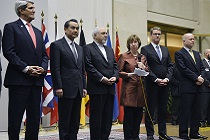
On November 24, the P5+1 and Iran reached a consensus on the interim agreement regarding Tehran’s long-disputed nuclear program. How comprehensive is this agreement, and what are its potential upshots for U.S., and West Asia – especially Israel and Saudi Arabia? More importantly, can India play a positive role?

Courtesy: IAEA Imagebank
9 April 2012

Iran: An opportunity for BRICS

The scope for any process on nuclear talks with Iran to founder on distrust, misunderstanding and political in-fighting in both Tehran and Washington remains formidable. Equally disturbing are the wider political realities. Can the upcoming talks in Istanbul launch a process that can, over time, lead to agreement?