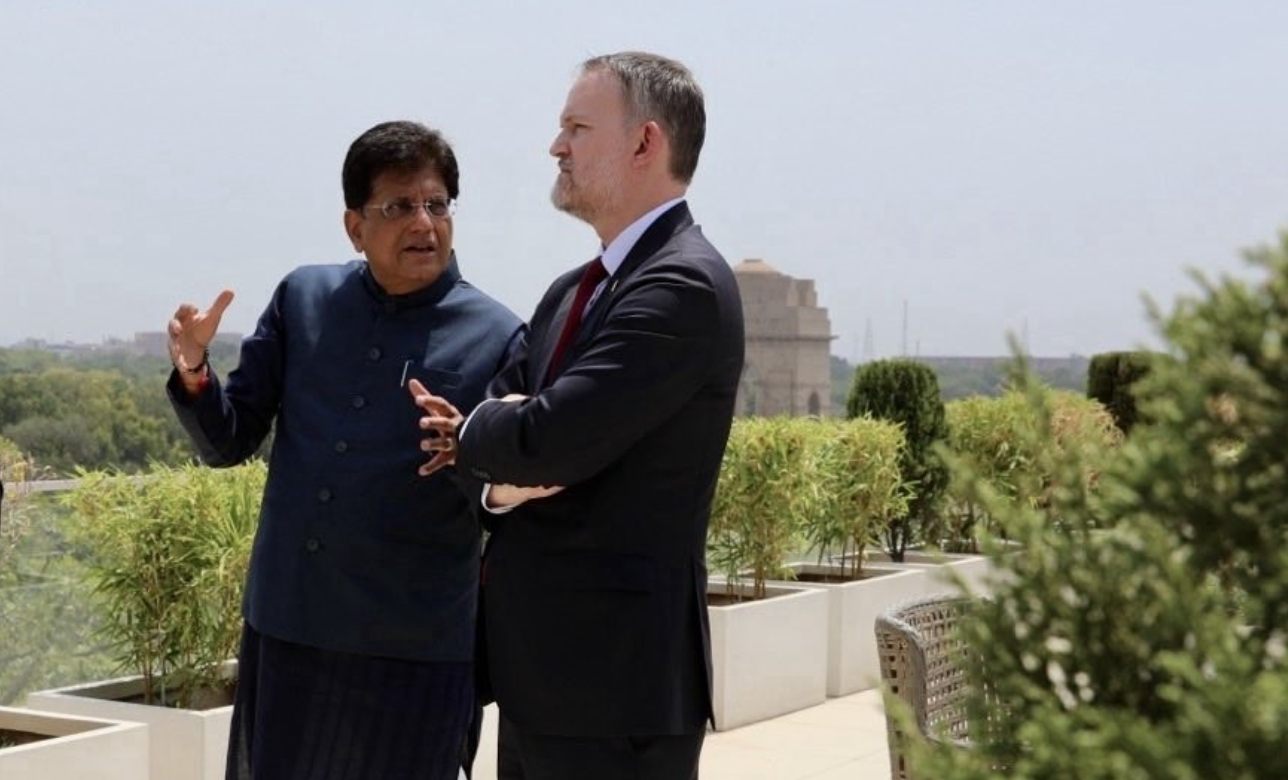
Jamieson Greer and Piyush Goyal Courtesy: X / @USAmbIndia
27 August 2026

New tariffs complicate India-U.S. trade negotiations

The proposed Bilateral Trade Agreement (BTA) between India and the U.S. aims to enhance trade relations by reducing barriers and increasing cooperation in various sectors. But negotiations have reached an impasse largely due to the tariffs implemented during Trump's second administration. India is maintaining a firm stance on key issues rather than softening its position.  

Supporters of the Joint Awami Action Committee (JAAC) Courtesy: AFP
6 August 2026

Protests loosen Pakistan’s hold on Kashmir

The ongoing and violent protests in Pakistan-occupied Kashmir have multiple reasons, but the most contentious is the demand to abolish 12 legislative assembly seats that are reserved for refugees from Indian-administered Kashmir. Islamabad’s civil-military establishment is unlikely to give in to the protestors: these seats allow them to hand-pick winners and control government formation in Muzaffarabad, bypassing local resident voters entirely.

the jerusalem post Courtesy: The Jerusalem Post
16 July 2026

The gulf in the Gulf

The ongoing conflict in the Gulf has created tremendous change. Israel is deeply scarred by the October 7 attacks. Iran retains the ability to go nuclear despite U.S.-Israel attacks. China’s assistance to Iran through intelligence and the supply of parts and chemicals for missiles has been noticed. New formations of countries - either interlocutors, participants or victims of the war – are generating an alphabet soup of influencers.

Dr. RS Courtesy: Gateway House
18 June 2026

Pakistan-Afghanistan: Conflict Without Resolution

Pakistan and Afghanistan have long shared one of the world's most volatile borders. Pakistan's 2025 airstrikes inside Afghanistan marked a dramatic rupture in a relationship Islamabad had once carefully cultivated. Regional expert Raghav Sharma examines the evolving military balance, China’s mediation efforts, the role of the Gulf states, and how the Iran conflict is reshaping Pakistan’s economy and internal fault lines. The result is a region facing multiple crises, where traditional strategic assumptions no longer offer clear answers.

1 (5) Courtesy: Gateway House
11 June 2026

Decoding India’s Neighbourhood dynamics

Nepal’s ruling party leader, Rabi Lamichhane, visited India from June 1-5, 2026, highlighting Nepal’s evolving political priorities under the leadership of new Prime Minister Balendra Shah. A conversation with Nayanima Basu examines how India is faring under its Neighbourhood First and Act East policies and how New Delhi should navigate an increasingly volatile and sensitive region.

Kenny Holston  AP Courtesy: Kenny Holston / AP
4 June 2026

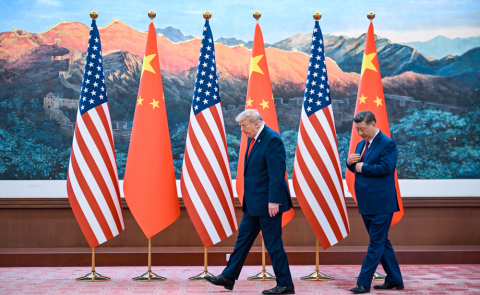
China trumps the U.S.?

President Donald Trump’s May 13-15 visit to China was set against the backdrop of the ongoing U.S.-Israel-Iran conflict. Though the agenda was an economic one, Beijing used the occasion to project itself as a stabilising power, urging dialogue between Washington and Tehran. The visit did produce agreements on trade and investment, but the absence of a joint statement and differing priorities exposed persistent tensions. In this tale of two visits, China seems to have trumped the U.S.

amb HVS (2) Courtesy: Gateway House
7 May 2026

Unfolding Geopolitics Episode 33 |Foreign policy impact of Bengal elections

The state elections in the eastern states of Bengal and Assam have given a massive mandate to the ruling Bharatiya Janata Party. The opportunity for transformation and progress is enormous, especially as both these states are the crucial connectors to India’s Act East Policy. Harsh Shringla, Member of Parliament and former Foreign Secretary of India, says India’s foreign policy will see multiple benefits from these states.

amb sk Courtesy: Gateway House
30 April 2026

Unfolding Geopolitics Episode 32 | Iran after the war: survival and strategy 

history, the Palestine issue, the creation of Israel, and strained U.S.-Iran ties. India’s former ambassador to India, Saurabh Kumar, witnessed the hope of the Joint Comprehensive Plan of Action and its collapse. Unfulfilled hopes have led to reignited tensions. The U.S.-Israeli objectives of regime change are still unmet, and Iran’s survival marks a strategic outcome, despite its domestic economic and military strain. Ambassador Kumar discusses Iran and the ongoing crisis in West Asia. 

20260415_1714_Minimalist Iran Conflict Illustration_remix_01kp8f9nksftqrj3zntfnpktpe Courtesy: Gateway House
15 April 2026

How did Iran fight this war?

The West Asian conflict is raising questions about Iran’s performance. Tehran appeared well-prepared, having expanded its low-cost drone and missile capabilities. It also widened the conflict by targeting U.S. bases in the Gulf. The key lesson is that eliminating leadership does not guarantee regime change. The conflict underscores that modern warfare depends not just on battlefield gains, but also on economic resilience, trade leverage, and technological strength.

rk (3) Courtesy: Gateway House
9 April 2026

Unfolding Geopolitics Episode 30 | The future of Persian Gulf oil flows

Following the U.S.–Iran ceasefire and partial reopening of the Strait of Hormuz, energy flows may resume, but uncertainty persists. Robin Mills, CEO of Qamar Energy, and Amit Bhandari, Senior Fellow on Energy, Investments and Connectivity, Gateway House, note that Iran will retain leverage and will continue influencing prices and supply chains. Natural gas shortages will further disrupt fertiliser production and fuel inflation world-wide.