rk (3) Courtesy: Gateway House
9 April 2026

Unfolding Geopolitics Episode 30 | The future of Persian Gulf oil flows

Following the U.S.–Iran ceasefire and partial reopening of the Strait of Hormuz, energy flows may resume, but uncertainty persists. Robin Mills, CEO of Qamar Energy, and Amit Bhandari, Senior Fellow on Energy, Investments and Connectivity, Gateway House, note that Iran will retain leverage and will continue influencing prices and supply chains. Natural gas shortages will further disrupt fertiliser production and fuel inflation world-wide.
Website articles  (13) Courtesy: Gateway House
5 March 2026

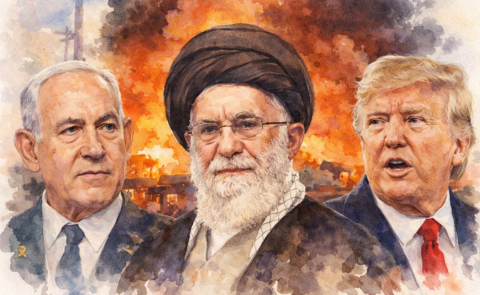
The geometry of attrition: Iran-Israel-U.S. theatre

Early indicators of the ongoing war in West Asia point to a conflict trajectory from the rapid decision to the controlled escalation to distributed strike capacity, advanced military integration and mounting regional exposure. Much like Johann Goethe’s Sorcerer’s Apprentice, conflicts initiated based on assumptions of control can acquire a momentum of their own.

Website articles  (51) Courtesy: Gateway House
4 March 2026

Unfolding Geopolitics Episode 29 |War and uncertainty in Iran today

The assumption that the Iranian public will rise up against its religious and political leadership, seizing the opportunity provided by Israel and U.S. strikes against Iran, may not prove true. Iran’s civilisational structure is resilient, and its educated population may not like being dictated to by the West. Raja Karthikeya, a former international civil servant based in Tehran, examines the escalating U.S.-Israel conflict with Iran, its regional and domestic implications and the tenacity of Iran’s political system amid external pressure.

News on Air (3) Courtesy: Gateway House
29 January 2026

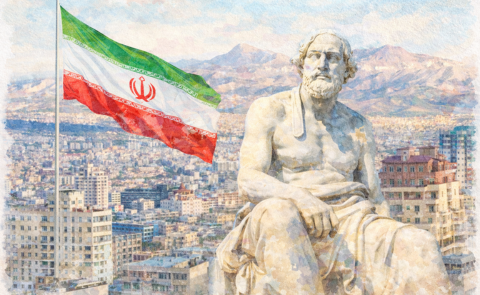
Iran: away from the Thucydides trap?

Iran has often stood at the crossroads of social and political metamorphosis and regional geopolitical recalibration, from the Islamic Revolution of 1979 to the attrition of the Iran-Iraq War. The current landscape reflects the convergence, once again, of internal pressures and sharper deterrence postures, that the social compact—from a Lockean and Rousseauian perspective—needs a new edition, and that timely diplomacy to prevent escalation is required.

Website articles  (3) Courtesy: AFP
13 November 2025

Pax Fragilis in Gaza: rupture and repair

The arc of revolutions has two acts: rupture - upending the status quo - and the craft of repair. Often, the second is as hard as the first. Today's Pax Fragilis in Gaza is narrow, given the continuing humanitarian crisis, regional reactiveness, limited scope of de-escalation channels, multiple actors' motivations for a permanent ceasefire, and the capabilities of Israel and Palestine to build a pathway with certainty.

netanyahu-gallant Courtesy: The Jerusalem Post
19 October 2023

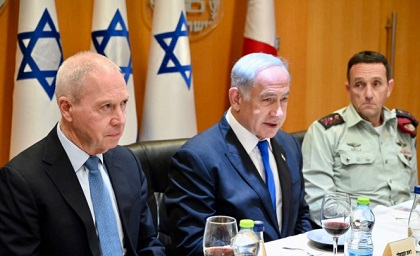
The unprecedented days of October

The October 7 intrusion of Hamas into Israel has exposed a respectable military institution and one of the most influential intelligence agencies, impacting their image in a contest where prestige is crucial. It weakens the Palestinian Authority internally and abroad, diminishes any peace processes, buries hope of a two-state solution, and marks the beginning of an unprecedented phase of war with repercussions far beyond the region.

Bin_Salman__Reuters_ Courtesy:
9 November 2017

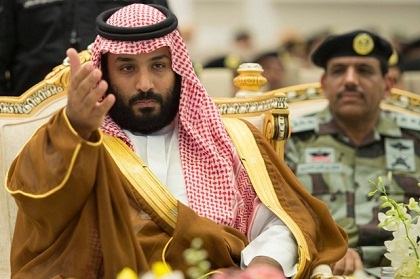
Saudi purge: Arab Spring 2.0?

The removal of 11 top ministers in the Riyadh government last week by the young crown prince Mohammad bin Salman, is a geopolitical upheaval, the implications are serious. Domestically, the kingdom is seeking to liberalise its conservative society and move away from oil-dependency – evident from the expected listing of its crown jewel Aramco. For India, which imports oil largely from West Asia, instability could cause a spike in prices, leaving less for its ambitious reforms. Globally, there is now space for new alignments – in the Great Power plays, in the Shia-Sunni rivalry, and in the war on terrorism.

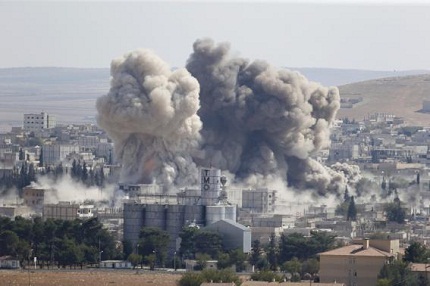
Smoke rises after an U.S.-led air strike in the Syrian town of Kobani Ocotber 8, 2014.     REUTERS/Umit Bektas Courtesy: IB Times
22 December 2016

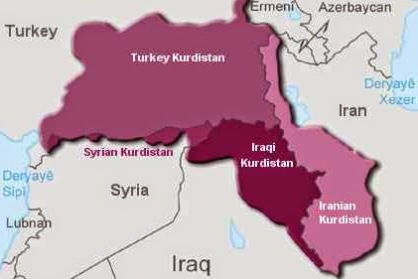
Syria: energy battles to regional alliances

Aleppo is back under the control of the Syrian government, the Russian ambassador to Ankara is assassinated for his country’s role in Syria, and U.S. President-elect Donald Trump wants to cooperate with Russia to fight ISIS in Syria. These momentous events in modern history compel an assessment of the geopolitics surrounding Syria.

nice-attack-1 Courtesy: The Independent/AP
20 July 2016

Islamic State and France: mortal enemies

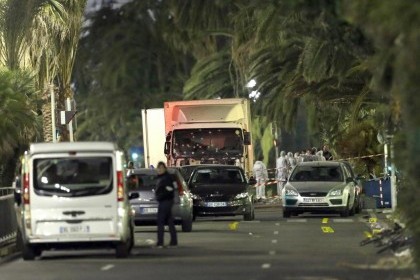
France's state policy of 'laïcité' (secularism) and its military interventions in Islamic countries has made it the prime target of IS in the West. The hardline French response to step up bombing campaigns against jihadis in Syria, Iraq, and Mali will likely continue, but conversely feeds IS strategy, which is to foment anti-Muslim sentiment among the non-Muslim French population.