Indo-Pacific Security Quad Courtesy: Indian Navy
3 January 2018

A case for the Quad’s reappearance

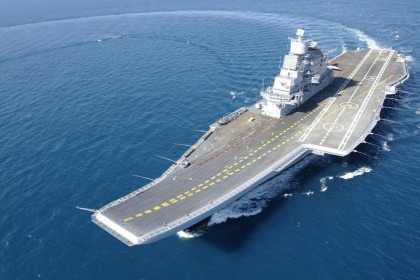
A noticeable feature of 2017 was China’s aggressiveness, which it deployed openly to advance its interests in the eastern rim, Southeast Asia, Central Asia and South Asia. This could well be the impetus for the consolidation of a broad front of China-wary nations in 2018
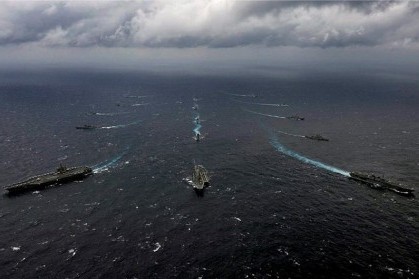
malabar-2 Courtesy: PTI
3 August 2017

Malabar 2017’s geostrategic dimensions

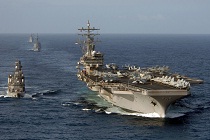
The historical evolution of the Malabar Exercise and the currently fraught relations between the participating countries and China created a much sharper context for the event, with the Chinese evincing a heightened interest in it

IORA photo Courtesy: Gateway House
2 March 2017

IORA summit: sharing commonalities

The two decade-old Indian Ocean Rim Association holds its first ever summit next week. Maritime safety and security in the region is a paramount concern as also enhanced trade, but will the Blue Economy be included as a priority? Another area of concern is devising modalities for cooperation with dialogue partners, such as the United States, China and Japan

1200px-Malabar_07-2_exercise Courtesy: Wikipedia
14 February 2017

A democratic quadrilateral in Asia?

A strategic coming together of the U.S., Japan, Australia, and India was close to fruition some years ago, impelled initially by the tsunami of 2004. The spirit of the enterprise remains alive even now, and there are many merits in India joining the quad, but such an arrangement can skew existing Asian equations, jeopardising the Act East policy

South pacific islands Courtesy: qdkfqsz.com
18 November 2014

A comprehensive Pacific policy

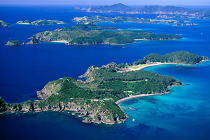
Prime Minister Modi's Fiji visit is a chance to broaden and deepen the relationship between India and the South Pacific. Promoting an inclusive policy that engages civil society and the private sectors of both countries, will be a step in the right direction in order to regain lost ground due to years of neglect

australia-uranium-mine Courtesy: mining.com
4 September 2014

India-Australia nuclear deal: a pivot point

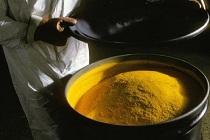
This week Prime Minister Modi will meet his Australian counterpart Tony Abbott for the second time in two months. New Delhi and Canberra have already signed a civil nuclear deal which will supply much needed uranium to India’s reactors and remove a big thorn in the relationship between the two nations. The deal is the pivot to take the bilateral forward

RIMPAC Courtesy: Seaman James R. Evans/Wikimedia Commons
14 April 2014

Australia’s submarine choice

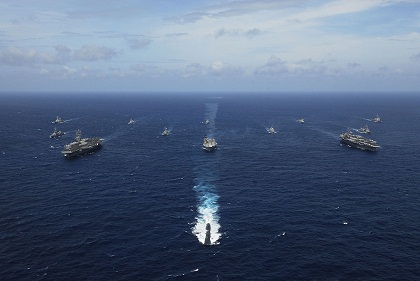
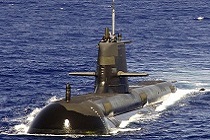
Australia is the second largest naval power among the Indian Ocean states and its submarine fleet represents its principal strategic force. Australia will be replacing its fleet with some of the largest and most capable conventional submarines in the world. Its decisions could hold important lessons for India

milanspikecallusnavy Courtesy: Spike Call U.S Navy/Wikimedia Commons
21 February 2014

Shaping regional diplomacy

The Indian Navy, through multi-lateral exercises, is increasing its sphere of influence and becoming a regional force. Yet, it needs to be supported by policy decisions that enable it to achieve its potential as a state-of-the-art establishment and a powerful tool in India’s diplomatic repertoire

ind jap Courtesy: generalising/Flickr
6 November 2013

The new Indo-Pacific core

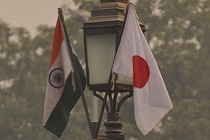
The India-Japan alliance needs to be viewed through a prism broader than that of "containing" China, and by treating the Indian and Pacific oceans as a single entity. Such an alliance has the potential to strengthen the geopolitical security of India and Japan, along with that of all their allies and associates