New Spotlight Magazine Courtesy: New Spotlight Magazine
19 June 2025

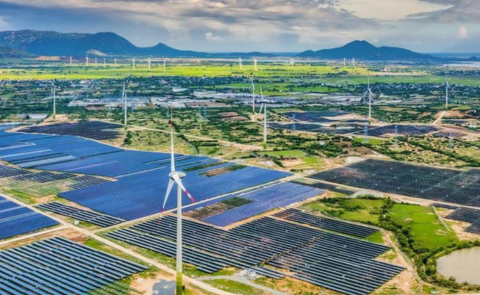
A case for South Asia energy connectivity

Building a robust engagement with India on energy can help offset some of the economic and political crises that most of India’s neighbours are facing. Smaller South Asian neighbours will benefit from cheaper electricity and oil, paving the way for greater regional economic cooperation.

Joint Statement from the Quad Foreign Ministers’ Meeting in Washington Courtesy: U.S. Embassy & Consulates in India
19 June 2025

Reappraising QUAD post Pahalgam

The July 2 meeting of the QUAD foreign ministers in Washington, D.C., restated all the commitments of the grouping, including a condemnation of the April 22 terrorist attacks on Pahalgam. Yet, none of the QUAD countries actually came to the aid of India, despite China being a present player in the fight, in full support of its partner Pakistan.

QUAD (1) Courtesy: Times Now
13 June 2025

India-U.S. Trade Agreement nearing reality

India and the U.S. are now on the verge of establishing a comprehensive trade agreement, overcoming a long history of bilateral trade challenges. This is a pivotal moment that could lead to mutual benefits and a deeper partnership. It will also illumine the path for other modern trade agreements that India is currently negotiating with multiple countries.

Website articles  (21) Courtesy: News Arena India
12 June 2025

G7 Summit: Plethora of opportunities

Canadian Prime Minister Carney can use the upcoming G7 summit he is hosting to advance the North-South dialogue and cooperation and also to discuss the strained bilateral with India. India can articulate the viewpoint of the Global South, stressing its conviction that the G7 is better served by constructively working with developing and emerging economies.

IMEC map with source Courtesy: Gateway House
11 June 2025

IMEC: more than just a corridor

The proposed IMEC corridor connecting India to Europe through the Gulf can be transformative, helping to reduce risks to the global movement of goods and data. It’s early days yet, and there are gaps to be filled in terms of missing infrastructure and overcoming a diplomatic rift.

Website articles  (18) Courtesy: Reuters photo
28 May 2025

Strategy meets statecraft: Trump in Riyadh

Presidential visits abroad are high-level instruments of statecraft and, more often than not, signals of geopolitical priorities. The recent visit of U.S. President Donald Trump to the United Arab Emirates, Saudi Arabia, and Qatar, exemplified this, indicating the administration's policy orientation.

podcast MK Courtesy: Abhijit Chavda Podcast
27 May 2025

Emerging Middle Powers beyond U.S. and China

The rules-based world, perceived to be functional till last year, seems broken, giving way to an increasingly multipolar order. Manjeet Kripalani, Executive Director, Gateway House discusses in the Abhijit Chavda podcast, how emerging middle powers like India, Brazil, and Indonesia to name a few, have the heft to rewrite the rules of global trade and reform, away from U.S. and China.

India Today (1) Courtesy: India Today
26 May 2025

India’s evolving defence doctrine

The Pahalgam attack has changed India’s strategic calculus. With Operation Sindoor, the country is moving towards a more assertive posture, consolidating its strategy around an evolving doctrine of Proactive Deterrence underpinned by Calibrated Coercive Capability. A strategic practitioner’s viewpoint is below.

Website articles  (19) Courtesy: Reuters
22 May 2025

India-UK FTA: Four benefits for India

The India-UK Free Trade Agreement comes amidst increasing economic uncertainty caused by the Trump administration’s reciprocal tariff policies. The FTA has revitalised previously lethargic discussions for India to conclude FTAs between like-minded countries. An India-EU FTA, along with the India-UK FTA, may reform global rule-making on international trade and perhaps even revive the WTO.

Getty (1) Courtesy: Gateway House
15 May 2025

The New Geopolitics and South Asia’s Trade Architecture – What Next?

Geopolitics is increasingly intertwined with the economic destiny of South Asia. Even before the U.S. tariffs were rolled out, growing polycrises had hit the global economy, which has been struggling since the pandemic. South Asia seems a relatively bright spark of regional trade and growth. This paper analyses South Asia’s trade architecture in the backdrop of a sluggish world economy in the 2020s, and makes recommendations for closer regional economic integration.