35830442835_e9239714cf_c Courtesy: MEA/Flickr
20 August 2020

India-Mexico: new strategic partnership?

India and Mexico will both be non-permanent members at the UNSC for 2021-22. Although located on different sides of the globe, culturally, the two countries share more in common than expected. As fellow non-permanent members of the UN Security Council as well as pro-active members of G20, the two countries need to intensify their mutual dialogue and cooperation on how to overcome the current weakening and impasse in the multilateral system.

Edm7TMnUEAEZlk6 Courtesy: Shutterstock
6 August 2020

QUAD or SQUAD?

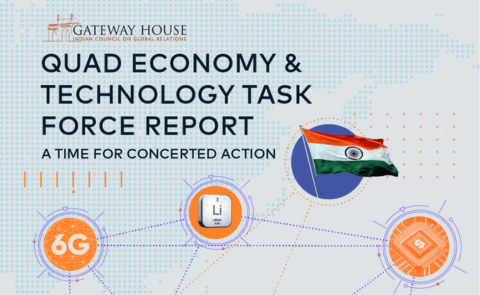
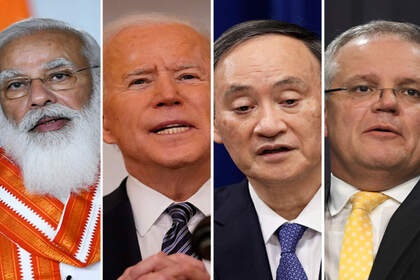
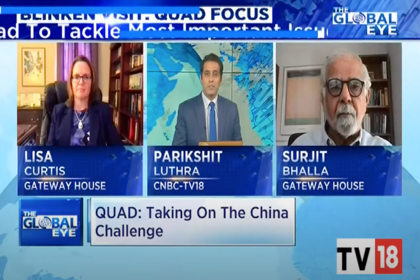
The Quad, a grouping of Indo-Pacific democracies, is more relevant than ever. It must now operationalise not just the military exchanges but also formalise economic and technology partnerships that will undergird a meaningful new multilateral, provide it with resilience and appeal in the Indo-Pacific region. In this Webcast, co-hosted by Gateway House and Konrad-Adenauer-Stiftung, the panelists discuss the need to reform Quad, which hosts the four leading global voices, in order for it to become the magnet that attracts like-minded nations, small and big cutting across continents and oceans to converge on the new world order realities.

CG Courtesy: USGS/Wikimedia
6 August 2020

Geospatial shutter control for India

The recent use of geospatial analyses by Indian social and mainstream media for near real-time defence and military intelligence in Ladakh has been made possible because of the lower cost of earth-observation satellite construction, and thereby, easy access to satellite imagery on the internet. While independent analysis is useful, the same intelligence can be also used against the interests of a sovereign nation by an adversary, especially border imagery. India must find innovative methods to reduce this vulnerability of commercial satellite imagery.

shutterstock_1752673730 Courtesy: Shutterstock
30 July 2020

A New World for India and the United States

The recent rush of U.S. capital into India’s digital future, and India’s recent structural reforms, is the impetus for an attractive collaboration between the U.S. and India. To really succeed, the U.S. will have to support India with the same kind of technical assistance and best practices in areas like regulation, distribution, and innovation, that it gave China. The alternative is for India to follow Europe’s regulatory model, which places less of an emphasis on job growth and innovation.

India-Canada_Olaf Weber Courtesy: Gateway House & CIGI
14 July 2020

Sustainable Energy through Green bonds in India

India’s energy future needs to be low-carbon, climate-resilient and protected against price fluctuation. It can meet these needs by investing in Canadian oil companies, given the country’s political stability and rule of law. India can also attract greater foreign direct investment at home through the issuance of green bonds, a climate finance debt instrument that addresses environmental and climate-related challenges. This paper explores the regulatory perspective of the green bond market.

India-Canada Energy Cooperation Courtesy: Gateway House & CIGI
9 July 2020

India-Canada energy cooperation

Canada has been one of the biggest success stories in oil over the past few years. India should consider financial investments in Canadian energy assets as a means to secure its energy supplies. This paper studies the feasibility and prospects for Indian investment in Canada's petroleum sector.

Final Cover-Cooperation in Trade in Services Courtesy: Gateway House & CIGI
23 June 2020

Cooperation in Trade in Services

The shift in the global trend from trade in goods to trade in services, especially digital services has focused attention on the necessity of a modern and robust regulatory framework for it. The bilateral steps by India and Canada outlined in this paper can feed into current efforts by multilateral institutions to develop a universal framework for capturing services trade data.

QUAD Courtesy: Shutterstock/Gateway House
18 June 2020

Quad, China and the Indo-Pacific churn

China’s escalating actions in the wake of the COVID-19 catastrophe is a calculated strategic diversion and risk. In the Indo-Pacific, tensions between China and the U.S., Australia, India and others are building momentum. As a geopolitical partnership, the relevance of the Quad is now proven. There are clear ways to empower it immediately, and make it a resilient grouping.