Website articles  (42) Courtesy: Gateway House
19 February 2026

Unfolding Geopolitics Episode 27 |Indian diaspora and new India-U.S. equation

In February 2026, India and the U.S. announced an Interim Trade Agreement framework, advancing toward a full bilateral trade pact and deeper economic integration. Beyond government ties, the relationship is increasingly shaped by supply chains and diaspora influence. Now over five million strong, the Indian diaspora plays a pivotal role across technology, finance, and innovation, creating new pathways for cooperation in a rapidly transforming global order.
Website articles  (41) Courtesy: ANI
19 February 2026

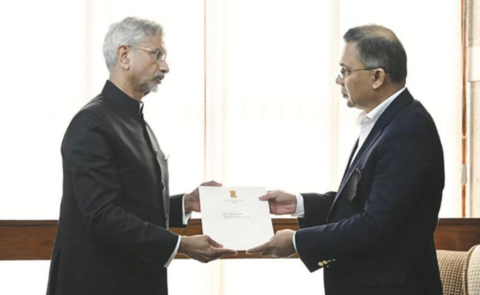
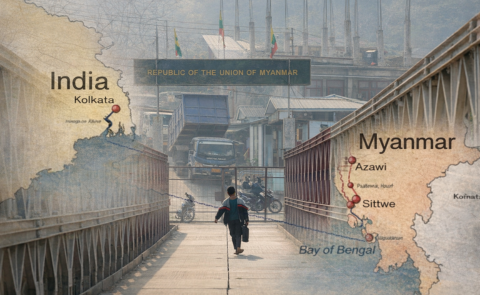
India and Myanmar after the military Coup

The Myanmar military coup of 1 February 2021 derailed a decade-long experiment in limited democracy, triggering violent resistance, armed conflict, fragmentation, and humanitarian crises. As instability deepens and global attention wanes, Myanmar’s turmoil carries significant implications for India, particularly along the border regions. With China’s growing footprint and ASEAN’s limited mediation, India must carefully navigate its Act East and Indo-Pacific strategies while sustaining people-to-people ties.

2 (12) Courtesy: Ingram Pinn
19 February 2026

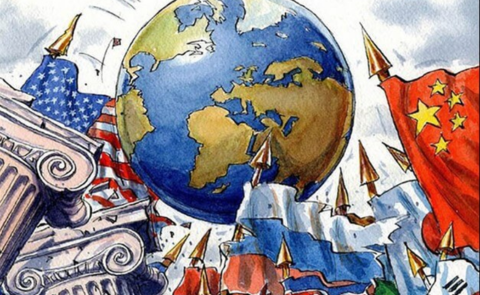
Managing multipolarity in a multilateral world

Multipolarity indicates who holds power, while multilateralism is about how states choose to cooperate. In today’s world, power is diffusing and interdependence is deepening simultaneously. A multipolar world creates fluid alignments and strategic competition, but multilateralism manages interdependence through rules and institutions. The world is becoming both, simultaneously, requiring states to manage competition, preserve cooperation, and stabilise an increasingly complex global landscape. That is easier said.

2 (8) Courtesy: ANI
11 February 2026

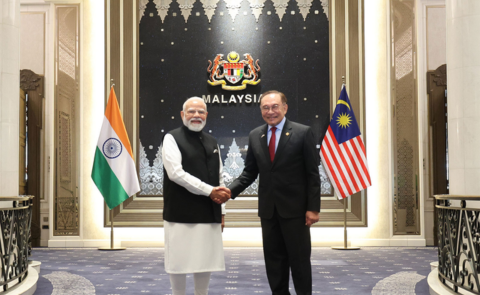
Modi brings momentum with Malaysia

From 7-8 February, Prime Minister Narendra Modi visited Malaysia to review the current state of bilateral ties and explore new avenues of cooperation. The focus was to deepen and diversify the economic dimension of the engagement. Two factors will help achieve this: Malaysia’s role in the ASEAN–India Trade in Goods Agreement review, and India’s enhanced negotiating weight following the signing of recent Free Trade Agreements. Both sides must now translate intent into action.

2 (3) Courtesy: Getty Images
5 February 2026

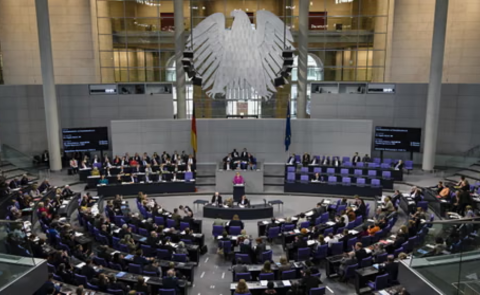
Germany’s reform under strain

Germany’s prospects in 2026 are defined by tension rather than momentum. The country is neither in crisis nor comfortably on a path to renewal. Instead, it is engaged in a difficult process of adjustment, seeking to reconcile fiscal restraint with strategic ambition, social protection with demographic reality, and climate leadership with industrial competitiveness.

2 (2) Courtesy: Niamul Rifat
5 February 2026

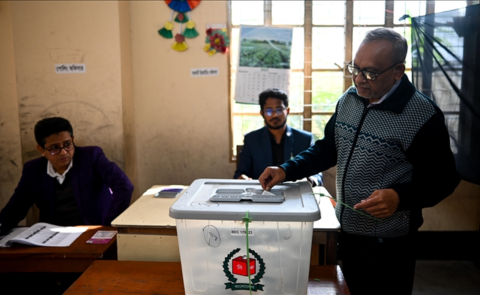
Will Bangladesh polls achieve stability?

In less than a week, on 12 February, Bangladesh will witness one of its most consequential parliamentary elections. The same day, the people of Bangladesh will also vote on a referendum that seeks to overhaul the country’s governance structure. The outcome of both, whichever way they turn out, is likely to pull Bangladesh into a vortex of political turmoil.

News on Air (4) Courtesy: DD News
29 January 2026

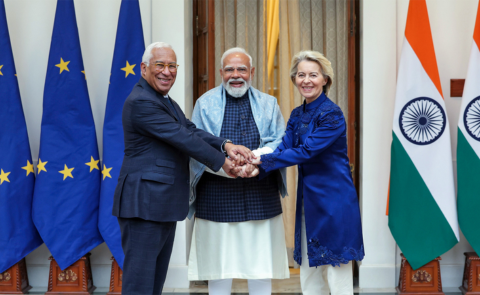
The European pivot to India

By signing the EU-India Free Trade Agreement on January 27, the ties that bind India and the European collective have been re-energised. They are now set to reach new heights, while overcoming past hesitations and divergences.

News on Air (3) Courtesy: Gateway House
29 January 2026

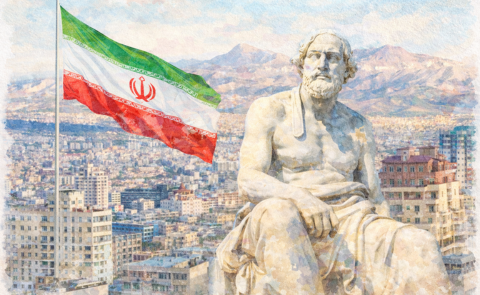
Iran: away from the Thucydides trap?

Iran has often stood at the crossroads of social and political metamorphosis and regional geopolitical recalibration, from the Islamic Revolution of 1979 to the attrition of the Iran-Iraq War. The current landscape reflects the convergence, once again, of internal pressures and sharper deterrence postures, that the social compact—from a Lockean and Rousseauian perspective—needs a new edition, and that timely diplomacy to prevent escalation is required.

Website articles  (37) Courtesy: GK newspaper
22 January 2026

Delhi and Dhaka can walk together

On 12 February, Bangladesh will go to the polls to choose a new leader. India should work to maintain a robust and cordial working relationship with the new regime as it did during Sheikh Hasina’s tenure. The new government in Bangladesh should prioritise eliminating anti-India sentiments before they become entrenched, to prevent security challenges for itself and the region.

Website articles  (35) Courtesy: Getty Images
22 January 2026

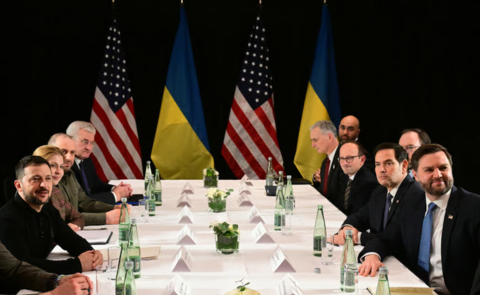
Can NATO survive without Article 5?

The U.S. demand for Greenland for security purposes, has alarmed Europe enough for talk of Article 5 of NATO’s collective defence agreement to be put on the discussion table. But can NATO survive without Article 5? And can Article 5 survive without the U.S. defence cover for Europe?