bimstec 2022 Courtesy: BIMSTEC
31 March 2022

BIMSTEC steps forward

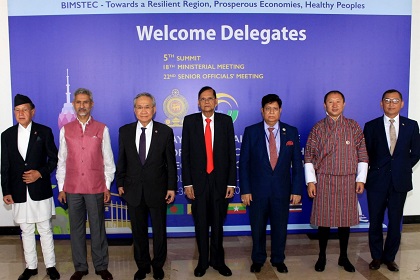
BIMSTEC is of special importance to India as it is a crucial link between the Neighbourhood First and Act East policies. This almost 25 year old multilateral can contribute to the Indo-Pacific region by addressing challenges in strategic areas of regional connectivity, security cooperation, free trade, and geoeconomic ties with external partners.

suiso frontier Courtesy: TIME
24 March 2022

Green Hydrogen in the Indo-Pacific

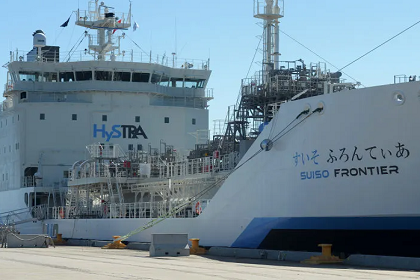
Last month, the Government of India released its Green Hydrogen Policy with the goal of boosting energy self-reliance and inspiring clean energy transitions. The time is right for the Indo-Pacific economies to finance green hydrogen projects and integrate them into supply chains.

TDB_car_151021 Courtesy: TDB
24 February 2022

Enhancing Regional Financial Intermediation in the Indo-Pacific

Financial intermediaries are critical lubricants for business, growth and development. The Indo-Pacific countries are industrializing, but smaller nations lag behind economically. The Quad countries can aid the advancement of the financial architecture in the Indo-Pacific by helping to develop an ecosystem, modelled on the examples of Japan and India.

0014 Courtesy: Gateway House
17 February 2022

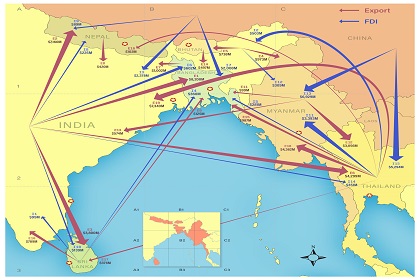
Financial connectivity in the Bay of Bengal

Multilateral funding can aid regional financial connectivity between the Bay of Bengal states, where financial networks are scarce. India's successful fintech can be mobilised to create a local ecosystem of startups with better access to funds and strong ties to the Indian market.

amb saurabh kumar Courtesy: Ministry of External Affairs, Government of India
3 February 2022

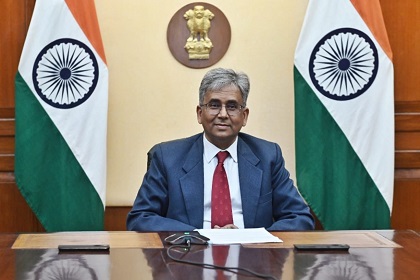
India’s Indo-Pacific vision

Saurabh Kumar, Secretary (East), Ministry of External Affairs, Government of India, delivered the keynote address at the panel discussion on India in the Indo-Pacific: Pursuing Prosperity and Security, organised by Gateway House and the U.S. Embassy, New Delhi, on 1 February 2022. He outlined India's vision for a free and inclusive Indo-Pacific, and the initiatives undertaken to further cooperation among nations in the region.

india central asia Courtesy: ANI
25 January 2022

Quantum leap forward with Central Asia

India hosted a summit with five Central Asian states on January 27, marking 30 years of diplomatic relations with the region, and an important step forward to pursue greater connectivity between India and Central Asia. New Delhi's engagement holds promise for ambitious bilateral agendas including security in Afghanistan, the revival of dormant projects, and potential collaboration in renewable energy, space and information technology.

Afg_Province_Poppy_cultivation hp Courtesy: UNODC
19 January 2022

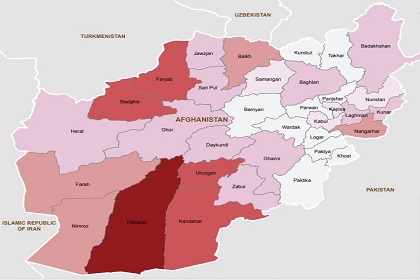
Funding the insurgency: The Taliban in Afghanistan

The Taliban's resurgence since 2001 has been largely funded by the creation of an opium economy and extortion. Now, with the withdrawal of U.S. troops, legitimate aid from Afghanistan and the freezing of Afghan funds abroad, the Taliban will revive its informal sources of finance to stay afloat. A look at the financing that brought the Taliban back to Kabul.

DRUK HYDRO DAM Courtesy: Druk Green Power Ltd
18 November 2021

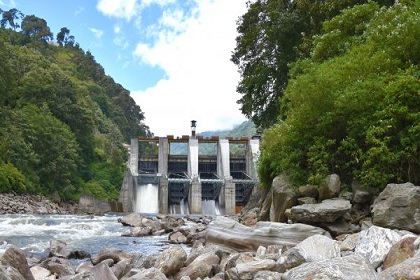
Bay of Bengal connectivity

The Bay of Bengal is gaining relevance as a significant sub-region within the Indo-Pacific. Despite its importance to regional security, there is inadequate financial, physical, and energy connectivity. India must use its strategic and political pre-eminence and influence in the sub-region to pursue deeper connectivity with Bangladesh, Myanmar, Thailand, Nepal, and Sri Lanka and to block China's growing influence.

bcim corridor Courtesy: Institute of Peace and Conflict Studies
9 November 2021

Physical connectivity in the Bay of Bengal

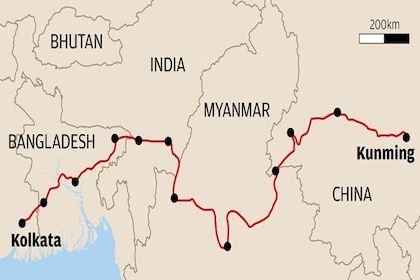
China is a clear winner in the physical connectivity stakes in the Bay of Bengal, and there's a reason a why: Its projects are connected to one another, from rail to road to port. While India also has some successful cross-border road and rail infrastructure projects, they are often an extension of an existing railway line or highway, not specific to the connectivity needs of the region. India can win by focussing instead on building infrastructure to maximise the vast maritime potential of the Bay of Bengal, especially the Andaman and Nicobar Islands that give India access to critical sea channels and trade routes.