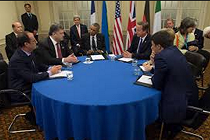
NATO Courtesy:
11 September 2014

NATO’s illusory power

Contrary to some current commentary, NATO has remained relevant after the post-Cold War period, largely due to the perceptions it still engenders. While its symbolic power still endures, a rapidly changing international order could make it obsolete in the near future, as new narratives take its place.

marina silva Courtesy: wikimedia commons
10 September 2014

The rise of Marina Silva

Brazilian president Dilma Rouseff's bid for re-election has been ambushed in just two weeks by activist Marina Silva who is now predicted to win the October elections. If elected, Marina is likely to continue with the pro-poor policies of the current government, and she has already shown a keen interest in foreign policy. PM Modi will find Marina more proactive and forthcoming than Rouseff

images Courtesy: fcpamericas.com
4 September 2014

Poverty and politics

The credit for significant poverty reduction achieved in the last decade in Latin America goes to the pro-poor policies of the leftist governments. The Left is expected to be voted back to power in the October elections to be held in Brazil, Uruguay and Bolivia. The increase in affordability power is good news for the Indian companies who are exporting goods to the region

Argentina protests Courtesy: wikimedia
22 August 2014

Washington and the Argentine default

The Argentines blame the 'Washington Consensus' for the default in 2001, and the New York judiciary and vulture funds for the 'artificial default' in July this year. These are challenges not just for Argentina; they endanger the global debt restructuring system and contradict U.S. domestic laws

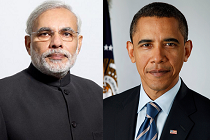
Modi-Obama Courtesy: Gateway House
22 August 2014

Can the U.S. up the game with India?

The Modi-Obama meet in Washington will be crucial to take the India-U.S. bilateral forward. The meet will test the commitment of both administrations and hence the dialogue must focus on deliverables such as defence co-operation and LNG exports to create a roadmap for concrete progress

US2 Courtesy: Owlpacino
14 August 2014

Indian union and American federalism

Although the histories, levels of economic development, and critical issues of India and the U.S. are different, the confrontational party politics in their political systems pose similar challenges. Both countries can learn from the experience of federalism of the other to take their national agendas forward

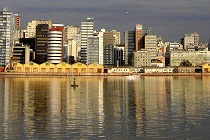
porto alegre Courtesy: wikimedia\commons
14 August 2014

Federalism, swaraj and Brazil

Brazil follows a more decentralised form of federalism and gives special importance to the municipalities. Porto Alegre’s successful 'participatory budgeting' is a role model for the world. India can learn from both the positive and negative aspects of the Brazilian system

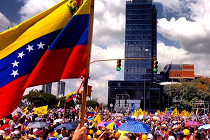
VenProtests-2014 Courtesy: durdaneta/Wikimedia
8 August 2014

Latin America slowdown

Latin America’s economic growth has slowed down in 2014. But the region’s fundamentals are relatively strong, and have the resilience to absorb external shocks and increase growth in the coming years. However, Argentina and Venezuela face continuing uncertainty and deterioration.

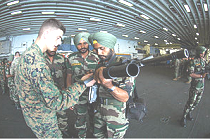
Hagel2 Courtesy: Joshua Martin
7 August 2014

Hagel in India: building greater synergy

U.S. defence secretary Chuck Hagel’s visit is the third in a flurry of visits by top American officials before the scheduled Modi-Obama meet in September. Hagel’s visit will aim to enhance an already well-established defence-trade partnership and allay fears of the Pentagon’s bias towards Pakistan

Latin-America-gaza Courtesy: news.yahoo.com
5 August 2014

Latin America takes a stand

The sharp Latin American response to the Israeli bombings in Gaza, on the back of solid support from the U.S., is attributable to the memory of the atrocities committed by past Latin American military dictators with similar U.S. backing. Their strong response is also a sign of the increasingly independent and assertive Latin American voice on the global stage