Badi Soch: The state of secularism in the subcontinent
This daily column includes Gateway House’s Badi Soch – big thought – of the day’s foreign policy events. Today’s Badi Soch looks at how secularism is faring in South Asia.


This daily column includes Gateway House’s Badi Soch – big thought – of the day’s foreign policy events. Today’s Badi Soch looks at how secularism is faring in South Asia.
 Courtesy: PML-N
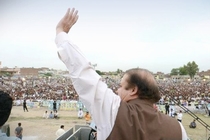
The high level of enthusiasm expressed by New Delhi – for former Prime Minister Nawaz Sharif’s expected return to power – may perhaps be premature. India be patient with the new government in Islamabad.
 Courtesy: Martin H./WikimediaCommons
Will former Pakistani Prime Minister Nawaz Sharif prove to be his country’s saviour, one that can make Pakistan the ambitious transit economy it can be? However, the most needed and least controversial angle from which India and Pakistan’s new government can begin to engage is through business and trade.
For the first time since 1947, Pakistan, on May 11, succeeded in transitioning from one elected government to another. Gateway House interviews Arun Nanda, Director, Mahindra Group, on the prospects of India-Pakistan trade in the new political environment.
This daily column includes Gateway House’s Badi Soch – big thought – of the day’s foreign policy events. Today’s focus is on the elections and new government in Pakistan.
 Courtesy: rwoan/Flickr
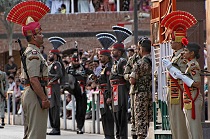
Pakistan’s national elections will take place in the backdrop of a troubled economy, severe energy crisis, and frequent terrorist attacks. Can these problems be solved if the next leadership agrees to open its territories for trade and transit purposes between India and Afghanistan?
 Courtesy: Kremlin
In the closing remarks of the online debate, titled ‘The civil-military equation in Pakistan,’ Daniel Markey concludes that the question for civilian leaders is not whether they can stave off military rule, but if they can find a way to put their country on a better path for the future.
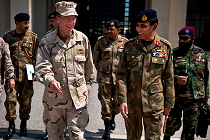 Courtesy: United States Navy
Gateway House’s Ambassador Neelam Deo, in a debate, titled ‘The civil-military equation in Pakistan has begun to tilt in favour of civilians,’ argues in her closing remarks that Pakistan will need sympathy and support as it confronts the complex choices that the democratisation process continually throws up.
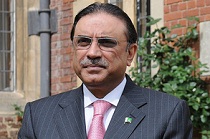 Courtesy: UK Prime Minister's Office
In the second round of the online debate, titled ‘The civil-military equation in Pakistan,’ Daniel Markey argues that although the power equation may not have titled completely in favour of the civilian government, today, the military’s influence in administrative affairs isn’t as strong as it previously was.
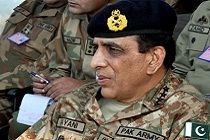 Courtesy: Pakistan97/WikimediaCommons
Gateway House’s Ambassador Neelam Deo, in a debate, titled ‘The civil-military equation in Pakistan has begun to tilt in favour of civilians,’ argues in her rebuttal that the changes in Pakistan resemble a one-step-forward-and-two-steps-backwards process rather than a move up to the next level.