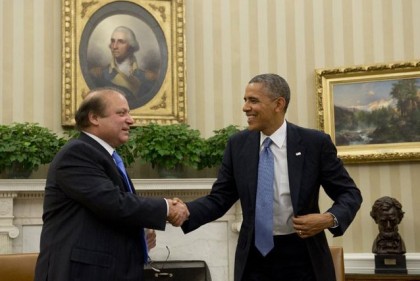
Modi and Obama Courtesy: Wikipedia
4 August 2015

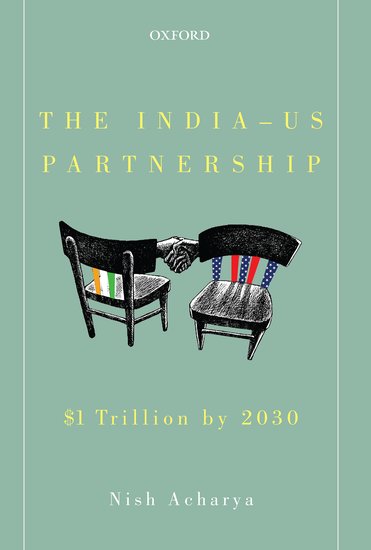
India-U.S: Surge to $1 trillion

Dev Lewis, digital media and content coordinator, Gateway House, speaks to Nish Acharya, Visiting Fellow, U.S.-India Studies, Gateway House, on how the U.S.-India partnership can reach $1 trillion by 2030

Zarif-Kerry Courtesy: Wikipedia
17 July 2015

Iran sanctions: journey’s end

A journey which began in Istanbul in 2012 ended in triumph in Vienna in July 2014, as the P5+1 countries and Iran announced a Joint Plan of Comprehensive action that would see Iran free of all economic sanctions while upholding the right to a civil nuclear programme. While this journey, fraught with challenges, technically is over, the ratification battle in the U.S. congress commences now

In this photo released by China's Xinhua news agency, a destroyer of the South China Sea Fleet of the Chinese Navy fire a missile during a traning in South China Sea on Saturday, Nov. 17, 2007. Dozen of warships of the South China Sea Fleet were deployed in the competitive training to improve combat capability of the fleet, Xinhua said.  (AP Photo/Xinhua, Zha Chunming) Courtesy: India Strategic
16 July 2015

Military strategies collide in the Asia-Pacific

The recent re-evaluation by the US, China, Japan, and Russia of their military strategies reflects new geopolitical equations in which the Asia Pacific is a major strategic intersection. Turmoil in this region can impact India’s trade and security interests, and to avoid this India must craft a balance between its relations with all the countries involved

Israel-Saudi Courtesy: Wikipedia
13 July 2015

Reassessing our Israel, Arab engagement

The announcement in June of a Saudi-Israeli alliance against Iran has to be seen in the context of the strategic dimensions of India’s relations with Saudi Arabia, Israel, Iran, and the U.S. And it has far-reaching implications for India’s policy towards West Asia

Kerry in Pakistan Courtesy: US Embassy in Pakistan
25 June 2015

Beguiling Americans: a guide for Indian diplomats

Pakistan continues to receive succour from its long-time ally, the U.S., despite blundering about in its neighbourhood unabashedly- be it through righteous indignation or through generous courtesies. The external affairs ministry needs to improve its approach towards U.S. officials who are visiting India in order to better its relation with the country.

US Senate 2 Courtesy: U.S. Senate/Wikimedia Commons
24 June 2015

Critics of Iran nuclear deal press on

Hardliners in the U.S. argue that the Obama administration’s eagerness to declare success has given Iran an advantage in the negotiations on its nuclear programme. Even if the agreement between the U.S., its partners, and Iran is finalised in the coming days, Obama has the tough task of convincing the U.S. Congress to lift sanctions

CUba Courtesy: Madaki/Wikimedia Commons
15 June 2015

Can Cuba become a Singapore?

After respite from the U.S. government, Cuba now faces the daunting task of reviving its economy without having to give up on its political ideology. The Singaporean model of limited democracy is something Cuba could emulate.

130918-D-NI589-073 Courtesy: Wikimedia Commons
2 June 2015

India-U.S.: technology transfer tussle

The visit of U.S. Defence Secretary Carter will help cement trust and expand the scope of India-U.S. defence cooperation. However, there are several important details around technology transfer that still need to be worked out before co-production of weapons can begin.

Leaders_of_TPP_member_states- wikipedia Courtesy: Wikipedia
20 May 2015

TPP and RCEP: the hare and the tortoise?

The Trans-Pacific Partnership might soon be concluded if the U.S. Congress fast-tracks it, as recently announced, while the Regional Comprehensive Economic Partnership Agreement remains on slow-track. But the TPP, although ambitious, follows an outdated template, and it is the dynamic RCEP that can be a model for a new global rules-based framework

PRISM_logo by NSA Courtesy: NSA/Wikimedia Commons
20 May 2015

Exposing NSA’s fallibility

This month’s U.S. Appeals Court ruling that deemed illegal the collection of bulk phone records by the U.S. NSA—falsely claimed by U.S. officials as having helped detect 26/11 plotter David Headley—is another nail in the coffin of the U.S. surveillance programme. However, detection of terrorist activity and prosecution of perpetrators remains as problematic as ever