bahrain piece neelam Courtesy: LGEPR
24 April 2012

The Bahrain formula

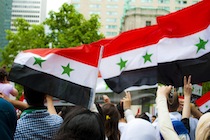
With turmoil in the Middle East, a drawdown in Iraq and Afghanistan, the Iran-Israel-U.S. conflict, the international community has paid little attention to the democracy of a small group of people - the Bahrainis. More worrisome, however, is that politics now responds to the elite.
5825395379_5d725a53f4_z Courtesy: Flickr/freeedomania
21 April 2012

UN: a return to ‘mandated colonialism’

By forcing regime change in Libya, and attempting the same in Syria, and by promiscuously arming disparate groups of Wahabbis and Salafists to achieve this aim, NATO is creating more room for instability in the region. What Syria needs is engagement, not isolation; it needs dialogue and not the arming of rebels.

IMG_4820 Courtesy: Gateway House
20 April 2012

Deciphering today’s Middle East

What are the implications for India if Iran is attacked? How effective has the response been by gulf nations to their own protests? Ambassador Talmiz Ahmad, India’s former Ambassador to Saudi Arabia, discusses the dynamics of West Asia with Gateway House’s Alisha Pinto and Azadeh Pourzand.

Pragati_0 Courtesy: PMO
10 April 2012

Between Washington and Tehran

Over the past thirty years, the U.S. and Iran have been at odds over Iran's alleged nuclear weapons programme. India too has a large stake with both countries - with the U.S. as a strategic partner and Iran for its oil imports - and resolving this conundrum will require some creative diplomacy.

Courtesy: IAEA Imagebank
9 April 2012

Iran: An opportunity for BRICS

The scope for any process on nuclear talks with Iran to founder on distrust, misunderstanding and political in-fighting in both Tehran and Washington remains formidable. Equally disturbing are the wider political realities. Can the upcoming talks in Istanbul launch a process that can, over time, lead to agreement?

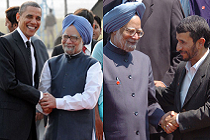
seema iran pic Courtesy: PMO
4 April 2012

India-U.S.-Iran: A tightrope walk

Although political discourse around Iranian sanctions is binary and stark in Washington, the reality of India's actions within its bilateral framework with Iran is complex. India is engaged in an excruciating tightrope walk, and has to defend its choices and compulsions with ardour.

wisner interview Courtesy: Gateway House
2 April 2012

India-U.S.-Iran Impasse?

Given the immediacy of rising tensions around Iran’s nuclear programme, what can India and the U.S. do to resolve the issue? Gateway House’s Manjeet Kripalani talks to Ambassador Frank Wisner about the possibilities of a strike against Iran and its effects on the India-U.S. relationship.

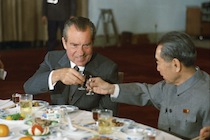
China, What Nixon wrought Courtesy: White House Photographer/Wikimedia Commons
23 February 2012

China: What Nixon wrought

Forty years ago, former President of the United States Richard Nixon made a visit to China that has perhaps changed the whole gamut of U.S.-China relations. In the following years, China witnessed the rise of a significant middle class and became the world's second largest economy.

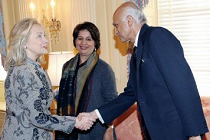
mathai us visit seema piece Courtesy: Indian Embassy
10 February 2012

Iran looms large on Indo-U.S. relations

Iran may become a litmus test for India's relationship with the U.S., where New Delhi must deftly balance its strategic relationship with the U.S. along with its energy interests in Iran.

that used to be us Courtesy:
7 February 2012

Book review: That Used To Be US

Ambassador Kanwal Sibal reviews "That Used To Be US", by Thomas L. Friedman and Michael Mandelbaum, and summarizes that it is an unpretentious book which explains the problems facing the US – heavily marked by a journalistic style that relies extensively on quotations.