outlook business (2) Courtesy: Gateway House
16 July 2026

Five surprising truths about middle-powers

The global steering wheel has come loose, replaced by more fluid, pragmatic, and regional frameworks. The Emerging Middle Powers Report 2026 illuminates the shifting postures and throws up some surprises: trust in the U.S. is receding, non-alignment is increasing, regionalism is more important, and divergences from the mainstream are clear. Can Middle Powers be more than just bridges to overcome differences?
Website articles  (74) Courtesy: Presidential Communications Office
9 April 2026

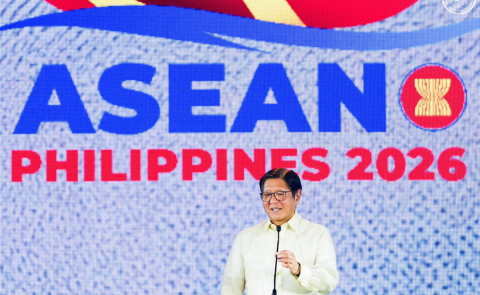
ASEAN challenged by the Iran crisis

The West Asia conflict has disrupted global stability, impacting ASEAN economies and diplomacy. As chair, the Philippines balances its alliance with the U.S. and regional neutrality, while Indonesia and Malaysia reflect domestic support for Arab states. With energy shocks, remittance risks, and inflation rising, ASEAN’s limited influence is evident. Has ASEAN once again been drawn into a vortex of crises beyond its control?

Koerber Stiftung (5) Courtesy: AFP
23 October 2025

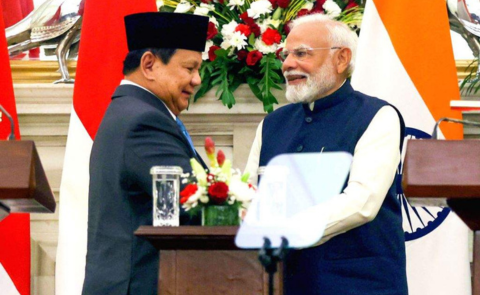
India and Indonesia guide Southern Consensus

India and Indonesia sit at the heart of the Indo-Pacific, and participate  in multiple global and regional frameworks that ensure developing countries remain part of governance debates. The two countries can use these platforms to craft a southern consensus, a framework for cooperation that prioritises resilience, equality and cooperation over competition and coercion. This can reduce vulnerabilities among developing countries and strengthen them against future disruptions.

Screenshot 2025-10-13 103335 Courtesy: Körber-Stiftung
13 October 2025

Bandung at 70: Multilateralism in a New Era of Multi-Alignment

The world is facing multiple crises which are shaking the foundations of multilateralism. The West’s structures are faltering, and the need for effective and equitable cooperation is greater than ever. Seventy years after the 1955 Bandung Conference, its principles of sovereignty, territorial integrity, cooperation and solidarity remain vital. This report revisits Bandung’s relevance for today’s reform efforts, urging renewed Global South–Europe collaboration for a sustainable global future.

VOA Courtesy: VOA
2 October 2025

Time to re-burnish Global South credentials

The year 2025 is often compared to the Bandung moment of 1955, and for good reason. With the U.S. reordering traditional relationships, the opportunity for greater emphasis on the Global South is now. It is therefore time for India, Africa and ASEAN among others to re-burnish their Global South credentials and use that identity as a platform to engage each other more deeply.

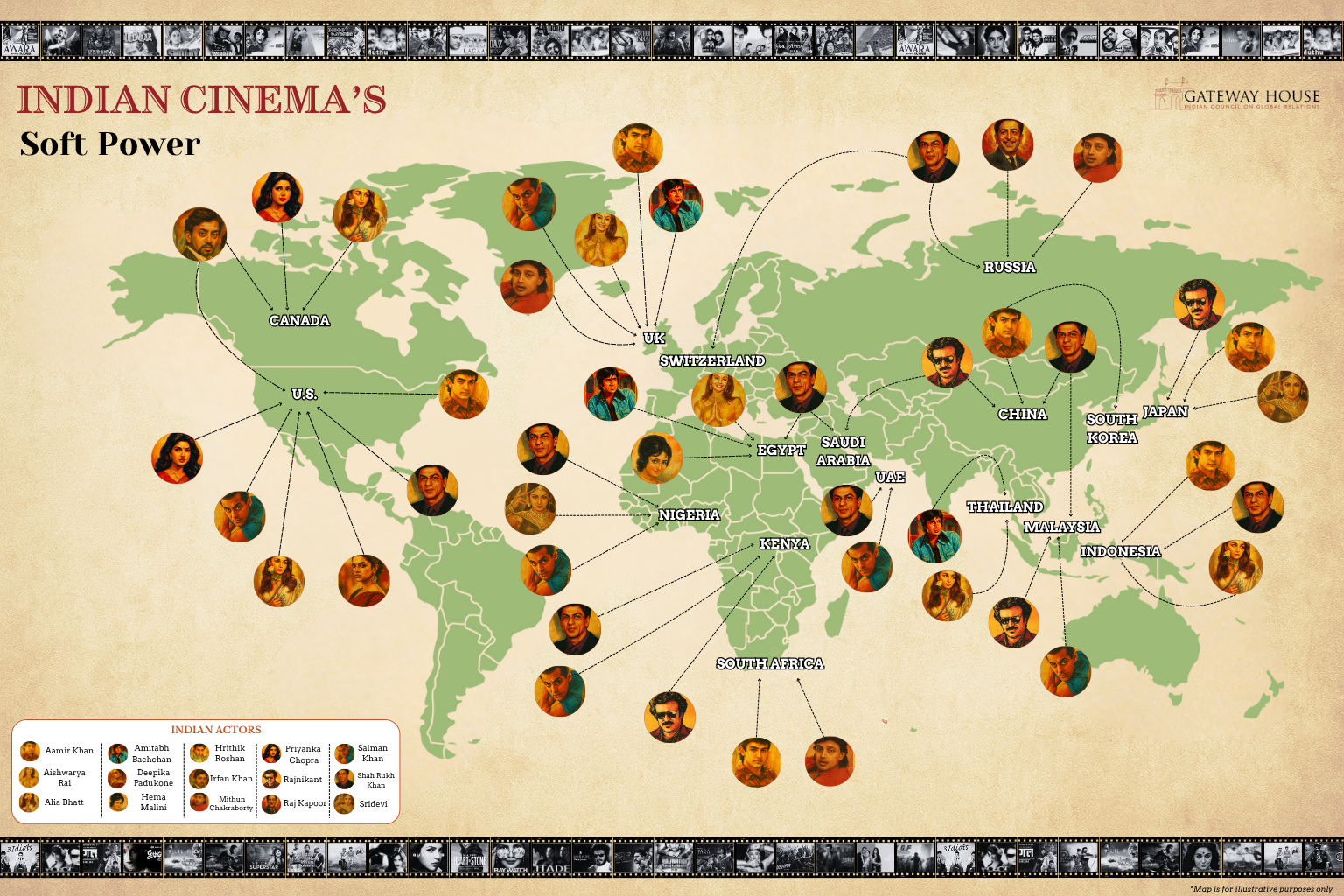
Most popular Indian actors worldwide Courtesy: Gateway House
1 October 2025

Indian Cinema as Economic Catalyst

As India seeks leadership in a multipolar world, cultural credibility is as vital as economic clout. Cinema gives India an edge with vivid storytelling, music, and empowering narratives, fostering understanding in a polarised world. Its popularity correlates with trade, as seen in the U.S., Russia, and Middle East. The more popular the cinema, the bigger the boost to trade.

Gateway House Courtesy: Gateway House
3 July 2025

China Plus One and global supply chains

A slowdown of the Chinese economy, and the shift, particularly by MNCs, from China to other more competitive locations has opened up business opportunities for latecomers to supply chains in the developing world. Evidence suggests that Southeast Asia and some South Asian countries like India, Sri Lanka, Bangladesh, could be beneficiaries of the supply chain shift, particularly in labour-intensive segments.

Getty (1) Courtesy: Gateway House
15 May 2025

The New Geopolitics and South Asia’s Trade Architecture – What Next?

Geopolitics is increasingly intertwined with the economic destiny of South Asia. Even before the U.S. tariffs were rolled out, growing polycrises had hit the global economy, which has been struggling since the pandemic. South Asia seems a relatively bright spark of regional trade and growth. This paper analyses South Asia’s trade architecture in the backdrop of a sluggish world economy in the 2020s, and makes recommendations for closer regional economic integration.

task force cover 420 Courtesy: Gateway House
16 February 2023

G20 Energy Transitions and Climate Finance Task Force Report

Significant progress has been made globally in adopting green energy. Technological advances, easier availability of capital and regulatory measures have helped. But progress is likely to slow due to the shocks caused by Covid-19 and the Ukraine crisis. How to continue the green transition whilst ensuring that lower-income countries have access to affordable energy? This Task Force offers recommendations for India’s G20 Presidency.

GH in the G20 & T20 Courtesy: Gateway House
16 December 2022

Gateway House in G20 & T20

Gateway House is the only institution in India that has hosted official and independent meetings under the annual G20 process since 2015. In October 2022, Gateway House initiated an independent G20 Task Force on Energy Transitions and Climate Finance, the first task force of India's G20 Presidency of 2023. In this compendium of reports, Gateway House assesses and includes its engagement with this influential multilateral through task forces, research and meetings of the last nine G20 Presidencies.