Website articles  (7) Courtesy: Gateway House
13 November 2025

India China relations in the near future

India-China relations move in waves of hostility and stability. The bilateral may be re-entering a period of stability, last seen in 2018. If the caveats of security, mutual sensitivity and a level playing field are respected, then much can be achieved by reviving the initiatives begun after PM Modi’s visit to China in 2015 and two informal summits in Wuhan in 2018, and Mahabalipuram in 2019.

Website articles  (6) Courtesy: Global Times
6 November 2025

China’s Military Modernisation: Implications for India

Chinese President Xi Jinping set two centennial goals and a 2027 target for the People’s Liberation Army’s (PLA) modernisation. This is in line since its founding in 1927, when the PLA has undergone continuous technological, doctrinal, and manpower transformation. Guided by Xi’s goals, it is adapting to evolving warfare trends drawn from experience and observation. For India, the implications arise not only from the PLA’s modernisation but also from emerging military and geopolitical dynamics.

Gateway House Courtesy: Telegrafi
6 November 2025

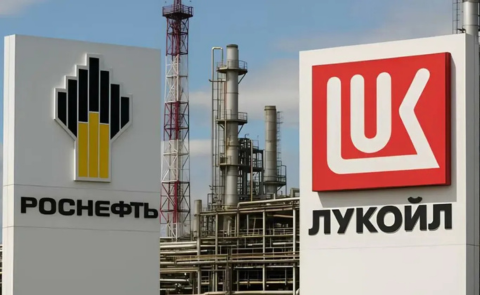
U.S. Sanctions on Russian oil giants

On October 22, 2025, U.S. President Donald Trump imposed sanctions on Russia’s oil giants, Rosneft and Lukoil. The move has clear geopolitical motives—to remove a major supplier from an oversupplied oil market. Indian oil companies, key buyers of Russian crude, now face pressure to cut imports, undermining India’s energy diversification and shaking global oil markets, including the U.S. economy.

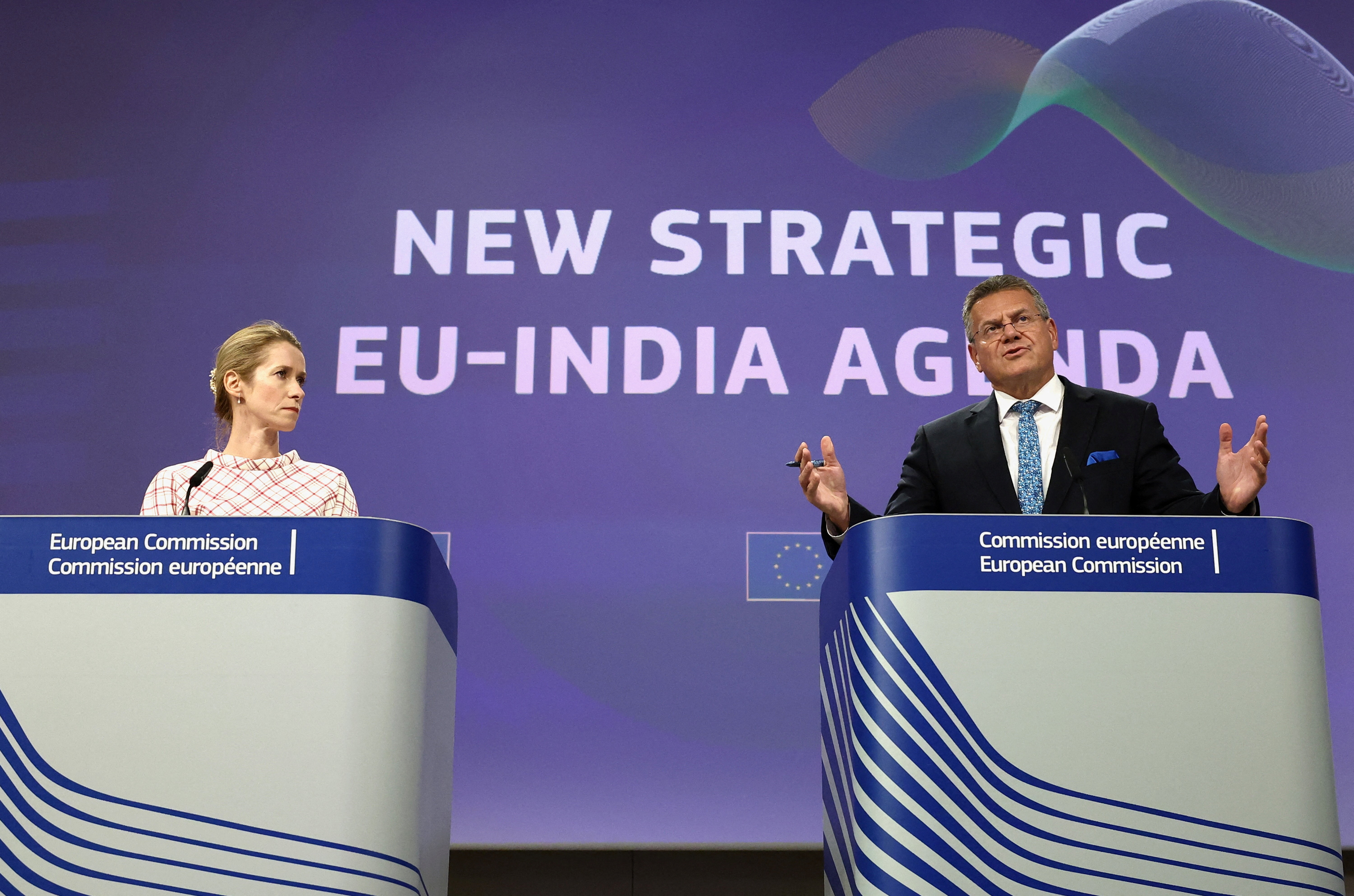
EU's India Strategy Courtesy: Reuters
30 October 2025

EU’s new India strategy

Despite over a decade of negotiations, the EU-India FTA remains stalled. The New Strategic EU–India Agenda released in October 2025 seeks to elevate ties, positioning India as central to Europe’s multipolar vision. Yet contradictions persist: Europe’s normative approach and India’s multi-alignment strategy diverge. Connectivity and infrastructure remain conceptual. Now, success depends on the EU’s ability to match rhetoric with resources, flexibility, and strategic patience. 

AFP (1) Courtesy: ANI
16 October 2025

Uncertainty around the Quad

The Quad summit is expected to be hosted by India in the second half of 2025, possibly in November. However, the grouping faces turbulence that transcends the current flow of India-U.S. relations. The relevance of Australia and Japan, too, needs to be factored in. Beijing considers the Quad as “the Asian NATO” that aims to contain China. Since the commencement of Trump 2.0, the grouping has been struggling to redefine its role and mandate.

Screenshot 2025-10-13 103335 Courtesy: Körber-Stiftung
13 October 2025

Bandung at 70: Multilateralism in a New Era of Multi-Alignment

The world is facing multiple crises which are shaking the foundations of multilateralism. The West’s structures are faltering, and the need for effective and equitable cooperation is greater than ever. Seventy years after the 1955 Bandung Conference, its principles of sovereignty, territorial integrity, cooperation and solidarity remain vital. This report revisits Bandung’s relevance for today’s reform efforts, urging renewed Global South–Europe collaboration for a sustainable global future.

Website articles  (10) Courtesy: Metro Vaartha
9 October 2025

Unseen opportunities in UK-India trade

UK Prime Minister Keir Starmer is in India Oct 8-9, to discuss geopolitics with his Indian counterpart and also to boost bilateral trade. The UK-India Comprehensive Economic and Trade Agreement (CETA) signed in July 2025 marks a milestone in the relationship. The deal, however, omits reference to the creative industries which contribute significantly to UK GDP and play a vital role in the UK-India corridor.

Ivan Courtesy: Gateway House
8 October 2025

Unfolding Geopolitics Episode 23 | India renews engagement with Afghanistan

Afghanistan’s Foreign Minister Amir Khan Muttaqi will visit India on October 10, marking the first high-level Taliban visit since the group took over Kabul in 2021. Nayanima Basu discusses the purpose of this visit and the importance of engagement with Afghanistan. She explains the roles of China, which seeks business; Pakistan, which pursues political interests; and the U.S., which has a renewed interest in Bagram Air Base and its return to the country it abandoned.

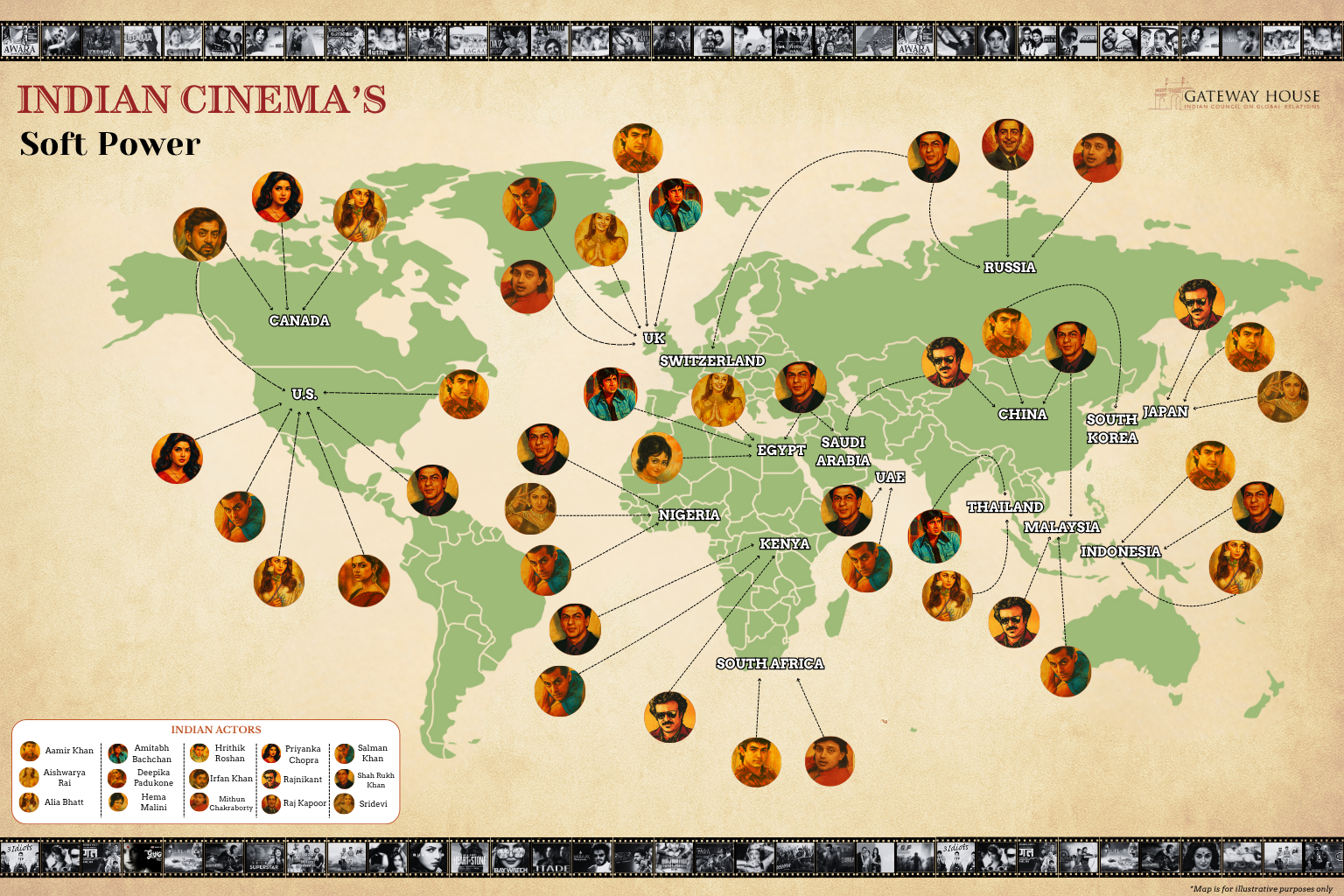
Most popular Indian actors worldwide Courtesy: Gateway House
1 October 2025

Indian Cinema as Economic Catalyst

As India seeks leadership in a multipolar world, cultural credibility is as vital as economic clout. Cinema gives India an edge with vivid storytelling, music, and empowering narratives, fostering understanding in a polarised world. Its popularity correlates with trade, as seen in the U.S., Russia, and Middle East. The more popular the cinema, the bigger the boost to trade.

U.S. Tariffs on Brics+ countries Courtesy: Gateway House
25 September 2025

U.S. Reciprocal Tariffs on BRICS+ countries

Under U.S. President Donald Trump’s reciprocal trade policy, the original five BRICS member countries account for the highest U.S. tariffs globally. India and Brazil are facing the highest tariffs of 50%, while China follows with a tariff of 34%, down from 145% earlier in the year. This infographic details the U.S. reciprocal tariff rates for each BRICS+ member and the sectors that are impacted.