Getty (1) Courtesy: Gateway House
15 May 2025

The New Geopolitics and South Asia’s Trade Architecture – What Next?

Geopolitics is increasingly intertwined with the economic destiny of South Asia. Even before the U.S. tariffs were rolled out, growing polycrises had hit the global economy, which has been struggling since the pandemic. South Asia seems a relatively bright spark of regional trade and growth. This paper analyses South Asia’s trade architecture in the backdrop of a sluggish world economy in the 2020s, and makes recommendations for closer regional economic integration.

Website articles  (12) Courtesy: Gateway House
15 May 2025

U.S., global emperor of sanctions

Over two centuries, the U.S. has amassed vast economic powers across the globe during and after the two World Wars , and sanctions slowly became an effective tool it used to achieve its foreign policy goals, becoming the global emperor of sanctions.

World Leaders Courtesy: East Asia Forum
17 April 2025

Multipolarity is gaining ground

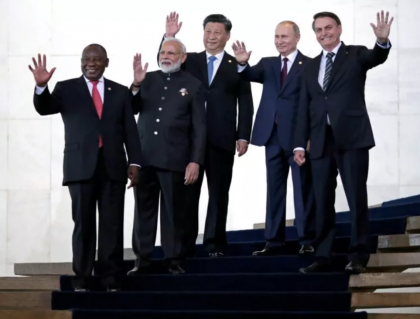
The traditional power structures of ‘unipolarity’ or ‘bipolarity’ prevalent over the past 80 years are no longer appropriate to describe the current global order, with more countries increasingly supporting the evolving multipolar world. With the old ‘rules-based’ order becoming less relevant, emerging powers like India have an opportunity to draft more equitable rules to match their multipolar intentions.

Report Courtesy: Körber-Stiftung
17 April 2025

Momentum for Middle Powers: Emerging Middle Powers Report

The world is undergoing profound transformations that are not being driven only by the United States, China or Russia. Small and medium-sized States are carving out a legitimate place for themselves in the emerging new order. This second edition of our annual Emerging Middle Powers Report is a reminder that the signs of the times are showing a new momentum for middle powers.

10_Bild10L_Evraz_KGOK2L-ironore-7ad449a79aa2d734 Courtesy: Evraz
10 April 2025

A changed India-Russia equation

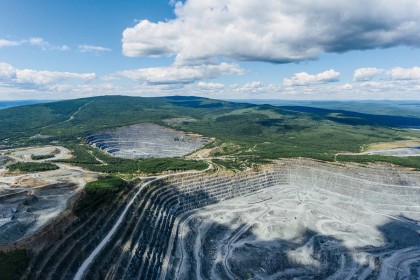
Three years into the war with Ukraine, Russia has adapted to the changed economic scenario. It’s an ideal time for India and Russia to step up their economic engagement, especially as India seeks resources in energy and critical minerals for growth. However, Indian companies are wary of using these opportunities and are missing out on access to the world’s larges and most mineral-rich region.

APTOPIX Russia Ukraine War Courtesy: AP
13 March 2025

Riyadh and the new halls of mediation

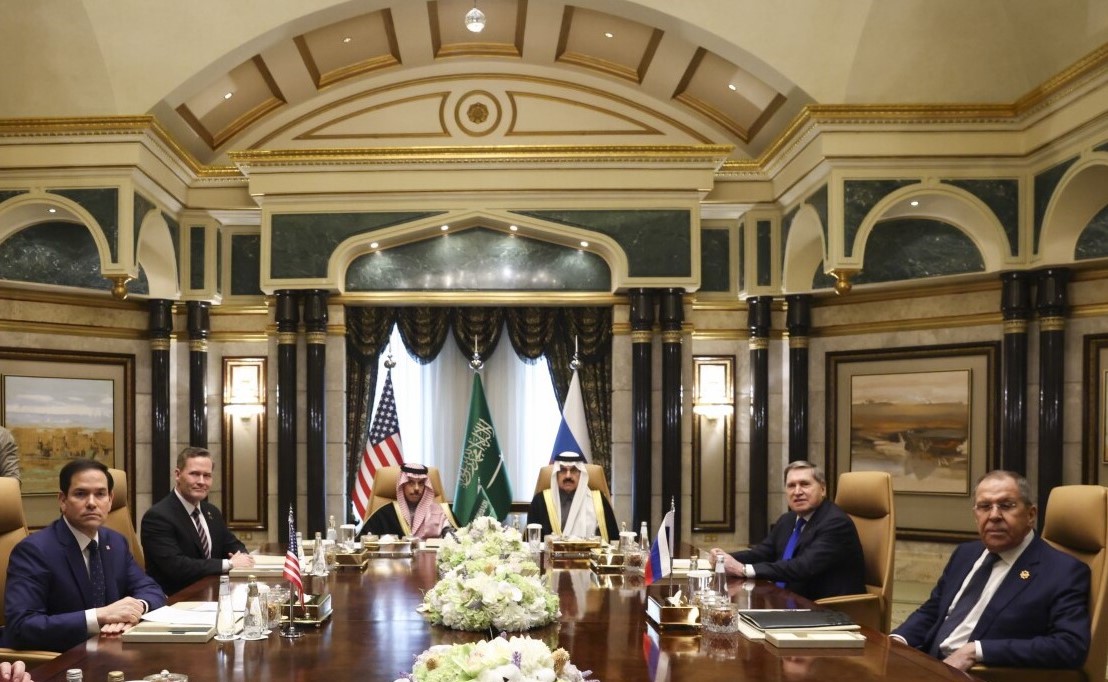
Saudi Arabia has been the new centre for mediation between warring states and their sponsors. It reflects the shifting dynamics in an increasingly multipolar world and the redefinition of power structures. This role has extended to other Gulf states, which have strategically positioned themselves as neutral players, leveraging their strong relations with the great powers, and adopted culturally sensitive to consensus-building.

Indian Prime Minister Narendra Modi welcomes President of the European Union Ursula von der Leyen upon her arrival at Bharat Mandapam convention center for the G20 Summit, in New Delhi, India, Saturday, Sept. 9, 2023.  Evan Vucci/Pool via REUTERS Courtesy: Atlantic Council
13 March 2025

The EU reaches out to India

The recent visit of the European Commission President Ursula von der Leyen, and the EU College of Commissioners to India, is a testament to its view of India as a key voice in the Global South and a stabilising force amidst a rapidly changing global dynamic. However, a strong push is required to elevate their transactional relationship into something more meaningful for both parties.

Turkstreampipe Courtesy: President of Russia-Events website
30 January 2025

LNG: winners and victims

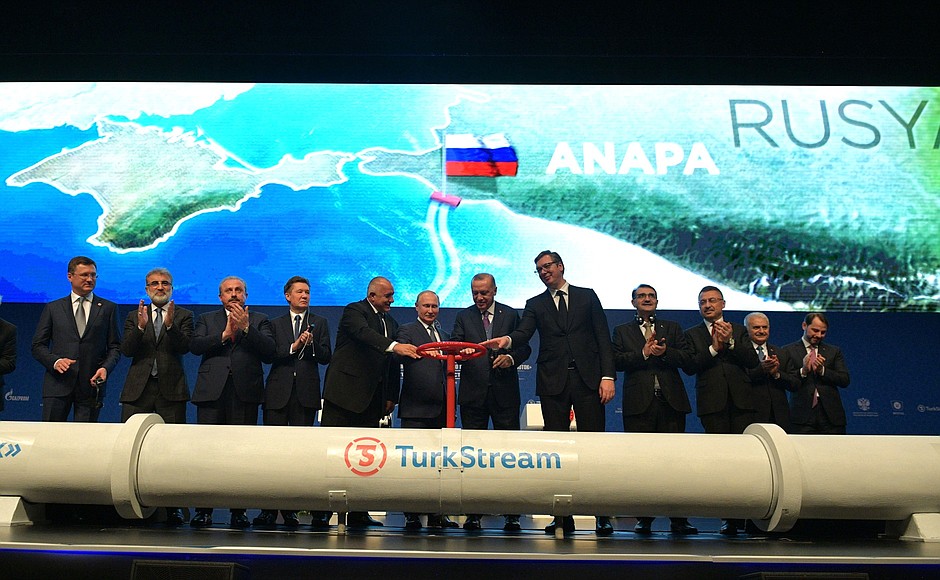
Europe has reduced its reliance on Russian gas following the war in Ukraine, and its chief supplier Russia is mired in western sanctions. What does it mean for Russia? It has certainly changed the fortunes for American gas to be sold to Europe: as of 2023, the US had become the world’s top exporter of gas.