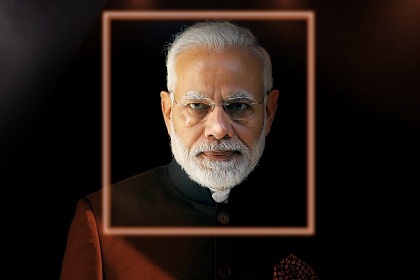
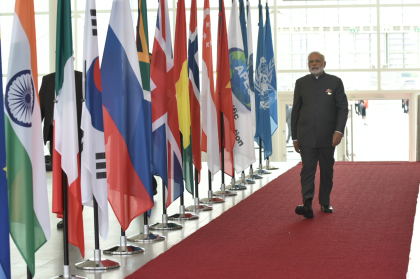
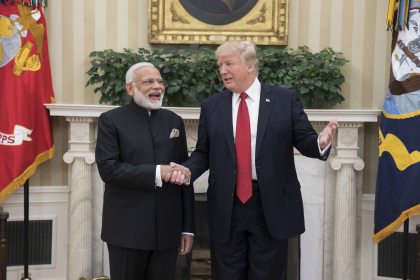
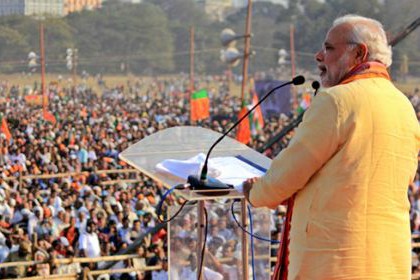
India's foreign policy under the second Modi government will take account of a turbulent world in which the old verities are disappearing and domestic political compulsions exert overwhelming influence on external postures
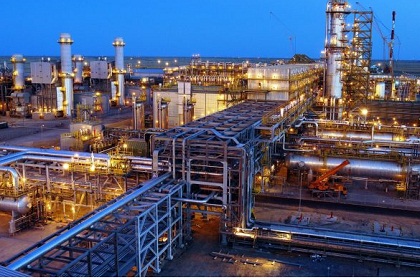
The main objective of the Shanghai Cooperation Organisation’s (SCO) Energy Club, when Russia formed it, was to market its member states’ substantial oil and natural gas reserves. This map shows some of the important natural gas pipelines, originating from Russia and its neighbouring countries that are not members of the SCO. What can India do to secure supplies from these abundant but currently inaccessible natural gas reserves?
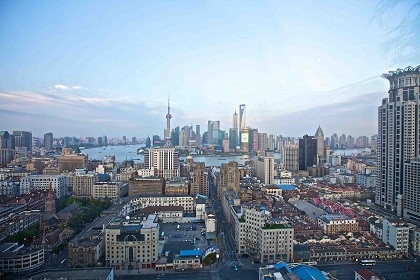
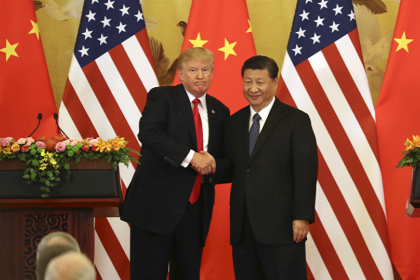
The Chinese leadership faces a range of economic problems and not very palatable solutions, says Prof Heribert Dieter, Visiting Fellow at Gateway House, Mumbai, and Senior Fellow, German Institute for International and Security Affairs, Berlin, in this wide-ranging conversation with Gateway House. He also analyses the European perspective on China, the U.S.-China trade war and the role of global forums, such as G20
The following remarks were given by Ambassador Rajiv Bhatia, Distinguished Fellow, Foreign Policy Studies, Gateway House as Distinguished Guest Lecturer at IIM Tiruchirappalli on February 3, 2019
The imperative for India to move away from its non-aligned posture is now, especially if it wants to be consequential in the global reordering underway. This will play out in the contention between the U.S. on one side, and China and Russia on the other.
Speakers at the seventh Atlantic Dialogues, held in Morocco earlier this month, discussed what the challenge to western dominance and China’s expansionism meant for their political and economic future
Academic and columnist M.D. Nalapat, in this interview with Manjeet Kripalani, speaks of how a tardy bureaucracy has brought about “a too-cautious” policy towards the U.S. and China as opposed to the former Gujarat chief minister’s greater openness in consulting people before handing over policy implementation to the bureaucracy. He also discusses the prime minister’s shrewd approach to South Asia, the dependable warmth of the Japanese and a range of other topics
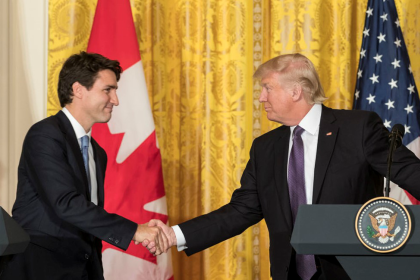
The United States, Europe and the Asia Pacific today form Canada’s tripartite foreign policy priorities. The ASEAN is its sixth largest partner, which was not so 20 years ago, but economic engagement with India – still small, compared to China and Japan – has scope to grow
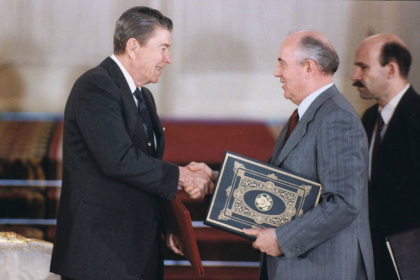
America’s withdrawal from a Cold War arms control agreement seems to be dictated by China’s development and deployment of thousands of short and medium range ballistic missiles.
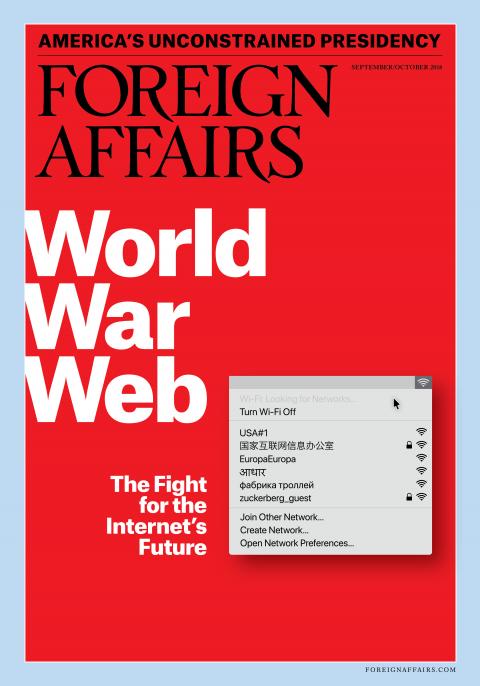
The immediate threat is more corrosive than explosive. States are using the tools of cyberwarfare to undermine the very foundation of the Internet: trust. The result is that an arena that the world relies on for economic and informational exchange has turned into an active battlefield.