Dr Homi Bhabha explaining the TIFR building model to Prime Minister Pandit Jawaharlal Nehru. To the left of Dr Bhabha is JRD Tata and his wife Thelma Tata is standing beside Pandit Nehru. Courtesy: TATA
22 October 2026

TIFR and the Tata Trust

The tussle between the directors on the Tata Sons’ board has drawn attention to the company’s largest shareholder: the Tata Trusts. The Trusts hold a 66% stake in Tata Sons and have pushed back against diluting it through a public listing. A look at the vision for and establishment of the Tata Institute of Fundamental Research in Bombay, supported by the Trusts, underscores the pioneering philanthropy the Tatas always practised.

RJFV Courtesy: Gateway House
23 April 2026

India and Scotland: a shared past

The Scottish imprint on India, starting in the British era, is visible even today. Roger Jeffery and Friederike Voigt explore historical ties between Scotland and India, drawing on their recent visit to Mumbai, its Scottish heritage, and their new book, Perceptions of Empire: Edinburgh’s Engagement with India. They dwell on how shared histories in education, trade, missionary activities, and institution building can inform a deeper engagement between Indians and Scots.

Website articles  (21) Courtesy: Alamy
24 December 2025

Japan in Bombay: trade, faith and community

The earliest sizeable presence of Japanese expatriates in India was in colonial Bombay and its Presidency. The Japanese came for trade, but their engagement with the port city and its cotton hinterland went beyond commerce to include spiritual life and later, India’s national movement. This chapter, ‘Geographies of Exchange between Japan and India’, traces their community, religion, social infrastructure, and commercial and cultural contributions to Bombay.

Website articles  (21) Courtesy: Alamy
18 December 2025

Japan in Bombay: trade, faith and community

The earliest sizeable presence of Japanese expatriates in India was in colonial Bombay and its Presidency. The Japanese came for trade, but their engagement with the port city and its cotton hinterland went beyond commerce to include spiritual life and later, India’s national movement. This chapter, ‘Geographies of Exchange between Japan and India’, traces their community, religion, social infrastructure, and commercial and cultural contributions to Bombay.

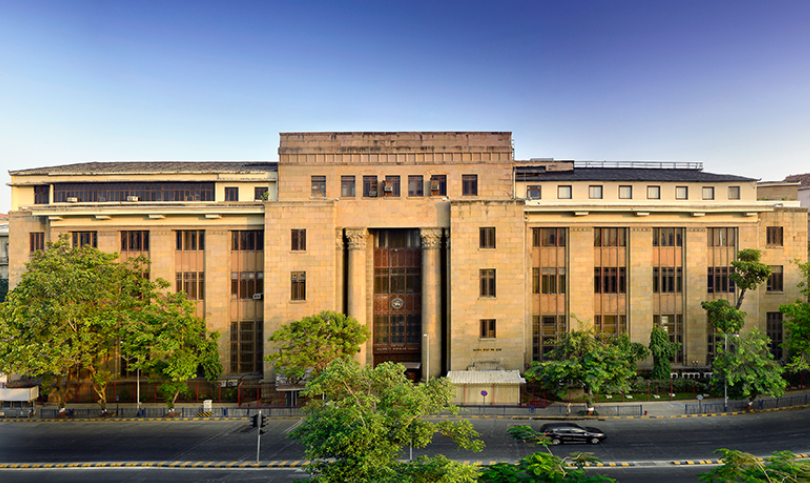
Reserve Bank India Courtesy: Shapoorji Pallonji
2 May 2024

A central bank for India in Bombay

The Reserve Bank of India entered its 90th year on 1 April. From the 1940s to 1960s it was critical in protecting India’s interests at the Bretton Woods Conference in 1944, and conserving India’s Forex by managing a Rupee trade with the East Bloc. Today, it is among Mumbai’s several historic financial institutions and has navigated India’s economy through turbulent geopolitical and geoeconomic events.

SifraExcerpt Courtesy: Sarmaya Arts Foundation
7 March 2024

Japan in Bombay and its presidency

India’s External Affairs Minister S. Jaishankar is currently visiting Japan for the 16th India-Japan Foreign Ministers Strategic Dialogue. The bilateral, which began 130 years ago with Bombay’s cotton trade, has deepened into a Special Strategic and Global Partnership in defence, digital technologies, semiconductor supply chains, clean energy, trade and connectivity. The following book excerpt traces the origin of India-Japan trade ties.

Vol 1 no 01 Courtesy: The Marg Foundation
3 March 2023

Marg @ 75: recasting India’s cultural identity

India’s famous cultural icon, Marg magazine, has turned 75 along with the nation. It has republished some of its path-breaking articles, adding an introduction with a contemporary rethink. The outcome is an intellectual inquiry, with clues on how a confident 21st-century India must shape its global and regional positioning.

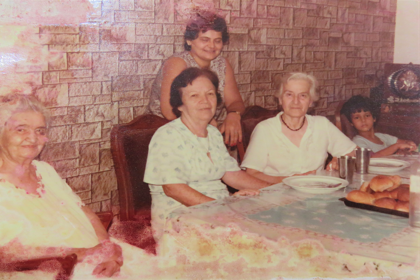
Armenian's in Bombay Courtesy: Zabel Joshi
25 August 2022

Bombay’s Armenian legacy

Bombay was once an important Armenian settlement in the 18th and 19th centuries, as the English East India Company was keen to relocate the successful Armenian merchants of Surat to the Company’s new outpost of Bombay. Today, no Armenians from Bombay’s historic community remain, but their church and cemetery survive, the subject of study for Armenian expatriates keen to rediscover their history.

sifra cover Courtesy: Routledge India
5 January 2022

Mercantile Bombay: A Journey of Trade, Finance and Enterprise

Mumbai has a deep legacy as an international financial hub from the 19th to early 20th century. It was the central node of trading communities in a globalised colonial world, the remnants of which are seen today. The author describes the city's heyday and advances the prospect of Bombay's revival as a global city of enterprise. This excerpt traces the history of the Bombay Burmah Trading Co., which played a role in the onset of the final Anglo-Burmese War.

kwadi Courtesy: Town Mumbai
23 December 2021

Bombay’s East Indian community

There is no better way to celebrate the winter festive season in Mumbai than to visit the many Bombay East Indian enclaves dotting the metropolis, urban villages that once made up the city before the 17th century. Attending Midnight Mass in the Bombay East Indian dialect of Marathi in a parish church and feasting on a traditional Christmas lunch is the best way to experience Mumbai before Bombay.