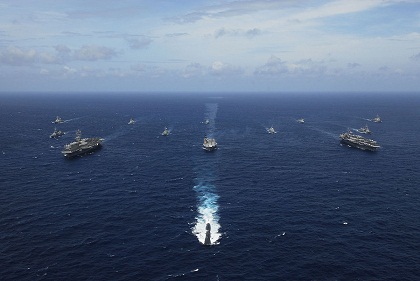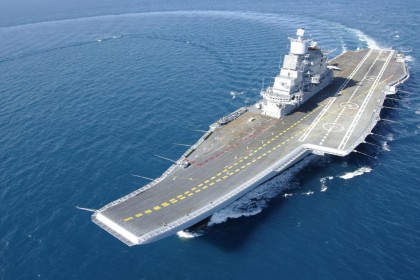
Indo-Pacific Security Quad Courtesy: Indian Navy
3 January 2018

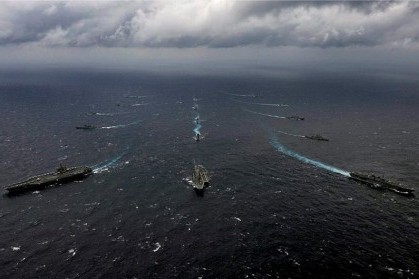
A case for the Quad’s reappearance

A noticeable feature of 2017 was China’s aggressiveness, which it deployed openly to advance its interests in the eastern rim, Southeast Asia, Central Asia and South Asia. This could well be the impetus for the consolidation of a broad front of China-wary nations in 2018

malabar-2 Courtesy: PTI
3 August 2017

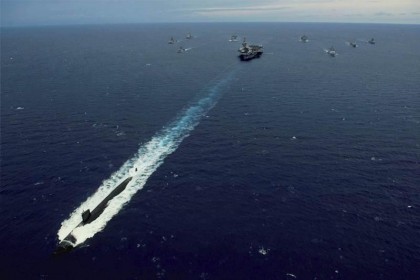
Malabar 2017’s geostrategic dimensions

The historical evolution of the Malabar Exercise and the currently fraught relations between the participating countries and China created a much sharper context for the event, with the Chinese evincing a heightened interest in it

malabar-pti-2 Courtesy: PTI
20 July 2017

Malabar 2017: strengthening the freedom of navigation

In a special podcast, Vice Admiral (retd.) Anil Chopra, Distinguished Fellow for International Security and Maritime Studies at Gateway House, shares his insights into this years recently concluded Malabar Exercise, examining the inclusion of Japan and potentially Australia, while detailing the geopolitical implications of these exercises.

28912263963_0b75893744_h Courtesy: MEA/ Flickr
14 February 2017

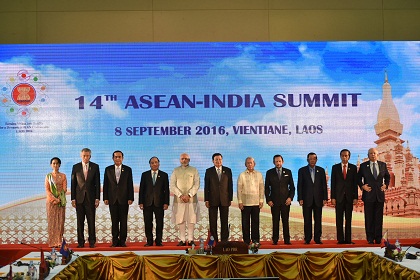
Indo-Pacific: a scenario of possibilities

The Indo-Pacific region is home to some of the largest and most rapidly growing economies as also powerful military forces. Nuclear threats, international terrorism and climate change are some of the issues that define the region. Uncertainty dogs relations among the four nations in the top league—U.S., China, India and Japan—but what is emerging is a hawkish, policy stance from the U.S. as opposed to an isolationist outlook apprehended earlier

1200px-Malabar_07-2_exercise Courtesy: Wikipedia
14 February 2017

A democratic quadrilateral in Asia?

A strategic coming together of the U.S., Japan, Australia, and India was close to fruition some years ago, impelled initially by the tsunami of 2004. The spirit of the enterprise remains alive even now, and there are many merits in India joining the quad, but such an arrangement can skew existing Asian equations, jeopardising the Act East policy

financial-chart-backgrounds-wallpapers Courtesy: Northernminer
14 February 2017

Global taxation and the perversion of capital flows

In the wake of trade-based globalisation followed by financial globalisation, a large volume of capital began moving from developing to advanced countries. This has resulted in relatively poor developing countries effectively becoming net creditors to the rest of the world. Reversing this massive outflow of capital requires governments to strengthen governance in all its dimensions and have closer international collaboration to tighten the regulatory oversight of tax havens for greater transparency

Donald_Trump_swearing_in_ceremony Courtesy: Wikipedia
9 February 2017

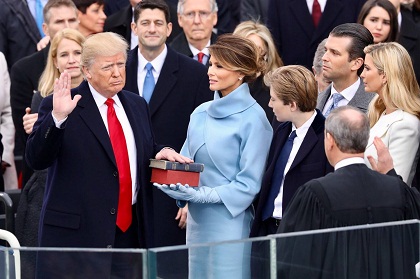
The West and the rest: resetting the order

There is a stark divergence between how the West views the world and how those outside it do. It is possible to oversimplify the equation, to portray the West as cynically self-interested. The West and countries like India need to reach a shared understanding of how the liberal international order can be reformed so it may be salvaged