Founding India’s  Gateway House Courtesy: Gateway House
26 November 2025

Founding India’s Gateway House

A former diplomat and a journalist came together in 2009 to build what would become Mumbai’s first foreign policy think tank – Gateway House. It is India’s first women-founded think tank, and among the few globally established by two women. In this conversation with Akshobh Giridharadas of USISPF, co-founders Manjeet Kripalani and Neelam Deo reflect on Gateway House’s origins and the epiphany that India needed to shape global conversations with its own perspective, one that extended beyond New Delhi.

Kyodo News (1) Courtesy: Kyodo News
20 November 2025

Sanae Takaichi’s strong start

The rise of Sanae Takaichi, Japan’s first female prime minister with firm conservative credentials, carries both symbolic weight and political controversy. Her early decisions suggest clarity of intention but also highlight the structural weaknesses and diplomatic sensitivities that will shape her tenure. To keep her ratings high, she has to stabilise her minority government at home, and manage the China, U.S. and ASEAN relationships with tact.

Website articles  (7) Courtesy: Gateway House
13 November 2025

India China relations in the near future

India-China relations move in waves of hostility and stability. The bilateral may be re-entering a period of stability, last seen in 2018. If the caveats of security, mutual sensitivity and a level playing field are respected, then much can be achieved by reviving the initiatives begun after PM Modi’s visit to China in 2015 and two informal summits in Wuhan in 2018, and Mahabalipuram in 2019.

IMG_3632 Courtesy: Gateway House
12 November 2025

Unfolding Geopolitics Episode 24 | Has Xi Jinping’s grip on China slackened?

There’s growing speculation about a power struggle in China and whether President Xi Jinping is losing control. Amid reported internal rifts within the Communist Party of China, Xi has launched a military purge, removing several top officials, while Chinese companies face mounting internal issues. Lt Gen S. L. Narasimhan, Adjunct Distinguished at Gateway House, analyses these rumours and reveals China’s internal dynamics.

Website articles  (6) Courtesy: Global Times
6 November 2025

China’s Military Modernisation: Implications for India

Chinese President Xi Jinping set two centennial goals and a 2027 target for the People’s Liberation Army’s (PLA) modernisation. This is in line since its founding in 1927, when the PLA has undergone continuous technological, doctrinal, and manpower transformation. Guided by Xi’s goals, it is adapting to evolving warfare trends drawn from experience and observation. For India, the implications arise not only from the PLA’s modernisation but also from emerging military and geopolitical dynamics.

Gateway House Courtesy: Telegrafi
6 November 2025

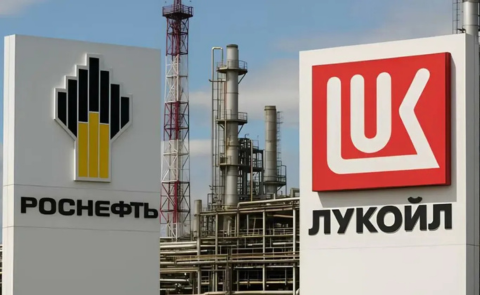
U.S. Sanctions on Russian oil giants

On October 22, 2025, U.S. President Donald Trump imposed sanctions on Russia’s oil giants, Rosneft and Lukoil. The move has clear geopolitical motives—to remove a major supplier from an oversupplied oil market. Indian oil companies, key buyers of Russian crude, now face pressure to cut imports, undermining India’s energy diversification and shaking global oil markets, including the U.S. economy.

Website articles  (4) Courtesy: Indian Embassy in Moscow / FB
30 October 2025

India in Russia’s polycentric world order

The Valdai 2025 conference’s single confirmation was this: Russia believes the post-Western world is already functioning. It is no longer seeking to re-enter Western-led institutions; it is building around them. The polycentric world is like a network, not a hierarchy. No one needs to choose a camp.

Koerber Stiftung (5) Courtesy: AFP
23 October 2025

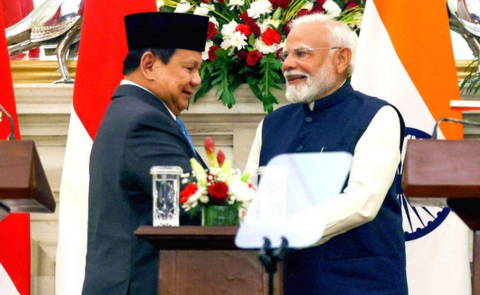
India and Indonesia guide Southern Consensus

India and Indonesia sit at the heart of the Indo-Pacific, and participate  in multiple global and regional frameworks that ensure developing countries remain part of governance debates. The two countries can use these platforms to craft a southern consensus, a framework for cooperation that prioritises resilience, equality and cooperation over competition and coercion. This can reduce vulnerabilities among developing countries and strengthen them against future disruptions.

Koerber Stiftung (3) Courtesy: Getty
16 October 2025

Labour Corridors: India-Russia’s Next Bet

The labour movement in the India-Russia corridor is a new element in the bilateral. It is already visible in the Delhi–Moscow flights. The usual students and tourists now share the cabin with welders, salon workers, and builders, many on their first overseas assignment. The trend signals a shift in Russia’s migration geography and opens a corridor linking India’s skill base with Russia’s industrial demand.

AFP (1) Courtesy: ANI
16 October 2025

Uncertainty around the Quad

The Quad summit is expected to be hosted by India in the second half of 2025, possibly in November. However, the grouping faces turbulence that transcends the current flow of India-U.S. relations. The relevance of Australia and Japan, too, needs to be factored in. Beijing considers the Quad as “the Asian NATO” that aims to contain China. Since the commencement of Trump 2.0, the grouping has been struggling to redefine its role and mandate.