A futuristic agenda for India & Canada
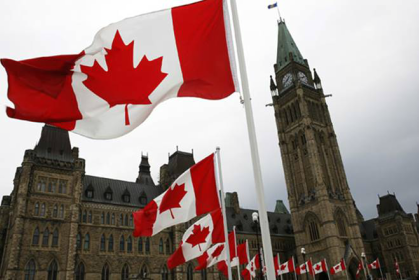
India can draw Canada in a new direction – away from its trans-Atlantic fixation, into the Indo-Pacific and a tech and resources partnership that will benefit both democracies
Courtesy: Financial Express
India can draw Canada in a new direction – away from its trans-Atlantic fixation, into the Indo-Pacific and a tech and resources partnership that will benefit both democracies
Courtesy: MEA/ Flickr
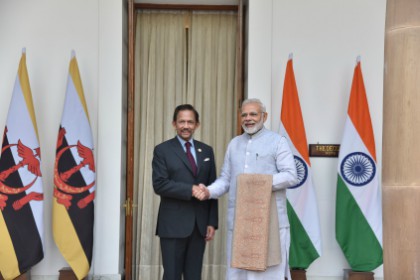
India and Brunei have a 34-year-old diplomatic relationship; but as yet no Indian president or prime minister has paid the country a bilateral visit to strengthen these ties. The strategically-located nation is rich in its history, with a unique political system. Its foreign policy approach is non-controversial, yet noticeably pragmatic.
Courtesy: Global Environment Facility
Since Independence, India has been consumed by its domestic priorities. Now, with increasing integration with the world and a huge stake in global stability, it is time to focus on the global commons. India has a seat on the hightable to design and shape the rules for the governance of the global commons. In this special Independence Day Briefing, Gateway House examines India’s engagement with four global commons – technology, outer space, cyber and the oceans – and makes recommendations on how best they can be governed for our collective future.
Courtesy: Wikimedia Commons
Cyber space is a new global common that defies formal governance. Its interconnectedness makes it full of opportunity, yet vulnerable. Attempts to regulate it have seen setback due to the differing visions of major powers and developing countries. India, an emerging economy with a sophisticated technology industry, is well positioned to shape the governance of this global common
Courtesy: Gateway House
Border regions and communities, some of them far from the heartland, constitute India’s first line of defence, a critical link in its national security. India’s 15,000-km borders touch seven neighbouring countries: Afghanistan (abutting Gilgit), Pakistan, Nepal, Bhutan, China, Bangladesh, Myanmar. Border regions have their own local dynamics, often shaped by subnational and religious identities that do not necessarily align neatly with political borders. Some also serve as flourishing corridors for illegal smuggling of goods and humans. Technology plays an important role in better protecting borders, but in some cases it has made borders obsolete. Despite their importance, border regions do not receive the full attention of the Indian mainstream, except when border tensions arise.
Courtesy: Sameer Patil
With India distracted in the Kashmir Valley, the critical border region of Ladakh has become a target of Chinese attention. Beijing appears to be exploiting Buddhist sectarian rivalries as it did in Tibet
Courtesy: Wikimedia
The June 12 summit was characterised by give-and-take as opposed to the one-way approach practised by earlier U.S. administrations. All countries welcomed the agreement and there is hope that this realism will enable the United States to address other contentious issues too
Courtesy: MEA Flickr
Prime Minister Modi’s visits to South East Asia last week were major steps in furthering the goals of India’s Act East Policy even as major power rivalries unfolded in the region. Most significant was the visit to Indonesia, a low key Asian power but one that India can partner to enhance its regional stature.
Courtesy: Wikipedia
A historic summit is scheduled to take place on June 12. Three participants—the two Koreas and the U.S.—were involved in effecting the rapprochement that has preceded it. And for once, China is playing catch-up. Here is how it came about
Courtesy: Gateway House
China’s ostensible intentions are to turn Gwadar port into a focal point of the China Pakistan Economic Corridor. But the geography of the region is a major stumbling block in the realisation of these ambitions and raises questions about the project’s underlying motives