South China Sea: escalating tensions
Braving potential retaliation from China, the Philippines has now challenged Beijing’s sovereign claims over the South China Sea before a UN tribunal, and raised the stakes in a longstanding dispute

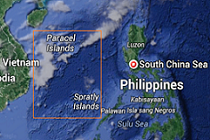 Courtesy: Google Maps
Braving potential retaliation from China, the Philippines has now challenged Beijing’s sovereign claims over the South China Sea before a UN tribunal, and raised the stakes in a longstanding dispute
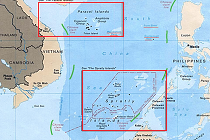 Courtesy: U.S. Central Intelligence Agency/Wikimedia Commons
China is reportedly taking advantage of the situation in Ukraine to further its claims in the South China Sea. Its aggressive stance has pushed the Philippines to approach The Hague for arbitration. There are concerns that the tensions could lead to a breakdown of trade routes in the Western Pacific
 Courtesy: dannyman/Flickr
Down the decades, every government has shown reluctance to declassify the contents of the Henderson Brooks Report, preventing a deeper analysis of what went wrong during the 1962 India-China war. In the absence of this, the key findings of this report remain shrouded in secrecy
 Courtesy: Press Information Bureau
The India-China Defence Dialogue is part of a joint effort to ensure peace along the LAC. The sixth round in New Delhi on 24 February included discussions on border protocols, security cooperation and exchanges in counter-terrorism. Along with these, India must also work on resolving the border dispute
 Courtesy: Spike Call U.S Navy/Wikimedia Commons
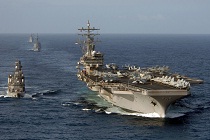
The Indian Navy, through multi-lateral exercises, is increasing its sphere of influence and becoming a regional force. Yet, it needs to be supported by policy decisions that enable it to achieve its potential as a state-of-the-art establishment and a powerful tool in India’s diplomatic repertoire
 Courtesy: Press Information Bureau/Wikimedia Commons
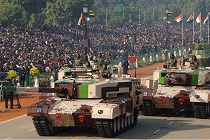
What are the implications for India of the scaling down of U.S. forces from Afghanistan, the continuing tension with China at the border, and the political turmoil in Bangladesh? How should India address these and other upheavals in its neighbourhood, which are potential challenges to the country’s security?
 Courtesy: W123/WikimediaCommons
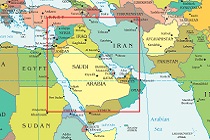
Whether backdoor geopolitics rather than careful negotiations brought about the interim agreement on Iran’s nuclear programme, the next six months will determine its fate. Reactions have ranged from a furious and mistrustful Israel to collective relief by many countries, and a worried India welcoming the agreement
 Courtesy: danxoneil / Flickr
Across the globe, governments trying to control the internet are violating the privacy and rights of internet users. China’s censorship model is limited to its borders, the U.S.’ surveillance affects everyone internationally. A multilaterally-acceptable mandate for cyber governance is now an imperative.
 Courtesy: generalising/Flickr
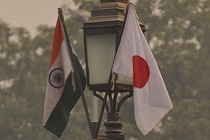
The India-Japan alliance needs to be viewed through a prism broader than that of "containing" China, and by treating the Indian and Pacific oceans as a single entity. Such an alliance has the potential to strengthen the geopolitical security of India and Japan, along with that of all their allies and associates
 Courtesy: bfshadow/flickr
This daily column includes Gateway House’s Badi Soch – big thought – of the day’s foreign policy event. This Badi Soch discusses the new Chinese internet censorship laws and analyses how it plays to a larger model of internet censorship.