Book review: the rise of China
‘Asia’s Cauldron: The South China Sea and the End of a Stable Pacific’ is a pragmatic narrative by Robert D. Kaplan of the receding power of the U.S. and China’s growing dominance

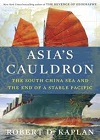 Courtesy: Random House
‘Asia’s Cauldron: The South China Sea and the End of a Stable Pacific’ is a pragmatic narrative by Robert D. Kaplan of the receding power of the U.S. and China’s growing dominance
 Courtesy: RT.com
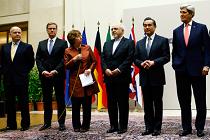
Talks are on in Vienna between Iran and the P5+1 to reach a settlement on Iran’s nuclear programme. The self-imposed deadline expires on July 20. However, with the U.S. insisting that Iran cut back on operational centrifuges any possibility of a comprehensive solution in the near future seems remote
Professor Madhav Nalapat, the director of the School of Geopolitics at Manipal University talks of the Wahhabi winter sweeping West Asia. In an interview to Manjeet Kripalani, Co-founder, Gateway House, he speaks of the need to include regional experts and religious leaders to deal with its impact on India
 Courtesy: U.S. Central Intelligence Agency/Wikimedia Commons
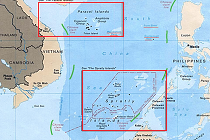
China is reportedly taking advantage of the situation in Ukraine to further its claims in the South China Sea. Its aggressive stance has pushed the Philippines to approach The Hague for arbitration. There are concerns that the tensions could lead to a breakdown of trade routes in the Western Pacific
 Courtesy: Alfred A. Knopf
‘Duty: Memoirs of a Secretary at War’ paints an unflattering and scary picture of the workings of Washington. The book stresses that U.S. presidents have too often been too quick to use military force
 Courtesy: Spike Call U.S Navy/Wikimedia Commons
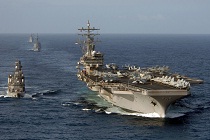
The Indian Navy, through multi-lateral exercises, is increasing its sphere of influence and becoming a regional force. Yet, it needs to be supported by policy decisions that enable it to achieve its potential as a state-of-the-art establishment and a powerful tool in India’s diplomatic repertoire
 Courtesy: Wikimedia Commons
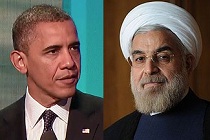
The P5+1 negotiations with Iran, mostly a Washington-Tehran affair, may be a means to a complex and ambitious end: a new strategic and energy equation in Southwest Asia. U.S. President Barack Obama’s recent State of the Union address indicates that to reach this goal, the U.S. is steering away from war to diplomacy
 Courtesy: Press Information Bureau/Wikimedia Commons
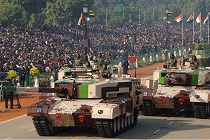
What are the implications for India of the scaling down of U.S. forces from Afghanistan, the continuing tension with China at the border, and the political turmoil in Bangladesh? How should India address these and other upheavals in its neighbourhood, which are potential challenges to the country’s security?
 Courtesy: monotrilho|/Flickr
With elections scheduled in seven Latin American countries, 2014 will be a year of significant political developments in the region. As we enter 2014, Gateway House examines the important events that defined Latin American politics and economy in 2013
 Courtesy: Bloomsbury
In 'Little America: The War within the War for Afghanistan', Rajiv Chandrasekaran examines the U.S.’s Afghanistan policy and the murky realities on the ground to narrate a story of discordant missteps