Countering China's Maritime Greyzone activities Courtesy:
22 July 2021

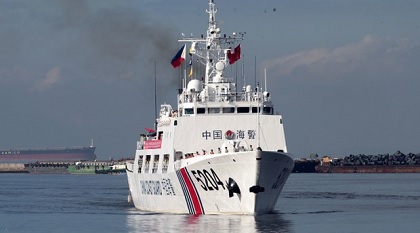
Countering China’s Maritime Grey Zone Activities

On 15 July, Gateway House co-hosted a webcast with Konrad-Adenauer-Stiftung (KAS) on 'Countering China’s Maritime Grey Zone Activities'. The panel discussed the potential strategies that smaller nations in the region can adopt to overcome the challenges of Chinese maritime grey zone activities, and the role of regional maritime powers in capability-building of maritime law enforcement agencies.

Malabar Excercise Courtesy: US Navy/Twitter
26 November 2020

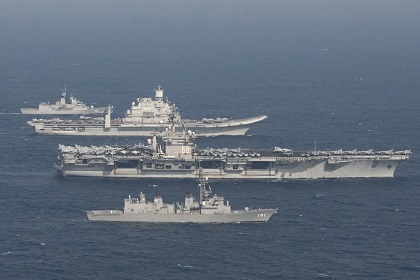
Malabar Naval Exercise 2020

Australia's much-awaited inclusion at the Malabar Exercise-2020 reflects a hard reset in India's foreign policy that was traditionally accommodative to Chinese concerns on the militarisation of the Quad. In the backdrop of the on-going stand-off with China at the Ladakh border, the Indian Navy has maintained a high operational tempo and deployed the highest numbers of frontline assets during this edition of the Malabar Exercise. India must build on this strategic vision and work towards including France at the next edition of Malabar in 2021.

shutterstock_563222041 Courtesy: Shutterstock
24 November 2020

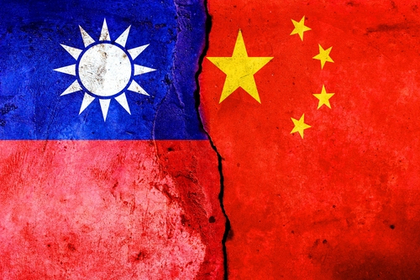
Taiwanese Porcupine vs. Chinese Dragon

Taiwan’s increasing threat of takeover from China by possible amphibious assault reveals the urgent need for the island to strengthen its defences. The commencement of the construction phase of the Indigenous Defence Submarine programme, is a crucial step in Taiwan’s quest to build a credible deterrence to counter sustained Chinese diplomatic and economic intimidation and technology denial.

shutterstock_1787861693 Courtesy: Shutterstock
21 October 2020

Riparian Governance in South Asia

The record of regional cooperation on rivers since India's independence in 1947 is one of several successes, with some contestations. In contrast to the past when governments strove to divide and share river waters, the endeavor has now shifted to thinking about comprehensive river basin development which makes the process even more complex. India’s policy on transboundary river governance must now also be aware of the increasing importance of Indo-Pacific in the global geopolitics.

CG Courtesy: USGS/Wikimedia
6 August 2020

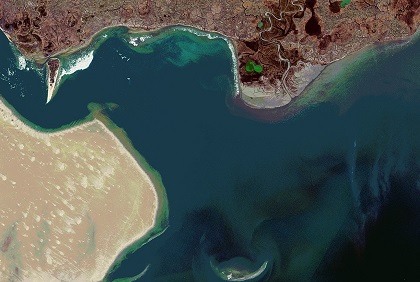
Geospatial shutter control for India

The recent use of geospatial analyses by Indian social and mainstream media for near real-time defence and military intelligence in Ladakh has been made possible because of the lower cost of earth-observation satellite construction, and thereby, easy access to satellite imagery on the internet. While independent analysis is useful, the same intelligence can be also used against the interests of a sovereign nation by an adversary, especially border imagery. India must find innovative methods to reduce this vulnerability of commercial satellite imagery.

DS - Final Courtesy: Tasnim News Agency
25 June 2020

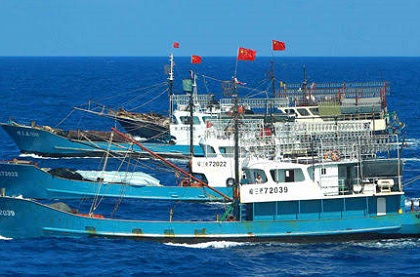
China’s “little blue men”

The Quad is set to launch a satellite-based maritime security initiative to monitor illegal fishing by the Chinese maritime militia. This is long overdue. China’s ‘little blue men’ are recruited from its fishing communities but are in fact official members of a well networked and controlled defense force engaged in regional grey zone warfare.

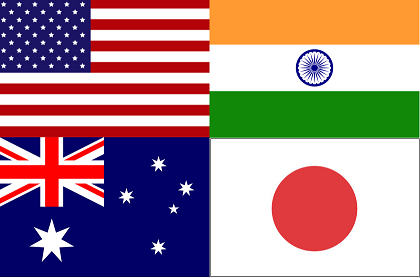
QUAD Courtesy: Shutterstock/Gateway House
18 June 2020

Quad, China and the Indo-Pacific churn

China’s escalating actions in the wake of the COVID-19 catastrophe is a calculated strategic diversion and risk. In the Indo-Pacific, tensions between China and the U.S., Australia, India and others are building momentum. As a geopolitical partnership, the relevance of the Quad is now proven. There are clear ways to empower it immediately, and make it a resilient grouping.

45874457001_77239716a2_c Courtesy: MEA/Flickr
11 June 2020

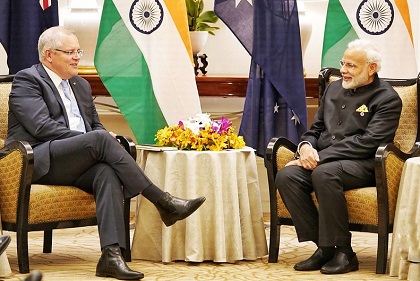
A critical logistics agreement with Canberra

At the 4 June, India-Australia, virtual summit, one of the most critical, among several agreements signed, was the Mutual Logistics Support Agreement (MLSA). India has logistics support agreements with many countries. How is the MLSA with Australia any different? Given the geo-strategic maritime competition with China, this agreement is uniquely significant and could be especially beneficial for the Indian Navy.