the influence of phil in the UN  (1) Courtesy: Debarpan Das
5 February 2026

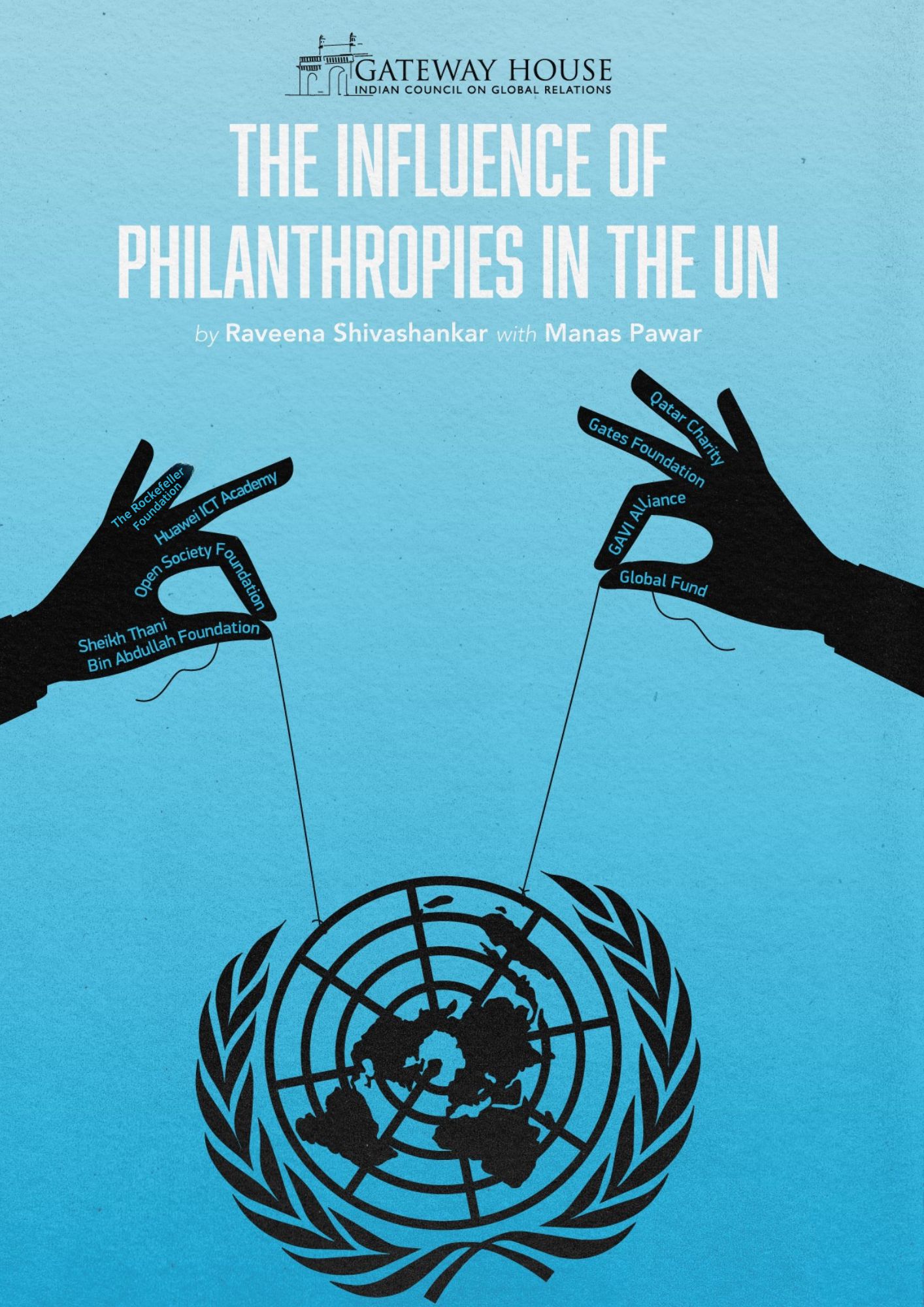
Influence of philanthropies in the UN

Over the last few decades, countries have stopped, delayed, or withheld their UN dues. The UN’s increasing financial needs have led to the acceptance of “voluntary” contributions. Those which come from any entities or individuals and are now its largest income stream. The biggest of these donors are the global philanthropies, which often have differing agendas from the UN’s responsibilities. This report studies these contributions and examines the linkages between donor priorities and UN mandates.
2 (6) Courtesy: Gateway House
5 February 2026

Influence of philanthropies in the UN

On January 7, 2026, the U.S. government announced its withdrawal from 31 UN organisations. This is a shock to the UN system. Several other countries have halted or only partially paid their dues over the years, creating a major funding gap. To cover for it, the UN has turned to “voluntary contributions” which come from philanthropic and private actors. Their misaligned mandates are distorting UN priorities.

News on Air (5) Courtesy: Gateway House
29 January 2026

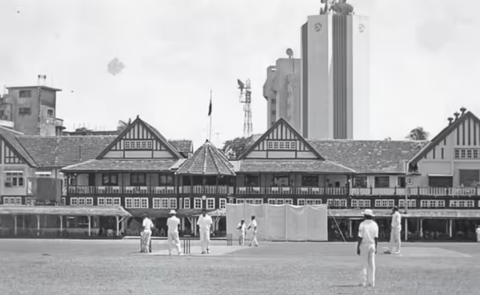
Bombay Gymkhana @150

Mumbai’s oldest sports club, the Bombay Gymkhana, is celebrating 150 years of its existence. Its legacy as a central gymkhana for all sports in the city is reflected in the year-round sports events in which the Club has a continuous presence, such as cricket, rugby, football, squash, tennis, badminton, swimming, and billiards. Its biggest achievement is putting India on the international calendar for cricket and rugby.

Website articles  (34) Courtesy: Gateway House
22 January 2026

Case for post-study ‘S’ visas

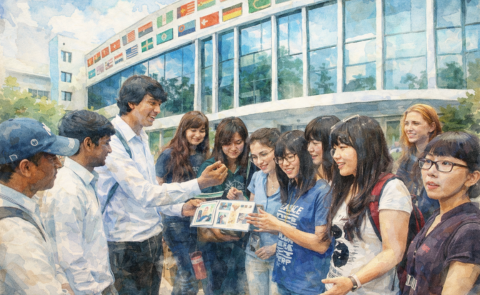
In recent months, visa restrictions have been imposed on foreign students particularly Indians, seeking higher education, especially in the U.S. and the UK. Post-study work opportunities, a key factor in international education choices, have also been affected. This creates an opportunity for India to step in and attract foreign students by introducing an ‘S’ visa that permits post-study work opportunity in India.

Untitled design (6) Courtesy: Gateway House
10 February 2022

Panel Discussion on India in the Indo-Pacific

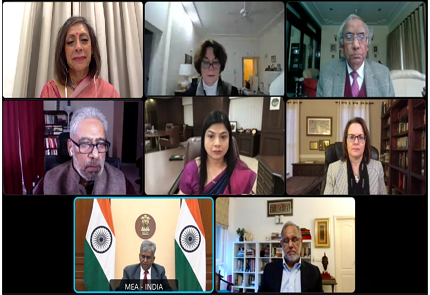
On 1 February 2022, Gateway House and the U.S. Embassy, New Delhi, co-hosted a panel discussion on India in the Indo-Pacific: Pursuing Prosperity and Security. The panelists explored the comprehensive role that India can play in the Indo-Pacific from the perspective of business, think tanks, academia and diplomacy.

Europe - IP Courtesy: Club of Three
18 November 2021

Indo-Pacific through the European prism

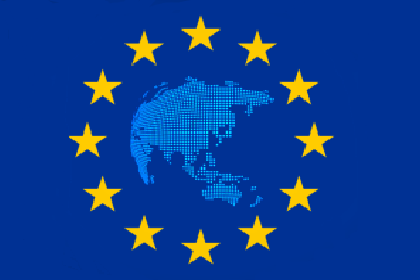
The EU's Indo-Pacific strategy, released in September, set the tone for a renewed focus on the region. Europe's Asia connect is rich, strong and multi-layered, laying the foundation for an advantageous position for the EU in the Indo-Pacific. This can be achieved if the EU is more candid with itself, more assertive with China, and more cooperative with India.

shutterstock_1091235845 Courtesy: Shutterstock
15 October 2020

UN: Necessary but reformed

The UN turned 75 this year but instead of grand celebrations, the world witnessed an empty UNGA with world leaders addressing it via video screening because of the pandemic. The UN is under unprecedented stress and being shown up for its inability to tackle the challenges of today like the pandemics, climate change, terrorism or global peace and security. The institution's key governing structures, especially the UN Security Council, are inadequate and demand reform. India must now use gritty resolve to ensure its place in these governing structures.

Global Stability Map Courtesy: Gateway House
1 August 2012

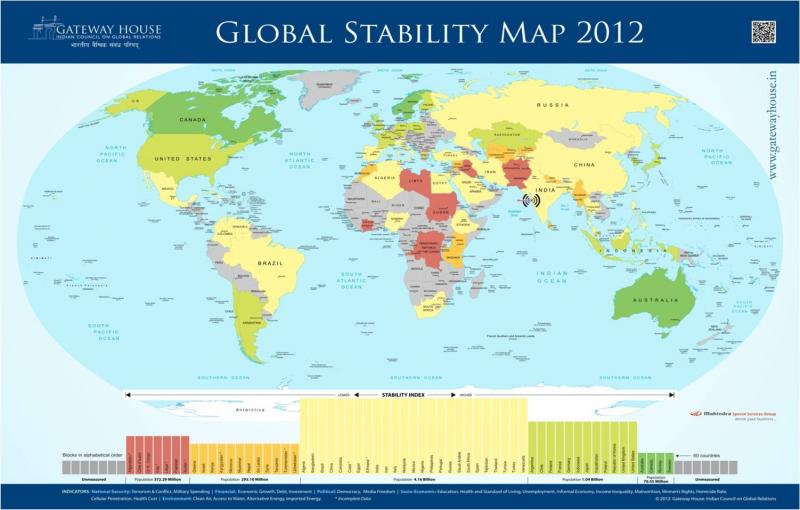
Global Stability Map 2012

Gateway House prepared a Global Stability Map, using 20 differing indicators, to analyze the stability of 60 countries around the world. Using criteria that are important to the emerging economies of the world, the map provides an Indian perspective of the world today.

Trans Pacific Partnership (TPP)
13 December 2011

Trans Pacific Partnership (TPP)

Amidst myriad country groupings that already exist – BRICS, IBSA, APEC, SCO and many others – a new initiative in the Pacific is looking to integrate more powerful countries to form a multilateral free trade agreement – the Trans Pacific Partnership. How important is this towards the reshaping of trade and power?