Prime Minister Narendra Modi’s visit to Japan is significant for India domestically and its extended Asian influence. His visit, just prior to the SCO Summit in China, represents a shrewd endeavour at balancing the several priorities of Indian foreign policy
The G20’s current cycle is unique, with four Global South nations presiding consecutively: Indonesia, India, Brazil, and now South Africa. Brazil’s 2023-24 presidency exhibited both achievements and struggles, prioritising social inclusion, hunger, energy transition, and governance reform. The handover to South Africa marks a significant milestone in G20 history. Will the momentum be followed by the U.S., the next G20 president but also a G20 sceptic?
Chinese Foreign Minister Wang Yi's two-day visit to India achieved a significant goal: to resolve the bilateral border dispute and ensure Prime Minister Narendra Modi’s presence at the Shanghai Cooperation Organisation summit. It’s not a reaction to the U.S.-India tariff tensions, but a realistic policy compulsion felt by India.
India-U.S. trade negotiations have faltered. India stepped outside its comfort zone to offer zero tariffs on industrial goods that form 40% of U.S. exports to India, but the additional 25% tariffs have rendered most Indian exports noncompetitive. Only a carefully balanced, incremental negotiating framework blending economic pragmatism with protection of core domestic interests backed by political will, stands a realistic chance of bridging the current impasse.
The proposed IMEC corridor connecting India to Europe through the Gulf can be transformative, helping to reduce risks to the global movement of goods and data. It’s early days yet, and there are gaps to be filled in terms of missing infrastructure and overcoming a diplomatic rift.
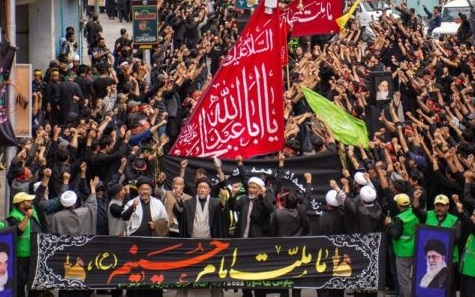
Thousands of Ladakhi Shia men and women in Kargil mourned the death of Iranian President Ebrahimi Raisi on May 21, 2024. Iran’s influence in the region goes back to the 15th century with the arrival of Shia missionaries. Their identity was reinforced by the Iranian Revolution in 1979. The cultural and religious practices of the Iranian-influenced community underscore the local politics in the sensitive border region.
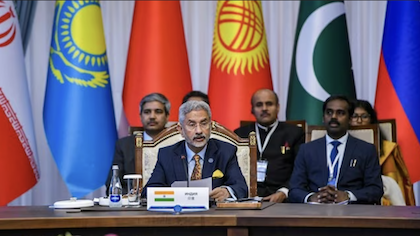
At the meeting of the Shanghai Cooperation Organisation (SCO) on October 26, Foreign Minister S. Jaishankar stressed the importance of maintaining regional stability and enhancing economic cooperation in Central Asia. Achieving its economic and strategic objectives in the SCO will become a challenge for Indian diplomacy next year, when Pakistan takes on the chairmanship of the grouping.
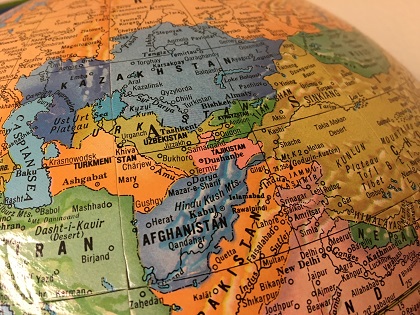
The Russia-Ukraine conflict has led to the resurgence of interest in Central Asian as an alternate trade corridor between Europe and Asia. Timely investment in connectivity projects like the Middle Corridor and the INSTC by regional stakeholders, as well as by the EU, China and India, must now build on this interest to create new regional, international, and cross-continental transport corridors.
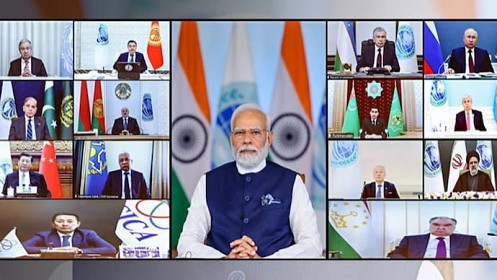
The Shanghai Cooperation Organisation's growing importance is seen in the numerous new applicants waiting in line for membership. The 23rd SCO Summit hosted by India on July 4 saw progress in areas like digital transformation and economic cooperation. However, timidity in acting on foundational issues like anti-terrorism reflects the internal contradictions and tensions within member states - a continuing challenge for SCO.
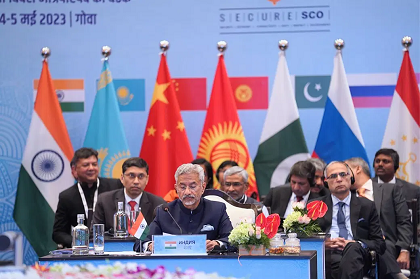
India, as chair of the Shanghai Cooperation Organisation, hosted the foreign ministers’ meet in Goa last week. What would have been an important and expanding regional grouping has been complicated by the Russia-Ukraine crisis, the increased influence of China and an obstructionist Pakistan. Still, India has played its role with an eye on the long term.