revised design Courtesy: Gateway House
27 November 2025

Rise of the Davos Competitor

U.S. health secretary Robert Kennedy Jr. called the World Economic Forum a “billionaires’ boys club” imposing totalitarian controls. Indeed, since 1971, the elite platform shaped geopolitics. But its Western-centricism kept out the concerns of the rest. This gave rise to alternative forums, which look beyond financial agendas to the perspectives shaping the Global South. Here are 45 of biggest, half of which began just two decades ago.

PTI Courtesy: PTI
30 October 2025

India’s Taliban outreach

The visit of Taliban foreign minister Mawlawi Amir Khan Muttaqi to India has resulted in the reopening of the Indian mission in Kabul, and the resumption of stalled projects, mostly in the development sector. India now needs a long-term strategy for Afghanistan – starting with an outreach to the Taliban’s Supreme Leader, the dreaded Haqqani network, even the anti-Taliban groups – to secure its position in that country.

Ivan Courtesy: Gateway House
8 October 2025

Unfolding Geopolitics Episode 23 | India renews engagement with Afghanistan

Afghanistan’s Foreign Minister Amir Khan Muttaqi will visit India on October 10, marking the first high-level Taliban visit since the group took over Kabul in 2021. Nayanima Basu discusses the purpose of this visit and the importance of engagement with Afghanistan. She explains the roles of China, which seeks business; Pakistan, which pursues political interests; and the U.S., which has a renewed interest in Bagram Air Base and its return to the country it abandoned.

President of Russia Courtesy: President of Russia
2 October 2025

Valdai frames Russia’s global doctrine

Each autumn, Russia convenes its flagship Annual Summit — a gathering of global leaders, business elites and intellectuals. Often compared in scale to Davos or Shangri-La, what sets Valdai apart is President Vladimir Putin’s extended, unscripted dialogue with the audience. Over the years, India has moved to the centre of this dialogue, reflecting its strategic weight and offering rare insight into Moscow’s evolving worldview.

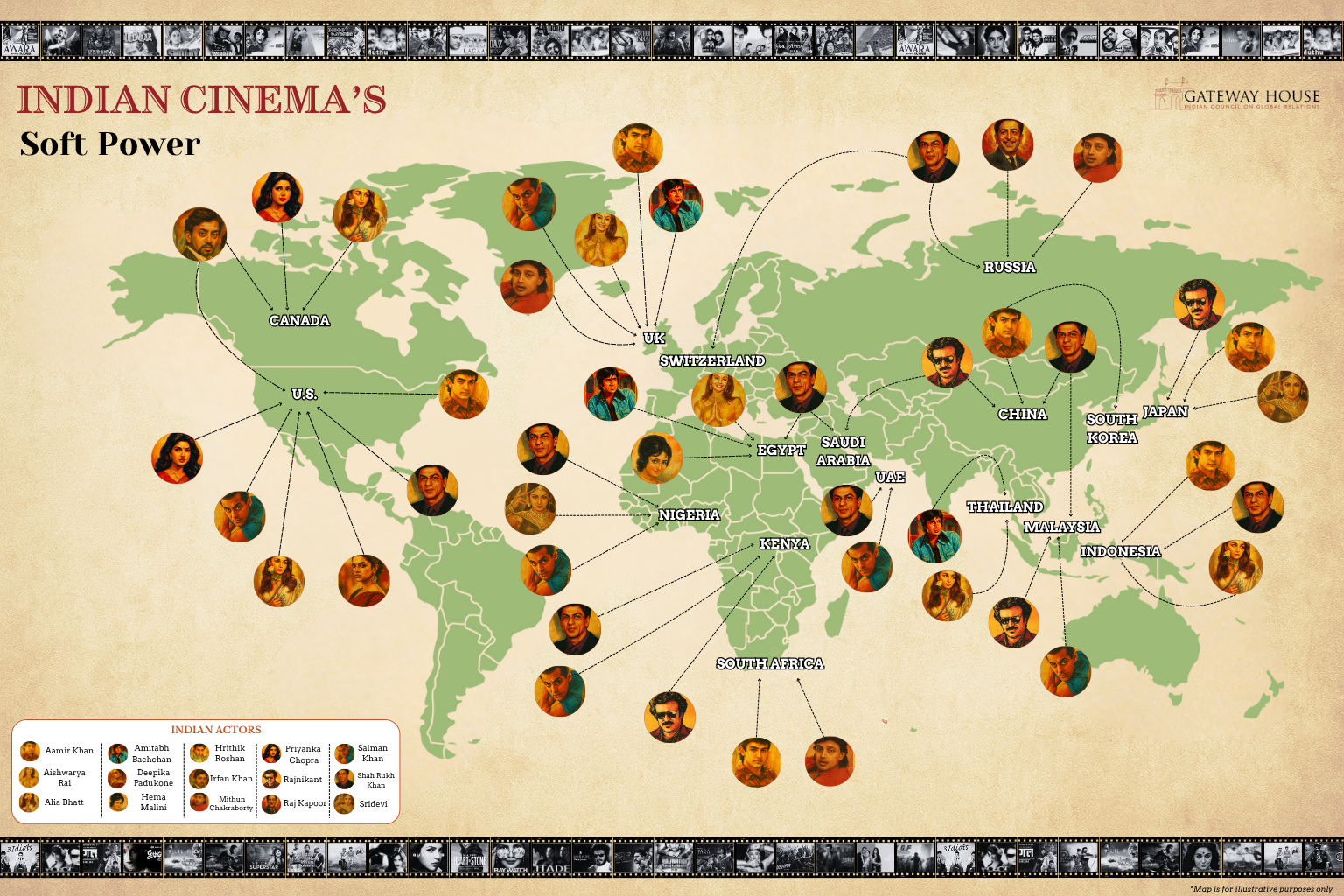
Most popular Indian actors worldwide Courtesy: Gateway House
1 October 2025

Indian Cinema as Economic Catalyst

As India seeks leadership in a multipolar world, cultural credibility is as vital as economic clout. Cinema gives India an edge with vivid storytelling, music, and empowering narratives, fostering understanding in a polarised world. Its popularity correlates with trade, as seen in the U.S., Russia, and Middle East. The more popular the cinema, the bigger the boost to trade.

U.S. Tariffs on Brics+ countries Courtesy: Gateway House
25 September 2025

U.S. Reciprocal Tariffs on BRICS+ countries

Under U.S. President Donald Trump’s reciprocal trade policy, the original five BRICS member countries account for the highest U.S. tariffs globally. India and Brazil are facing the highest tariffs of 50%, while China follows with a tariff of 34%, down from 145% earlier in the year. This infographic details the U.S. reciprocal tariff rates for each BRICS+ member and the sectors that are impacted.

Website articles  (12) Courtesy: Gateway House
15 May 2025

U.S., global emperor of sanctions

Over two centuries, the U.S. has amassed vast economic powers across the globe during and after the two World Wars , and sanctions slowly became an effective tool it used to achieve its foreign policy goals, becoming the global emperor of sanctions.

website SCO Courtesy: India Today
11 July 2023

SCO Summit: Same old, some new

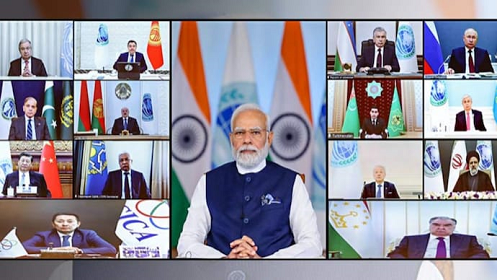
The Shanghai Cooperation Organisation's growing importance is seen in the numerous new applicants waiting in line for membership. The 23rd SCO Summit hosted by India on July 4 saw progress in areas like digital transformation and economic cooperation. However, timidity in acting on foundational issues like anti-terrorism reflects the internal contradictions and tensions within member states - a continuing challenge for SCO.

1247994038.0 Courtesy: Vox
23 March 2023

Peacemakers, Rivals and Mates in the Gulf

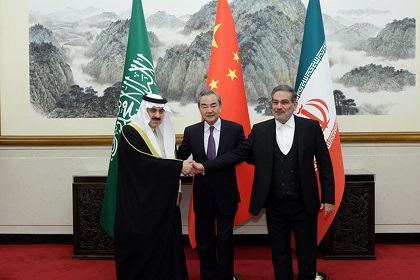
The restoration of diplomatic ties between Iran and Saudi Arabia marks the end of a seven-year marathon of indirect confrontations and impasses involving a broad spectrum of actors. It allows both to harvest economic and political benefits. Most importantly, it confirms China’s status as a significant power with influence to unlock broad and complex international agreements.