shutterstock_167012954 Courtesy: Shutterstock
9 January 2020

Digital Natives’ protest goes offline

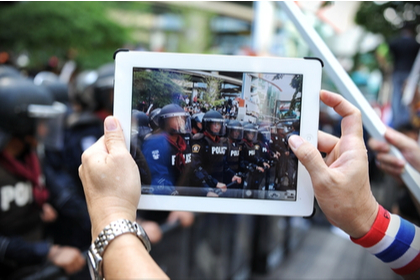
The current wave of protests sweeping India and the government’s suspension of internet services to impede communication has led to innovation. Protesters have taken recourse to offline messaging applications to escape detection while executing their plans. This infographic tracks the evolution of online media – from the basic to the more discreet

shutterstock_1420700369 Courtesy: Shutterstock
24 October 2019

Global protests: leaderless, youthful, persistent

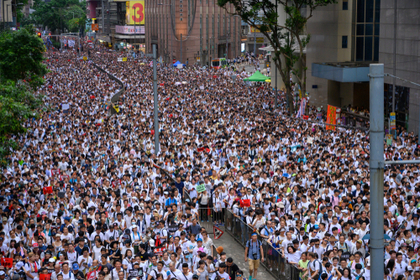
There has been a wave of civil protests across the globe since early 2019 which have taken governments by surprise by their sheer intensity and resilience. The common impelling factor has been discontent with government. Other factors for the current wave, beginning with the Arab Uprising in 2011, have been corruption and regressive constitutional changes. This infographic charts the arc of the outcry

Cryptocurrency-Bitcoin-Blockchian Courtesy: exit.al
2 May 2019

Chronicling strikes on digital black markets

Digital black markets or “dark net marketplaces” which facilitate the transaction of contraband and illegal services, pose a silent, relatively unnoticed threat to the economy. Hackers, organised criminal networks and terrorist groups use these sites, their advanced security features enabling anonymity when executing cybercrimes. This infographic looks at some of the security crackdowns that have eliminated only some of these sites as they have proved to be resilient

Djibouti - Title Card Courtesy:
3 October 2017

Djibouti’s ‘military base’ diplomacy

Indian President Ram Nath Kovind leaves for Africa on his first foreign visit as president on October 3. His first port of call will be Djibouti, which occupies a strategic location in the Horn of Africa. The country has assumed significance for hosting multiple foreign military bases on its territory, the latest entrant being China. This infographic illustrates Djibouti’s ‘military base’ diplomacy.

GH_GeoeconomicPushback Courtesy: Gateway House
10 August 2017

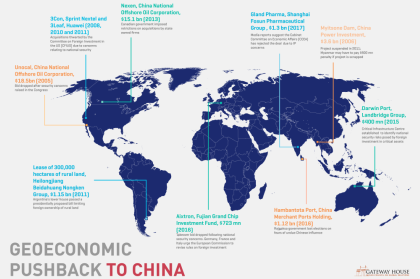
Geoeconomic pushback to China

The Indian government may block the acquisition of Gland Pharma by Shanghai Fosun Pharmaceuticals, a move that offers further confirmation of how China’s opaque business model is causing concern worldwide. This infographic shows some high-profile cases of acquisitions by Chinese companies that ran into local opposition

GH_5050-3-page-001 (1) Courtesy: Gateway House
22 December 2016

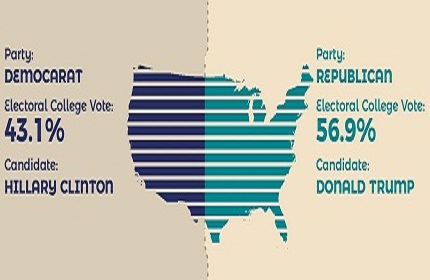
The year of the close vote: a 50:50 world

The year 2016 is the year of the divided electorate, so close were some of the election outcomes. Deep divisions lurk within voters coming from ostensibly “liberal” political cultures. The trend looks set to continue in the elections that will be fought in dozens of countries in 2017, where the votes could also be divided. Gateway House analyses these results through this infographic

GH_Demonetisation_Web-724x1024 Courtesy: Gateway House
24 November 2016

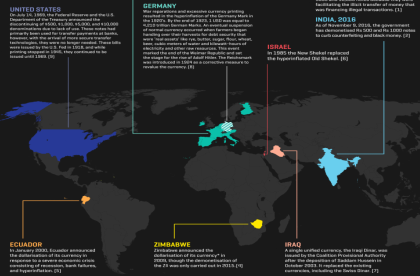
Demonetisation around the world

Prime Minister Narendra Modi's announcement on November 8 to demonetise notes of the denomination of Rs 500 and Rs 1000 has a precedent. This infographic traces some interesting demonetisation initiatives around the world. From discontinuation of high denomination notes due to lack of circulation, to the use of beer and water as 'real assets' in place of hyper-inflated currency.

GH_Cover Image Courtesy: Gateway House
4 August 2016

U.S. elections: foreign policy positions

A lesser publicised aspect of the American Presidential Race is the adoption of the Party Platform during the Convention. During the Republican National Convention and the Democratic National Convention, the two parties put down and adopted their platforms. Ambassador Neelam Deo analyses the foreign policy aspects of the platforms and their implications.