Indo-Pacific: New Geostrategic Reality
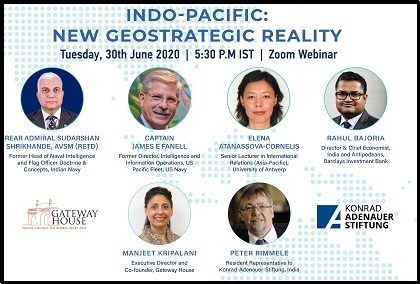
On 30th June, 2020 Gateway House in association with Konrad-Adeneur-Stiftung (KAS) co-hosted a webinar on Indo-Pacific: New Geo strategic reality.

 Courtesy: Gateway House
On 30th June, 2020 Gateway House in association with Konrad-Adeneur-Stiftung (KAS) co-hosted a webinar on Indo-Pacific: New Geo strategic reality.
 Courtesy: Flickr/MEA
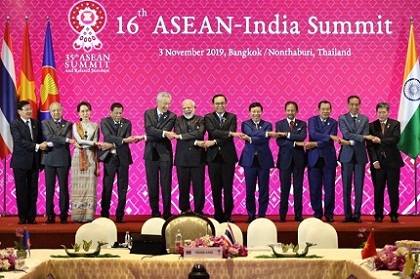
The 35th summit of the Association of South East Asian Nations, held in Bangkok early in November, showed that a shifting geostrategic landscape notwithstanding, “ASEAN centrality” in the region is a top priority with members. It also served as a backdrop for three summits that ASEAN held on November 4 with China, U.S. and India
 Courtesy: Shutterstock
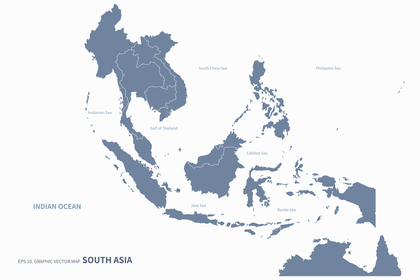
The foreign ministers of the Quad countries meet for the first time in New York today even as the Indo-Pacific has turned into a keenly contested geopolitical arena. Some countries are offering to play a mediatory role while other triangular equations are also undergoing change. An analysis of some of the relationships at work here
 Courtesy: Pacom
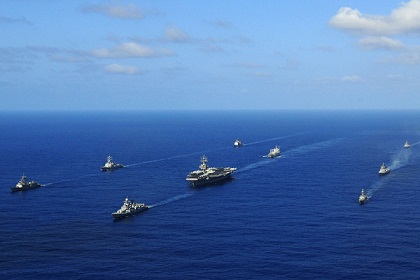
Canada, which has been slow to respond to a changing trans-Pacific neighbourhood, can join India and the ASEAN member states to embark on a trilateral dialogue on the Indo-Pacific’s importance in terms of political, strategic and other domains. An alignment in outlook can strengthen the security and prosperity of a region, currently mired in U.S.-China rivalries
 Courtesy: Gateway House
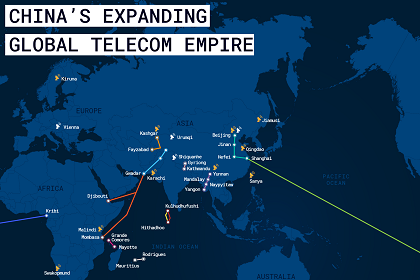
This version of the Gateway House Map on China’s Expanding Global Telecom Empire identifies some more telecommunication assets -- optic-fibre and satellite ground stations -- that Beijing is working on in South and Central America, Africa, Myanmar, the Indian Ocean Region and mainland China besides the existing ones, such as the Pakistan East Africa Cable Express (PEACE). It shows the direction China’s investment is taking, its diplomatic overtures and the larger geopolitical implications of its growing telecom empire
 Courtesy: Zee News
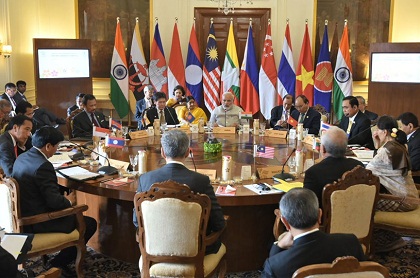
Indonesia and Malaysia appreciate India’s leadership role in the Indo-Pacific, but are also aware of all that keeps it from delivering on its commitments. A policy visit to the two countries enabled a closer look at some key issues, such as ASEAN’s centrality, the Quad and India’s stand on the Regional Comprehensive Economic Partnership
Yuan Peng, Vice President, and Dr. HU Shisheng, director, respectively of the Institute of South & Southeast Asian and Oceanian Studies, China Institute of Contemporary International Relations, Beijing, spoke to Gateway House about working towards ‘the final goal of denuclearisation’, India-China relations since the Doklam stand-off and addressing security concerns raised by the Belt and Road Initiative
 Courtesy:
The following presentation was given by Ambassador Rajiv Bhatia at an event hosted by Working Group on Alternative Strategies on 4 January 2018 The Issue: Vital Elements Two dates and a few numbers are worth recalling here: 25 August 2017 when Read more
 Courtesy: Flickr
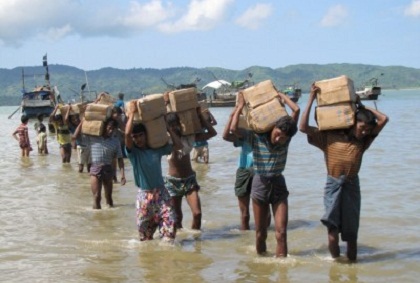
No easy solutions to this refugee problem are emerging despite the considerable international attention it has drawn. India has taken a pragmatic stand despite anxiety about deepening China-Myanmar ties
 Courtesy: Western Naval Command
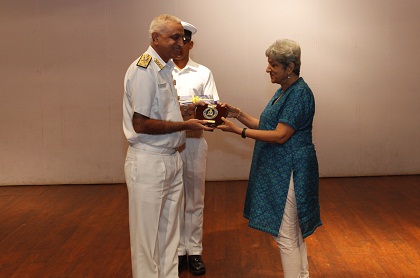
China has expanded its presence in the Indian Ocean Region. President Xi Jinping has abandoned Deng Xiaoping’s conciliatory posture for an aggressive, money-fuelled search for super power status