Geopolitical contestations in cyberspace
27 December 2021

Geopolitical contestations in cyberspace

On 20 December 2021, the Gateway House-FLAME Policy Lab organised a webcast on geopolitical contestations in cyberspace. Gateway House’s Sameer Patil moderated the discussion with former deputy National Security Advisor Latha Reddy, National Law University’s Gunjan Chawla and cybersecurity expert Atul Khatavkar.


DRUK HYDRO DAM Courtesy: Druk Green Power Ltd
18 November 2021

Bay of Bengal connectivity

The Bay of Bengal is gaining relevance as a significant sub-region within the Indo-Pacific. Despite its importance to regional security, there is inadequate financial, physical, and energy connectivity. India must use its strategic and political pre-eminence and influence in the sub-region to pursue deeper connectivity with Bangladesh, Myanmar, Thailand, Nepal, and Sri Lanka and to block China's growing influence.

Pakistan is India's new cybersecurity headache Courtesy: Technology Times
11 November 2021

Pakistan is India’s new cybersecurity headache

Cyberattacks from Pakistan-based hacker groups targeting India have increased. The stepped-up cyber activity comes in the backdrop of Islamabad's new cyber security policy and expanded digital cooperation with China. India must bolster its existing abilities in cyber forensics and regulations to counter the enhanced Pakistani threat.

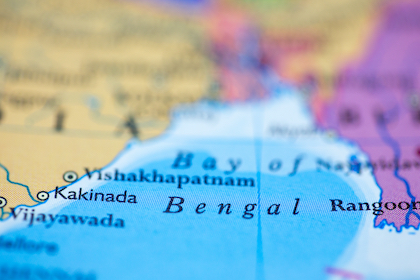
The Bay of Bengal: The next battle Courtesy: Shutterstock
28 October 2021

Bay of Bengal: Building tech connectivity

The Bay of Bengal is a natural bridge between South and South-East Asia, which New Delhi seeks to optimise. But progress on India's Act East policy has been slow, creating a space for China's Belt and Road Initiative to step into. While India cannot match China’s cheque-book diplomacy, it can use its start-up industry to pursue a combination of physical, technological and financial projects to improve regional connectivity.

Countering China's grand tech strategy Courtesy: Shutterstock
21 October 2021

Countering China’s grand tech strategy

In 'A Grand Strategy: Countering China, Taming Technology, and Restoring the Media', a new book on China's technological ambitions, author William J. Holstein explains China's push to advance its technological prowess, exploring ​the link between technology, politics and economics in today's world. In this podcast, he tells us more about this connection, which has often been overlooked by the American media.

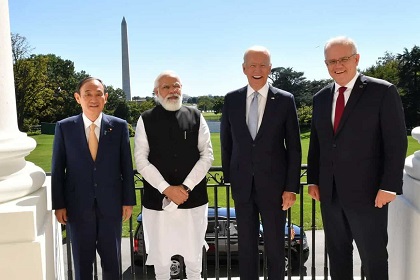
quad_ 420x280 Courtesy: Twitter | @narendramodi
14 October 2021

Cyber resilience in the Quad

The recent Quad Leaders' Summit set cybersecurity cooperation as a priority for the four countries. The Quad leaders also announced the creation of a Senior Cyber Group, a joint effort on establishing cyber standards and security. This builds on an already-robust collaboration, especially since Quad members have shared cyber threat perceptions.

Lisa Curtis and Surjit Bhalla Courtesy: CNBC-TV18 (Youtube)
5 August 2021

Quad collaboration on economics and technology

On 30 July 2021, Lisa Curtis and Surjit Bhalla, co-chairs of the Gateway House Quad Economy and Technology Task Force, spoke to CNBC-TV-18 on the various channels of cooperation between the Quad countries in technology, supply chains and undersea cables, and the need to counter China's dominance in the Indo-Pacific.

attributing cyber-attacks Courtesy: Shutterstock
15 July 2021

Attributing cyber-attacks

A ransomware attack recently targeted Kaseya, a software services company in the U.S., for $70 million, incapacitating hundreds of its clients globally. There is an increasing incidence of such attacks, with perpetrators targeting government agencies and high-tech companies, leading to considerable economic losses. How can governments mitigate these threats and attribute responsibility to those accountable?

BigTech Report (1) Courtesy: Gateway House
1 July 2021

Regulating Big Tech: A Balancing Act

Big Tech is powerful and its profits are growing - by 105% over the last year. It dominates economies. This raises concerns about data protection and privacy, anti-trust, fintech and the specific role of intermediaries. India is leading the way on fintech, but is behind several countries and institutions on digital rules. It is important to establish laws and rules to govern technology – whether domestic or through multilateral bodies – with the aim to strike the right balance between innovation and regulation.