Regional impact of U.S.-Taliban deal
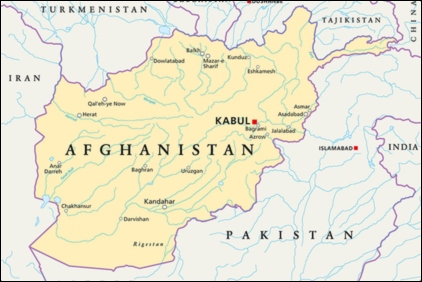
The U.S.-Taliban deal of 29 Feb favours some and disadvantages others in the region. This infographic shows how regional geopolitics will change

 Courtesy: Shutterstock
The U.S.-Taliban deal of 29 Feb favours some and disadvantages others in the region. This infographic shows how regional geopolitics will change
 Courtesy: Gateway House
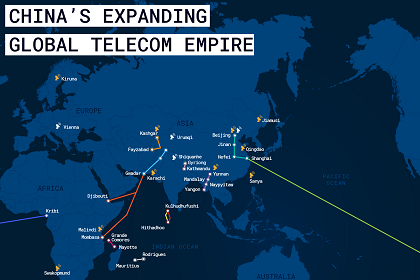
This version of the Gateway House Map on China’s Expanding Global Telecom Empire identifies some more telecommunication assets -- optic-fibre and satellite ground stations -- that Beijing is working on in South and Central America, Africa, Myanmar, the Indian Ocean Region and mainland China besides the existing ones, such as the Pakistan East Africa Cable Express (PEACE). It shows the direction China’s investment is taking, its diplomatic overtures and the larger geopolitical implications of its growing telecom empire
 Courtesy: Wikipedia
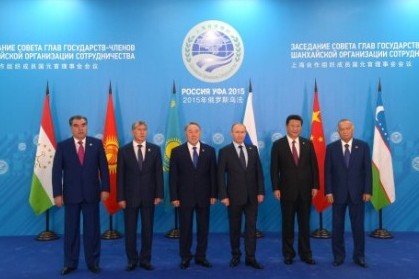
India’s forthcoming membership in the Shanghai Cooperation Organization (SCO) will benefit the SCO, Central Asia, Russia, China, as well as India itself. While India will be able to promote its own security, strategic, trade, economic, and energy interests in Central Asia, the SCO will benefit from India's rapid growing economy and its experience in counter-terrorism.
 Courtesy: Wikipedia
Prime Minister Narendra Modi’s recent visit to Central Asia is an important moment for Indian business to increase its presence in the region. Before doing so, it must consider the region’s geopolitical and security challenges—but once past these hurdles, the region has many investment opportunities
 Courtesy:
India must quickly recognise the evolving changes, challenges, and opportunities in Central Asia to avoid being relegated to the periphery of Eurasian trade AND geopolitics. It is now up to Prime Minister Modi to manage a rebalancing in Central Asia through diplomacy and cooperation rather than competition
 Courtesy: Ministry of External Affairs, India
While the recent India-Japan Joint Statement contains significant breakthroughs, the China-Pakistan Joint Statement reveals the absence of warmth between India and China. With the current flurry of bilateral exchanges, India is fine-tuning its approach to emerging regional realities, as are others.
 Courtesy:
India’s relations with Islamic nations, many of which are members of the Organisation of Islamic Cooperation (OIC), have become even more prolific over the last decade. While India does not visualise becoming a member of a religious international body, many reasons militate against our formally joining the OIC.
 Courtesy: Gateway House
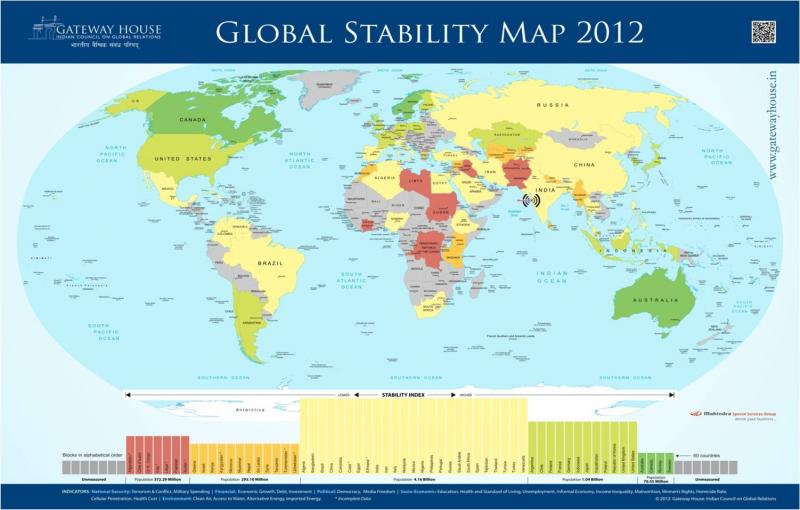
Gateway House prepared a Global Stability Map, using 20 differing indicators, to analyze the stability of 60 countries around the world. Using criteria that are important to the emerging economies of the world, the map provides an Indian perspective of the world today.
Though some countries like Russia gained a strong foothold in Central Asia and the Caucasus post-1991, India has been a late-comer. Gateway House interviews former Ambassador to Azerbaijan Debnath Shaw to discuss India’s energy interests in the region, the Shanghai Cooperation Organization and the TAPI pipeline.
 Courtesy: PMO
India will do well to expand its positive and trust-laden cooperation with Russia in commerce, technology, and education, into a broader regional one, and establish a more meaningful presence in Central Asia. This will also assist in the future acquisition of energy resources in the region.