Imperatives of regulatory diplomacy
Regulations are the new focus of economic statecraft. Their increasing importance is reflected in the negotiations on global financial standards, plurilateral trading rules, and regional economic unions.

 Courtesy: Quartz
Regulations are the new focus of economic statecraft. Their increasing importance is reflected in the negotiations on global financial standards, plurilateral trading rules, and regional economic unions.
 Courtesy: rajkumari1220/Flickr
India’s political and economic future will be determined over the next few weeks. Gateway House recommends a priority diplomacy agenda for the next government – one which puts economics at the heart of our foreign policy
 Courtesy: Asitimes/ Flickr
Indian and Chinese companies routinely bid against each other in their quest to secure oilfields and other resource pools resulting in rising prices. However, a preferable recourse would be for the nations, along with ASEAN, to collaborate as there is enough for all
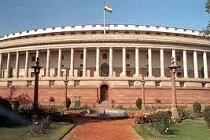 Courtesy: Shwkyn231/Flickr
The year 2012 has been a busy one for foreign policy: from escalating disputes in the South China Sea to alternate financial instruments from the emerging world. India’s foreign policy too has its shown strengths and weaknesses. We present our top foreign policy Hotspots, Sweet spots and Blind spots for 2012.
Philip Oldenburg, Professor at Columbia University, comments on the fragile relationship between India and Pakistan, and also discusses his new book "India, Pakistan, and Democracy: Solving the Puzzle of Divergent Paths".
Sreeram Chaulia, Vice Dean of the Jindal School of International Affairs, talks to Gateway House’s Samyukta Lakshman about his new book titled, "International Organisations and Civilian Protection".