Sifra_image Courtesy: Gateway House
12 November 2020

India and the SCO: Bound by Buddism

In November this year, India will be hosting the Shanghai Cooperation Organisation (SCO) exhibition “Shared Buddhist Heritage” to coincide with the SCO Council of Heads of Government Meeting and two Ministerial Level Meetings. This paper recommends a theme on India’s Buddhist legacy in the SCO, which ties together three important Buddhist historical narratives (based on archaeological evidence), that can add heft to India’s leadership in reviving people-to-people ties through Buddhism amongst the eight member nations
Ambika_Image Courtesy: Gateway House
12 November 2020

SCO: Time for a revised Charter

The expansion in membership of the Shanghai Cooperation Organisation (SCO) is an opportunity to review, possibly revise and widen the scope of its Charter to make it more suited to address the concerns of all its members, including new ones like India. This paper recommends what the changes in the SCO Charter ought to be by comparing it with the successful ASEAN charter.

Rajiv Bhatia_Image Courtesy: Gateway House
12 November 2020

India-SCO: New Platform, Common Ground

India will host the 19th meeting of the Council of Heads of Government on 30 November 2020. This will be the first meeting of the grouping’s second highest organ, hosted by India. The significance of the event lies in the timing – India’s relations with two fellow memberstates, China and Pakistan, are at an exceptionally low ebb; yet the clear message from the SCO Secretariat and other member-states is: India’s presence in the SCO is highly beneficial to the latter and should be fully leveraged to strengthen it as an important and upcoming intergovernmental organisation. This necessitates a fresh appraisal of options for India.

Edm7TMnUEAEZlk6 Courtesy: Shutterstock
6 August 2020

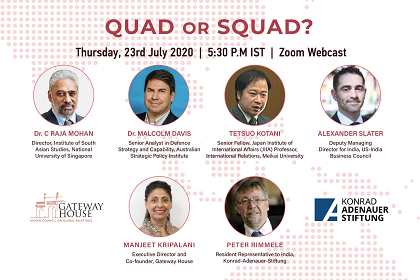
QUAD or SQUAD?

The Quad, a grouping of Indo-Pacific democracies, is more relevant than ever. It must now operationalise not just the military exchanges but also formalise economic and technology partnerships that will undergird a meaningful new multilateral, provide it with resilience and appeal in the Indo-Pacific region. In this Webcast, co-hosted by Gateway House and Konrad-Adenauer-Stiftung, the panelists discuss the need to reform Quad, which hosts the four leading global voices, in order for it to become the magnet that attracts like-minded nations, small and big cutting across continents and oceans to converge on the new world order realities.

QUAD Courtesy: Shutterstock/Gateway House
18 June 2020

Quad, China and the Indo-Pacific churn

China’s escalating actions in the wake of the COVID-19 catastrophe is a calculated strategic diversion and risk. In the Indo-Pacific, tensions between China and the U.S., Australia, India and others are building momentum. As a geopolitical partnership, the relevance of the Quad is now proven. There are clear ways to empower it immediately, and make it a resilient grouping.

kcmodi0312_0 Courtesy: Flickr/MEA
28 November 2019

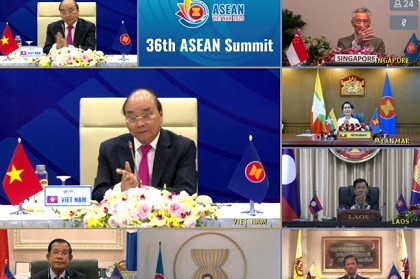
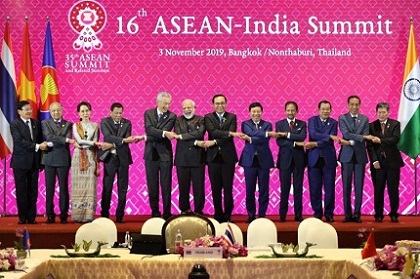
Assessing the 35th ASEAN Summit

The 35th summit of the Association of South East Asian Nations, held in Bangkok early in November, showed that a shifting geostrategic landscape notwithstanding, “ASEAN centrality” in the region is a top priority with members. It also served as a backdrop for three summits that ASEAN held on November 4 with China, U.S. and India

48645255438_77e7265a4b_c Courtesy: TICAD7/Flickr
3 October 2019

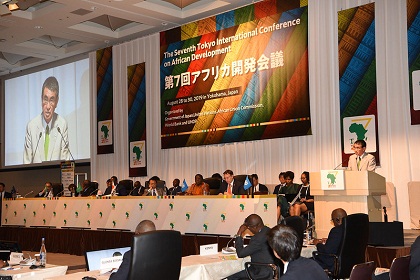
TICAD 7’s agenda: engaging private enterprise

The Seventh Tokyo International Conference on African Development was a departure from earlier editions of it. Japan, which is changing tack as a competitor to China in Africa, held back from publicising the number of heads of state present to prevent any comparisons with other such forums and made no further commitments on Overseas Development Assistance. The accent, instead, was on increasing Japanese private sector engagement

shutterstock_1457421710 (1) Courtesy: Shutterstock
26 September 2019

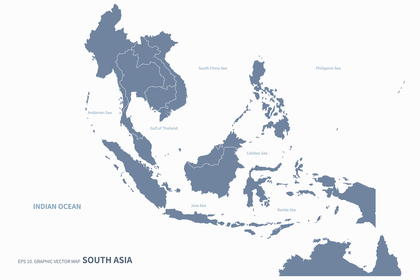
Quad in the Indo-Pacific

The foreign ministers of the Quad countries meet for the first time in New York today even as the Indo-Pacific has turned into a keenly contested geopolitical arena. Some countries are offering to play a mediatory role while other triangular equations are also undergoing change. An analysis of some of the relationships at work here