SCO Goa meet unveils ‘big gulf of distrust’ between India and Pakistan
Our Distinguished Fellow for Foreign Policy Studies, Amb. Rajiv Bhatia, was quoted by WIONews on the SCO Foreign Ministers Meeting. Read the full report here.

 Courtesy: WION
Our Distinguished Fellow for Foreign Policy Studies, Amb. Rajiv Bhatia, was quoted by WIONews on the SCO Foreign Ministers Meeting. Read the full report here.
 Courtesy: India Shipping News
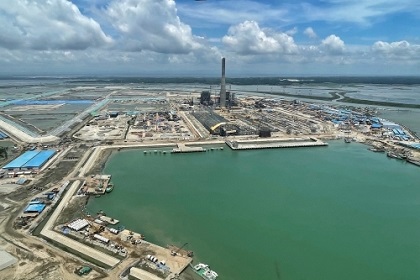
India’s Northeast is developing and getting close to its goal of being part of the Indian mainstream in connectivity and business – which is also critical for the success of India’s Act East Policy. For both goals, Bangladesh and Japan are invaluable partners and friends. The troika’s collaboration can be a model in the region.
 Courtesy: South Asian Voices
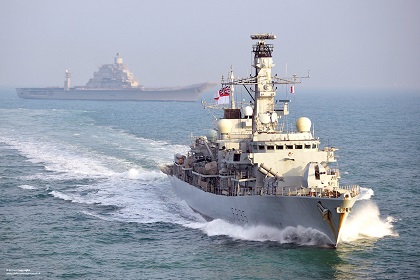
The UK has been admitted to the Comprehensive and Progressive Agreement for Trans-Pacific Partnership or CPTPP, a significant step forward for its efforts in achieving its Brexit goals. The benefits will be more strategic than economic, as it gives the UK a place in the new ‘Atlantic-Pacific’ region.
 Courtesy: Sputnik News
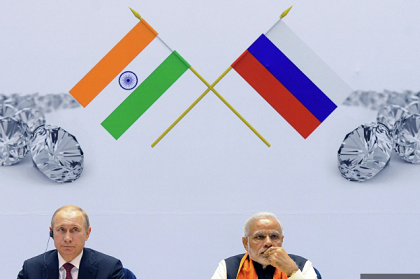
India’s G20 and SCO presidencies have both promise and complexity, for itself and for Moscow. India need not involve itself in crisis settlement, but focus on economic issues, food and energy security, innovation and terrorism. Moscow can help itself by aligning its interests with India’s especially at multilaterals and the global south outreach, and potentially rebuild bridges with the developed north.
 Courtesy: United Nations Economic Commission for Africa
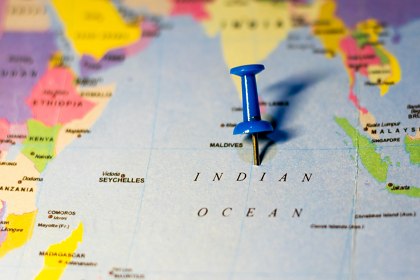
The Indo-Pacific is viewed by powers within and outside the region as both a strategy and policy to interpret the changing geopolitical dynamics in Asia and beyond. But the question of its geographical and geopolitical definition has varied. Opinions among governments and academics have traditionally differed, but over the years, a viable consensus for a wider definition of the concept seems to have emerged.
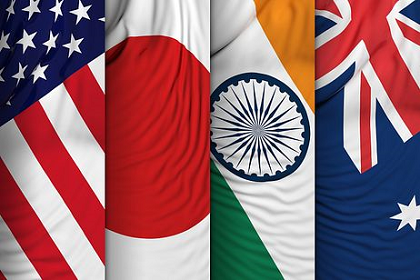 Courtesy: The Diplomat
The Ukraine crisis transferred global anxiety away from China and onto Russia. But this has not happened in the Indo-Pacific, where the Quad countries have followed a policy of economic disengagement from China, in the backdrop of the COVID pandemic and the regeneration of some economies. How the Quad managed this, is a worthwhile assessment.
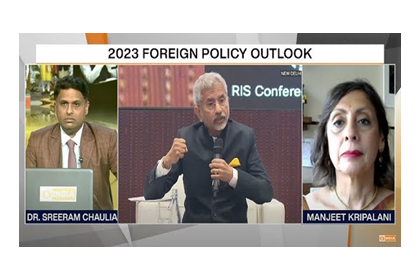 Courtesy: DD India
Analysis of main milestones, opportunities, challenges and threats for Indian foreign policy in the New Year live on Doordarshan. Featuring commentary by Manjeet Kripalani, Co-founder & Executive Director, Gateway House and Dr. Deepshikha Shahi, O.P. Jindal Global University
 Courtesy: Shutterstock
Despite the current tense global atmosphere, India and its foreign policy have remained true to its core of peace and security for all and equity and justice for the developing world. Throughout history, dialogue and diplomacy has been supported as a solution to dispute. Now, as G20 President, New Delhi can sow these seeds of peace in an increasingly multipolar world.
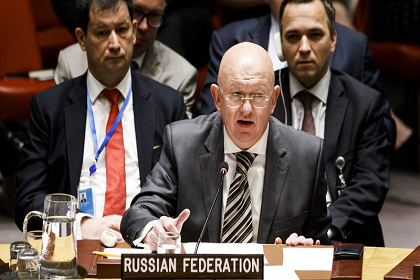 Courtesy: Justin Lane/European Pressphoto Agency
The BRICS have largely abstained from the UNSC resolution condemning Russia’s attempts to annex four Ukrainian provinces. Is it BRICS solidarity or is it because the interests of the Global North and its allies, and those of the Global South, are diverging?
 Courtesy: Shutterstock//Creativa Images
Indonesia has managed its G20 Presidency year by understanding the importance of not going it alone. This trading nation has used its deep regional and multilateral cooperative processes which provided trusted back-up and support at every step, and was book-ended by strong linkages and investment partnerships with Japan and Australia. In this, it has laid the groundwork for India’s 2023 presidency.