Can the world aspire to a future where the use of force is not seen as leadership? Can the U.S. and former colonial powers like France and UK, think differently and reject the use of force as first resort? Can China and India craft alternatives?
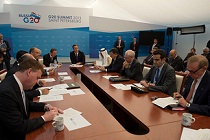
Global institutions responsible for price discovery and speculation in commodities are suspected of fuelling price hikes. With the world experiencing turmoil in the food and energy markets, fixing the global pricing architecture for commodities should be the priority for the G20
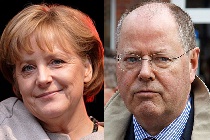
German foreign policy can be described as one anchored in the European and NATO alliance while being the economic centre of Europe. Yet, any government that comes in after the September 22 elections will be challenged by rapid developments in West Asia and elsewhere in a politically and economically turbulent world
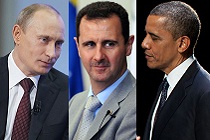
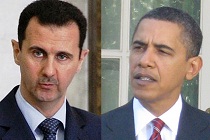
Despite rising international opposition, U.S. President Barack Obama is ready to penalise the Syrian regime for an alleged chemical attack in Ghouta, Syria, last month. The justifications given by the U.S. for an armed attack are questionable, and such retaliatory action will destabilise the entire region
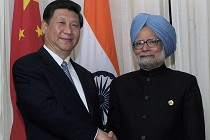
Indian and Chinese companies routinely bid against each other in their quest to secure oilfields and other resource pools resulting in rising prices. However, a preferable recourse would be for the nations, along with ASEAN, to collaborate as there is enough for all
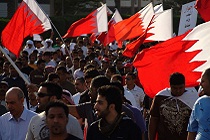
Two years ago, during the Arab Spring uprisings in several West Asian nations, youth and pro-democracy movements flared up on the Persian Gulf island of Bahrain. In light of these events, this paper assesses how Bahrain’s policies toward its Shia constituency have affected relations between Sunni and Shia groups.
Subsequent to the global financial crises of 2007, while several countries were still struggling with economic problems, Latvia managed to dramatically decrease its public debt, and its GDP too grew at an impressive pace. How was this success achieved and at what cost to the people of the country?
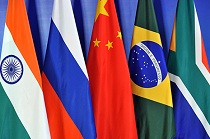
Indian foreign policy has not yet addressed the ramifications of Chinese economic dominance in BRICS. Nor have we matched China’s engagement within the group to ensure that the BRICS vision of a new international order for emerging economies actually works in their favour.
At the 5th BRICS Summit that begins in South Africa today, the heads of state of Brazil, Russia, India, China and South Africa are expected to ratify the creation of the BRICS Bank. After discussion and study for over a year by the respective governments, the bank will be launched with seed money estimated at between $50 billion to $100 billion, and most likely an equal share of voting rights for the management of the bank. What remains