Website articles  (66) Courtesy: Reuters
26 March 2026

Myanmar’s second shot at limited democracy

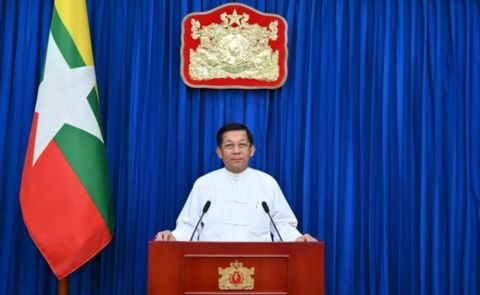
A new government will be sworn into office in Myanmar in April to run a ‘hybrid democracy’ in which military and civilian representatives will share power. It is Myanmar’s second experiment with this system. The West is rethinking its positioning on Myanmar and now seeking ‘calibrated engagement.’ India, too, should reassess its two-track diplomacy and develop a nuanced policy and an early outreach to the new leaders.
Website articles  (41) Courtesy: ANI
19 February 2026

India and Myanmar after the military Coup

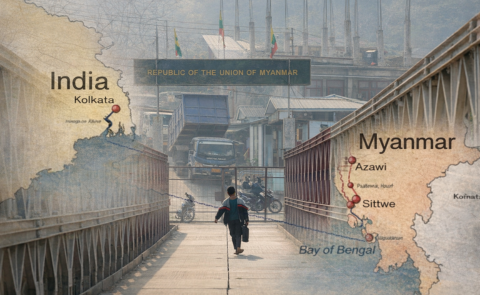
The Myanmar military coup of 1 February 2021 derailed a decade-long experiment in limited democracy, triggering violent resistance, armed conflict, fragmentation, and humanitarian crises. As instability deepens and global attention wanes, Myanmar’s turmoil carries significant implications for India, particularly along the border regions. With China’s growing footprint and ASEAN’s limited mediation, India must carefully navigate its Act East and Indo-Pacific strategies while sustaining people-to-people ties.

BERNAMA Courtesy: BERNAMA
13 February 2025

High expectations of Malaysia as ASEAN chair

Malaysia’s chairmanship of ASEAN in 2025 is pivotal. It will have to steer ASEAN toward regional peace, stability, and prosperity while reinforcing its centrality. All this during a time of heightened geostrategic rivalry, economic deglobalisation, rising protectionism, and nationalist trends.

ASEAN Website Courtesy: Kuwait Times
25 July 2023

ASEAN on a trodden path

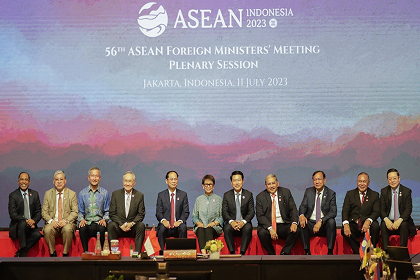
The 56th ASEAN Foreign Ministers Meeting in Jakarta reflected the grouping’s resilience amidst transformative geopolitical changes in the Indo-Pacific. Striving for unity and centrality, ASEAN tackled challenges posed by COVID-19, economic slowdown, climate change, and U.S.-China competition. However, internal differences on sensitive issues like Myanmar have tested its credibility.

Myanmar website Courtesy: WION
24 July 2023

Myanmar: An empty seat, ASEAN schism and India’s choices

ASEAN's efforts to restore democratic transition and political normalcy in Myanmar have come up against a wall of non-cooperation from the state's current military regime. The grouping's internal unity and credibility has also been challenged by two parallelly unfolding policy lines - one favoured by the grouping and the other pursued by Thailand and its supporters. India, which has vital national interests at stake in Myanmar, has supported ASEAN centrality and the 5PC on Myanmar, while also simultaneously demonstrating an understanding of the Thai unilateral policy.

7396fefe-aba2-49fe-a3e5-33b8cea9ebf1 Courtesy: WWF
30 June 2022

Can the WTO Agreement Stop Unsustainable Fishing?

Hailed as historic, the new global rules to curb harmful fishing subsidies is a step towards sustainable fishery practices. The negotiated deal, however, is fraught with concerns over overcapacity in fisheries, deep-sea fishing legislations, and blue finance. It may be better for developing countries to formulate their own regulations and set up mechanisms to prevent illegal fishing within their territorial waters – and hold the WTO agreement to its word.

IMG-1700 Courtesy: @BIMSTECInDhaka
8 June 2022

BIMSTEC@25

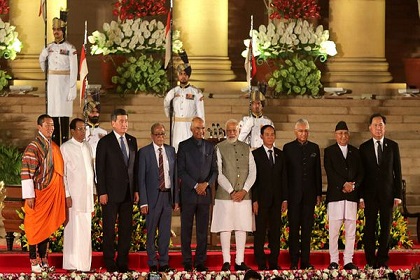
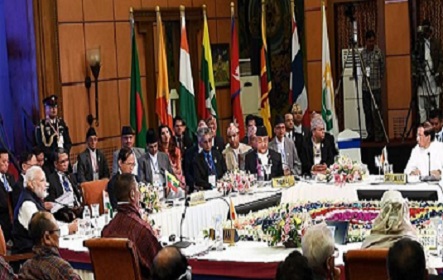
June 6, 2022, marks 25 years since India, Bangladesh, Sri Lanka, Bhutan, Nepal, Myanmar and Thailand joined hands to create BIMSTEC and infuse South Asia with economic and institutional cooperation. The strategic geography of this grouping has the potential to bring new synergy between South Asia and the recently-instituted Indo Pacific Economic Framework, ASEAN and the Quad, for a prosperous, secure Bay of Bengal Community.

ISRO satellite Courtesy: ISRO
26 May 2022

India’s EO satellites in the Indo-Pacific

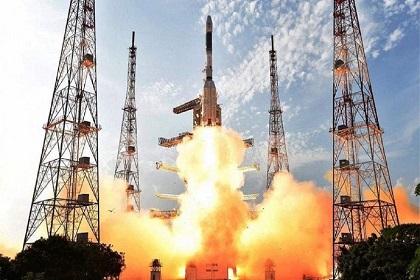
The Quad has agreed to launch a satellite-based maritime security initiative to curb illegal fishing by China. India is a global leader in satellite launches, especially in Earth Observation (EO) satellites. The Indo-Pacific nations are looking at the Indian model because it is applicable, economical, and sustainable.

bimstec 2 Courtesy: Twitter- BIMSTEC
19 May 2022

Incorporating the Blue Economy into BIMSTEC

The BIMSTEC charter has laid the foundations for a prosperous, peaceful, and sustainable Bay of Bengal region, a goal that can be achieved by greater integration and deeper collaboration. While ensuring continuity with past efforts and strengthening economic cooperation is necessary, it must also realise its potential in newer areas such as the blue economy, which has three interlinked pillars— connectivity, prosperity, and regional stability.