Badi Soch: Pakistan’s next government
This daily column includes Gateway House’s Badi Soch – big thought – of the day’s foreign policy events. Today’s focus is on the elections and new government in Pakistan.


This daily column includes Gateway House’s Badi Soch – big thought – of the day’s foreign policy events. Today’s focus is on the elections and new government in Pakistan.
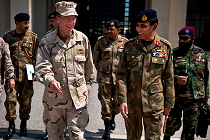 Courtesy: United States Navy
Gateway House’s Ambassador Neelam Deo, in a debate, titled ‘The civil-military equation in Pakistan has begun to tilt in favour of civilians,’ argues in her closing remarks that Pakistan will need sympathy and support as it confronts the complex choices that the democratisation process continually throws up.
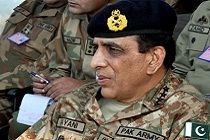 Courtesy: Pakistan97/WikimediaCommons
Gateway House’s Ambassador Neelam Deo, in a debate, titled ‘The civil-military equation in Pakistan has begun to tilt in favour of civilians,’ argues in her rebuttal that the changes in Pakistan resemble a one-step-forward-and-two-steps-backwards process rather than a move up to the next level.
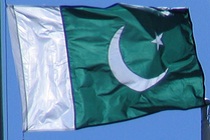 Courtesy: Benchill/WikimediaCommons
The national election in Pakistan looks like a game of polarisation, but if democracy is meant to provide some relief and prosperity, all political parties have flopped, bottom up. The field is now wide open, and anything can happen - including a hung parliament.
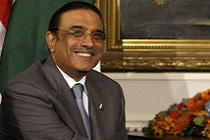 Courtesy: Eric Draper/WikimediaCommons
With Pakistan geared for a defining general election scheduled for May 11, Council on Foreign Relations' Daniel Markey, in a debate, titled ‘The civil-military equation in Pakistan has begun to tilt in favour of civilians,’ argues for the motion.
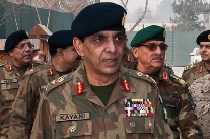 Courtesy: U.S. Army/WikimediaCommons
With Pakistan geared for a defining general election scheduled for May 11, Gateway House’s Ambassador Neelam Deo in a debate, titled ‘The civil-military equation in Pakistan has begun to tilt in favour of civilians,’ argues against the motion.
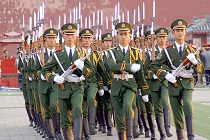 Courtesy: Steve Webel/Flickr
The Chinese army’s trespassing of the Sino-Indian Line of Actual Control near Ladakh has fuelled serious security concerns in India. This signals a sharper policy from Beijing towards India; it is also why its response must be firm, and the Chinese must be seen to back off.
 Courtesy:
The ‘Lady Hughes incident’, as a confrontation between British and Chinese authorities in 1784 came to be called, perhaps holds lessons for the ongoing dispute between India and Italy. Aniruddha Bose blogs
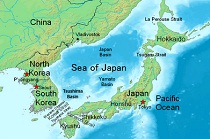 Courtesy: Phoenix7777/WikimediaCommons
Political disputes and popular passions in North East Asia argue for discreet diplomacy and the provision of mutual assurances to prevent conflict and escalation.
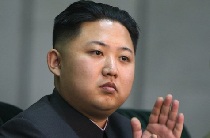 Courtesy: Courtesy: Petersnoopy/Flickr
The new provocations from Pyongyang heighten the risk of a military showdown with the U.S., South Korea and Japan. China, the only power with sway over the regime, is exercising limited options for peace on the peninsula.