malabar-pti-2 Courtesy: PTI
20 July 2017

Malabar 2017: strengthening the freedom of navigation

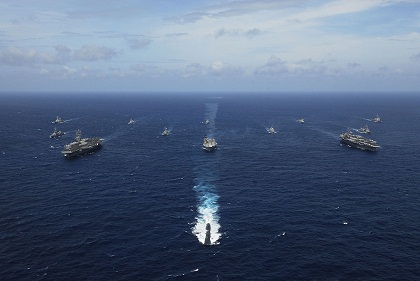
In a special podcast, Vice Admiral (retd.) Anil Chopra, Distinguished Fellow for International Security and Maritime Studies at Gateway House, shares his insights into this years recently concluded Malabar Exercise, examining the inclusion of Japan and potentially Australia, while detailing the geopolitical implications of these exercises.
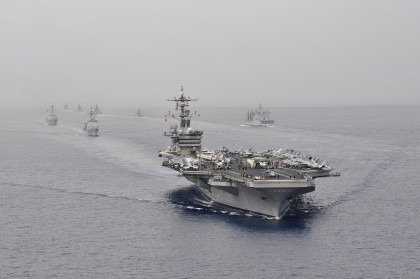
120416-N-ZI635-259 
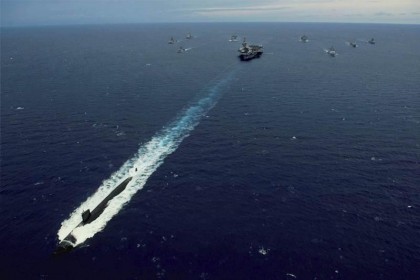
INDIAN OCEAN (April 16, 2012) The Nimitz-class aircraft carrier USS Carl Vinson (CVN 70), the Ticonderoga-class guided-missile cruiser USS Bunker Hill (CG 52) and the Arleigh Burke-class guided-missile destroyer USS Halsey (DDG 97) participate in a passing exercise with Indian navy ships during Exercise Malabar 2012. Carl Vinson, Bunker Hill, and Halsey comprise Carrier Strike Group (CSG) 1 and are participating in the annual bi-lateral naval field training exercise with the Indian navy to advance multinational maritime relationships and mutual security issues. (U.S. Navy photo by Mass Communication Specialist Seaman George M. Bell/Released) Courtesy: Wikimedia
24 April 2017

Military option in North Korea too risky

As the United States considers its policy options towards North Korea it must understand that Pyongyang has been thinking about military conflict for decades. It too will have military plans and they could pose major challenges for the U.S. This is why China and South Korea–and U.S. regional experts too–prefer the diplomatic route

28912263963_0b75893744_h Courtesy: MEA/ Flickr
14 February 2017

Indo-Pacific: a scenario of possibilities

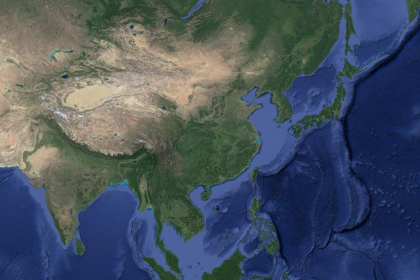
The Indo-Pacific region is home to some of the largest and most rapidly growing economies as also powerful military forces. Nuclear threats, international terrorism and climate change are some of the issues that define the region. Uncertainty dogs relations among the four nations in the top league—U.S., China, India and Japan—but what is emerging is a hawkish, policy stance from the U.S. as opposed to an isolationist outlook apprehended earlier

1200px-Malabar_07-2_exercise Courtesy: Wikipedia
14 February 2017

A democratic quadrilateral in Asia?

A strategic coming together of the U.S., Japan, Australia, and India was close to fruition some years ago, impelled initially by the tsunami of 2004. The spirit of the enterprise remains alive even now, and there are many merits in India joining the quad, but such an arrangement can skew existing Asian equations, jeopardising the Act East policy

Donald_Trump_swearing_in_ceremony Courtesy: Wikipedia
9 February 2017

The West and the rest: resetting the order

There is a stark divergence between how the West views the world and how those outside it do. It is possible to oversimplify the equation, to portray the West as cynically self-interested. The West and countries like India need to reach a shared understanding of how the liberal international order can be reformed so it may be salvaged

Reversal of Globalisation2 Courtesy: Systemic Alternatives
8 February 2017

Is globalisation in reverse?

The contours of globalisation are being reshaped. The Brexit vote and the election of Donald Trump mark a strong anti-globalisation sentiment even as leaders in China, India and Russia successfully marry nationalist rhetoric with a cleverly crafted overseas strategy, premised on the very tenets of globalisation. There seems to be a ‘pause’ in the unbalanced progress of globalisation of the last three decades—and this could have many positive outcomes

28455374735_17cf79553a_b Courtesy: Flickr
31 January 2017

Saudi prince: not quite a game changer?

Prince Salman’s accession to the throne after the death of Saudi King Abdullah on 23 January 2015 has been a game changer, both domestically and in West Asian politics. Within days, he sidelined rivals within the House of Saud, and took on Iran with a confrontational policy. But two years later, the results of his new strategy disappoint