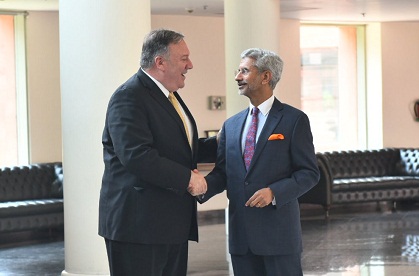
India’s foreign minister S. Jaishankar and U.S. Secretary of State Mike Pompeo have sorted through the India-US niggles and minutae, so that the substance of the bilateral can be advanced by their leaders who are meeting in Osaka this week
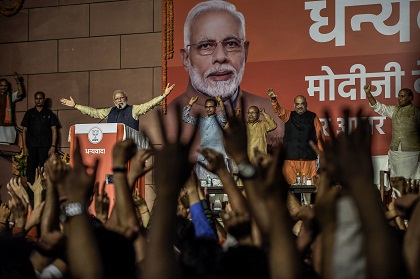
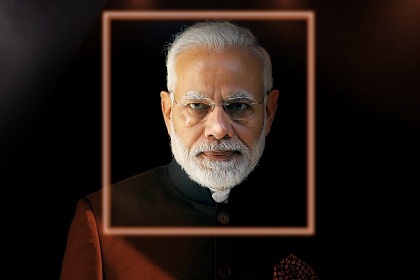
India’s foreign policy is increasingly blended in with its domestic agenda – and vice versa. Prime Minister Modi’s past proactive foreign policy has paid dividends in bringing global attention to India, a fact young voters have noticed and approved. In his second term, what will India’s foreign policy look like? A continuum of the past, but also new frameworks for the future
India's foreign policy under the second Modi government will take account of a turbulent world in which the old verities are disappearing and domestic political compulsions exert overwhelming influence on external postures
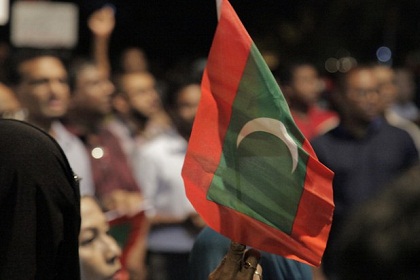
Maldives’ new president, Ibrahim Solih, has had two election wins in a span of six months – his own in September 2018 and his Maldivian Democratic Party’s landslide victory in the Majlis elections about three weeks ago. An analysis of what this win says about democratic politics in Maldives, improved relations with India and the complex equation it shares with China
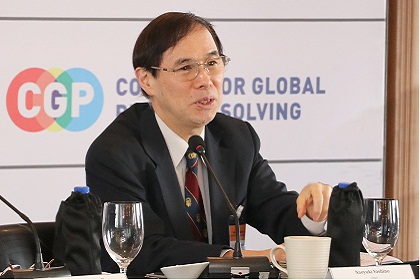
Naoyuki Yoshino, Dean, Asian Development Bank Institute, outlined some of the issues that will concern Japan, which is president of the G20 this year. He was in Mumbai for the India-Japan dialogue, organised by Gateway House recently
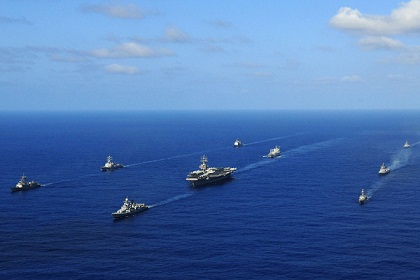
Canada, which has been slow to respond to a changing trans-Pacific neighbourhood, can join India and the ASEAN member states to embark on a trilateral dialogue on the Indo-Pacific’s importance in terms of political, strategic and other domains. An alignment in outlook can strengthen the security and prosperity of a region, currently mired in U.S.-China rivalries
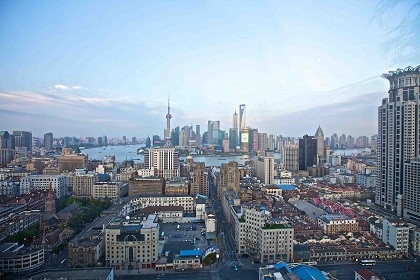
The Chinese leadership faces a range of economic problems and not very palatable solutions, says Prof Heribert Dieter, Visiting Fellow at Gateway House, Mumbai, and Senior Fellow, German Institute for International and Security Affairs, Berlin, in this wide-ranging conversation with Gateway House. He also analyses the European perspective on China, the U.S.-China trade war and the role of global forums, such as G20
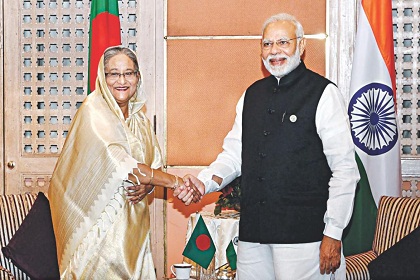
Bangladesh faces several major challenges in its external relations. It showed humanitarianism in receiving the fleeing Rohingyas, but its diplomatic efforts to repatriate them have not succeeded. It must also maintain a balance between relations with India and China and show proactive leadership in garnering regional cooperation
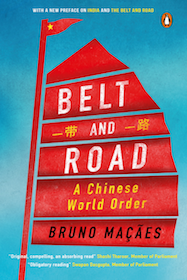
This timely book on a controversial subject attempts to sum up the scope and ambitious scale of the BRI. It does not offer judgement nor copious detail, but shows how an infrastructure project now seems to be the basis of a China-centred global economic system