Prime Minister Narendra Modi’s visit to Japan is significant for India domestically and its extended Asian influence. His visit, just prior to the SCO Summit in China, represents a shrewd endeavour at balancing the several priorities of Indian foreign policy
The G20’s current cycle is unique, with four Global South nations presiding consecutively: Indonesia, India, Brazil, and now South Africa. Brazil’s 2023-24 presidency exhibited both achievements and struggles, prioritising social inclusion, hunger, energy transition, and governance reform. The handover to South Africa marks a significant milestone in G20 history. Will the momentum be followed by the U.S., the next G20 president but also a G20 sceptic?
There was much at stake for the U.S.-Russia summit at Alaska – more than just the future of Ukraine. It will put the world back on economic track, and ease East-West relations, under stress for an on-going tariff war. For now, diplomacy has played a successful hand.
U.S. President Trump will meet Russian President Putin on August 15. A positive outcome may mean removal of punitive U.S. tariffs on India for buying Russian oil and resolving its dilemma of placating a partner country with growing commercial, geopolitical and defence ties, or pursuing strategic autonomy, keeping its old friends and take an economic hit? Is Russia the red line for India?
India-U.S. trade negotiations have faltered. India stepped outside its comfort zone to offer zero tariffs on industrial goods that form 40% of U.S. exports to India, but the additional 25% tariffs have rendered most Indian exports noncompetitive. Only a carefully balanced, incremental negotiating framework blending economic pragmatism with protection of core domestic interests backed by political will, stands a realistic chance of bridging the current impasse.
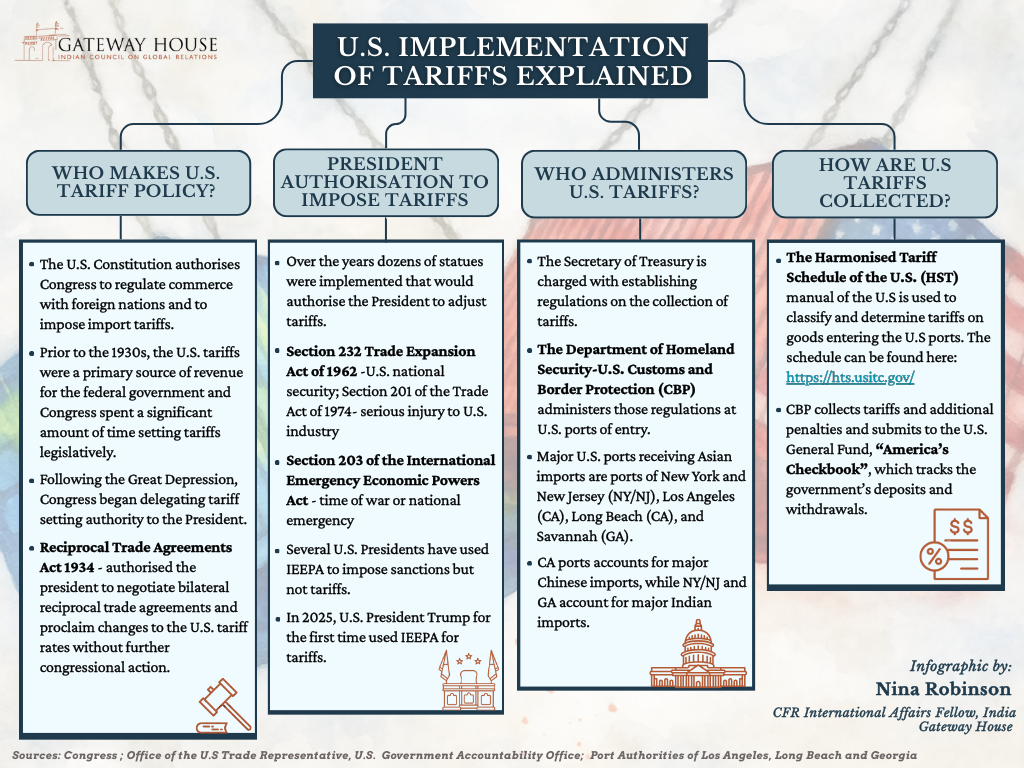
Who makes, imposes, administers and collects U.S. tariffs? The U.S. Congress, but for the last several decades, it has been at the discretion of the U.S. President, who has been given tariff-setting authority. Under the International Emergency Economic Powers Act, 1977, U.S. President Donald Trump has imposed reciprocal and universal tariffs on over 60 countries.
The India-Maldives bilateral, so fraught till recently, has seen a positive reset. This was evident in Prime Minister Narendra Modi’s July 25-26 visit to Male. Using patience, quiet diplomacy and a consultative process with the Maldivians, India is now on the path to achieving its bilateral and regional goals in tandem with its strategically critical neighbour in the Indian Ocean.
PM Modi's five-nation tour highlights that despite geopolitical conflicts, New Delhi remains confident in its ability to balance relationships with the North and South.
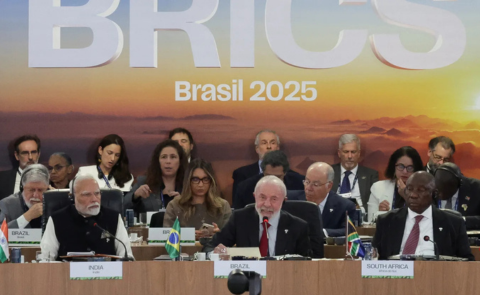
While BRICS does have a wise agenda, backed by considerable unity, it is not in a strong position to garner the world’s support for it. The fissures within the G7, the tensions between the U.S. and Europe, and the unilateralism of Washington leave little room for BRICS to develop an international consensus on the issues agreed at the recent Rio Summit.
BRICS is undergoing a major transformation—expanding its membership, redefining its global role, and navigating geopolitical tensions. As the group prepares for the Rio Summit in July 2025, key challenges include integrating new members, reforming multilateral institutions, and balancing economic ambitions with strategic unity. With India set to chair in 2026, the bloc’s evolving identity will shape its global influence.